For over 30 years, we’ve powered Rhode Island with expert electrical services delivered with a personal touch. Discover our story and commitment to quality.
Contact Info
- List Item
For over 30 years, we’ve powered Rhode Island with expert electrical services delivered with a personal touch. Discover our story and commitment to quality.
Contact Info
Not sure when to call an electrician? Discover the warning signs Riverside homeowners need to know to prevent electrical fires and keep their families safe.
You flip a breaker. Again. The lights flicker every time the fridge cycles on. That one outlet in the kitchen feels warm when you unplug your phone charger. You tell yourself it’s probably fine.
Until your homeowner’s insurance sends a letter saying they found knob and tube wiring during an inspection. Or until you smell something burning and can’t find the source.
Electrical problems in Riverside’s older homes don’t always look dangerous at first. But they rarely fix themselves. This guide covers the warning signs that mean you need to call an electrician—and why waiting usually makes things worse, not better.
Your home’s electrical system talks to you. Not with words, but with symptoms. Breakers that trip without an obvious reason. Outlets that feel hot to the touch. Lights that dim when you turn on the microwave.
Most people assume these are quirks of an older house. And yes, Riverside has plenty of homes built in the 1940s, 50s, and 60s. But age doesn’t make electrical problems normal. It makes them more likely.
When you notice flickering lights, frequent breaker trips, burning smells, buzzing sounds from outlets, or scorch marks around switches, you’re seeing your system struggle. These aren’t inconveniences. They’re warnings that your wiring, panel, or circuits can’t safely handle what you’re asking them to do.

A breaker trips because it’s doing its job. It detects too much current flowing through the circuit and cuts power before the wiring overheats. That’s the safety mechanism working exactly as designed.
The problem isn’t the breaker. It’s what’s forcing it to trip in the first place.
If you’re running a vacuum, a space heater, and a hair dryer on the same circuit, you’ve overloaded it. The breaker trips to prevent the wires from getting hot enough to melt their insulation or start a fire. In a home built when 60 amps was considered plenty, that’s easy to do. Modern homes need 200 amps just to run the HVAC system and kitchen appliances without issue.
But overloads aren’t the only cause. A short circuit happens when a hot wire touches a neutral wire, creating a sudden surge that trips the breaker immediately. You’ll often smell something burning or see scorch marks near an outlet when this happens. Ground faults are similar, except the hot wire is touching a grounded surface like a metal box or the ground wire itself. Both are dangerous and need a licensed electrician to diagnose and fix.
Sometimes the breaker itself is the problem. Breakers wear out. If yours is tripping at lower loads than it should, or if it won’t stay reset, the internal components may have failed. Replacing a bad breaker isn’t a DIY project. Working inside an electrical panel exposes you to live current that can kill you.
And if your panel is old—25 years or more—it may not meet current safety standards. Panels installed before the 1980s often can’t handle modern electrical demands. Some brands, like Federal Pacific and Zinsco, have documented safety issues. Their breakers are known to fail to trip during an overload or short circuit, which means the wiring keeps heating up until something catches fire. If you have one of these panels, replacement isn’t optional.
Frequent breaker trips mean your system is telling you it’s overworked, outdated, or failing. Ignoring that doesn’t make it go away. It just gives the problem more time to turn into something worse.
Occasional flickering when a large appliance starts up isn’t unusual. Your refrigerator compressor kicks on, pulls a surge of power, and the lights dip for a second. That’s normal.
Persistent flickering is not. If your lights dim every time the AC runs, or if they flicker randomly throughout the day, something in your electrical system isn’t right.
The most common cause is an overloaded circuit. Your panel is struggling to distribute power evenly, so when one appliance draws a lot of current, the lights on that same circuit lose voltage. It’s a sign the system doesn’t have enough capacity for what you’re asking it to do.
Loose wiring is another possibility. Over time, connections inside outlets, switches, and junction boxes can loosen. When that happens, electricity doesn’t flow smoothly. It arcs across the gap, creating heat and causing lights to flicker. Loose wiring is a fire hazard. It generates heat in places that aren’t designed to handle it, and that heat can ignite nearby materials.
Flickering can also point to a problem at the panel itself. Corroded connections, failing breakers, or an undersized panel all create inconsistent power flow. If you’re in an older Riverside home with the original electrical system, this is more likely than you’d think.
You might also have a problem with the utility connection outside your home. If the issue is at the service drop or the meter, your power company needs to fix it. But you won’t know that until an electrician rules out problems inside your house first.
Dimming and flickering lights aren’t just annoying. They’re symptoms of a system that’s either overloaded, poorly maintained, or reaching the end of its functional life. Any of those conditions increases your risk of electrical fire. And if your wiring is old enough, the insulation around it may already be brittle and cracked, which makes the problem worse.
Don’t assume flickering lights are just part of living in an older home. They’re not. They’re a warning that your electrical system needs attention before it fails in a way that’s a lot more expensive—and a lot more dangerous.
Want live answers?
Connect with a Lightning Electric expert for fast, friendly support.
If you smell burning plastic or notice a hot outlet, stop using it immediately. Don’t wait to see if it gets worse. Don’t plug anything else in to test it. Just stop.
A burning smell near an outlet or switch means something is overheating. That could be a loose connection, damaged wiring, or an overloaded circuit. All three are fire hazards. Electrical fires don’t always start with visible flames. They start with heat building up inside a wall where you can’t see it.
Outlets should never feel warm to the touch. If one does, it’s a sign that too much current is flowing through it, or that the wiring inside is failing. Buzzing or crackling sounds are even worse. Those noises mean electricity is arcing—jumping across a gap instead of flowing smoothly through the wire. Arcing generates intense heat in a very small area, and that’s how fires start.
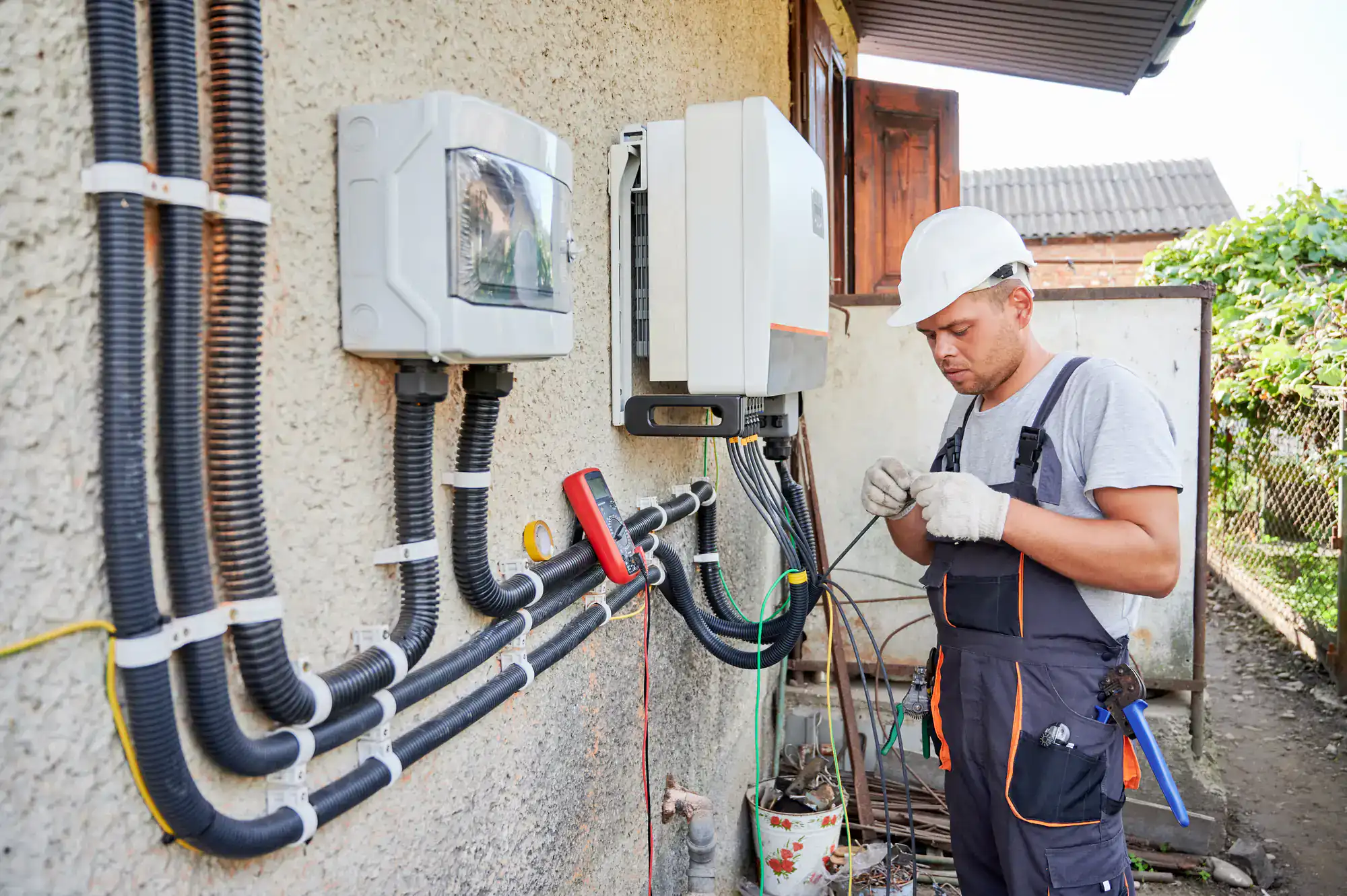
Overheating outlets usually come down to one of three problems: overloaded circuits, loose connections, or old wiring that’s reached the end of its life.
An overloaded circuit happens when you’re pulling more power through an outlet than it’s designed to handle. If you’ve got a power strip plugged into a single outlet, and that power strip is running a space heater, a laptop, a phone charger, and a lamp, you’re asking too much of that circuit. The wiring heats up. The outlet heats up. And if it gets hot enough, the plastic around it starts to melt.
Loose connections are common in older homes. Every time you plug something in or unplug it, the metal contacts inside the outlet wear down a little. Over time, those contacts don’t grip the plug as tightly as they should. When the connection is loose, electricity has to jump a tiny gap to complete the circuit. That creates resistance, and resistance creates heat.
Old wiring is another issue. Homes built in the 1940s, 50s, and 60s often have wiring that’s been in place for 50, 60, or 70 years. The insulation around those wires breaks down. It gets brittle. It cracks. And when the insulation fails, the wires inside can touch things they’re not supposed to touch—like each other, or the metal box the outlet is mounted in. That’s when you get sparks, scorch marks, and fires.
If you see discoloration around an outlet—brown or black marks on the wall plate—that’s evidence of heat damage. It means the outlet has been overheating for a while. You might also notice a burning smell, or the outlet might feel warm even when nothing is plugged into it. All of those are signs you need an electrician to inspect the wiring and replace the outlet.
Don’t ignore hot outlets. They don’t cool down on their own. They get worse. And the longer you wait, the higher the chance that the problem turns into a fire.
Knob and tube wiring is the original electrical system used in homes built before 1950. It’s called that because the wires are held in place by ceramic knobs and run through ceramic tubes where they pass through framing. It was a solid system for its time. But that time was a hundred years ago.
The problem isn’t just that knob and tube wiring is old. It’s that it wasn’t designed for the way we use electricity today. There’s no ground wire, so you can’t safely plug in three-prong appliances. The insulation is cloth or rubber, and after decades in an attic or inside a wall, that insulation deteriorates. It cracks. It falls off. And when the wires are exposed, the risk of fire goes up.
Knob and tube wiring also can’t handle the electrical load of a modern home. It was installed when a household might have a few lights, a radio, and maybe an iron. Now you’ve got a refrigerator, a microwave, a dishwasher, computers, phone chargers, televisions, and HVAC systems all running at the same time. The wiring wasn’t built for that. It overheats. And when it overheats, it becomes a fire hazard.
Insurance companies know this. Most won’t cover a home with active knob and tube wiring. If they find it during an inspection, they’ll either require you to remove it within 30 days or they’ll cancel your policy. If your mortgage company finds out you lost coverage, they’ll force-place insurance on your home at a much higher rate—sometimes triple what you were paying.
Replacing knob and tube wiring isn’t cheap. Most Riverside homeowners pay between $12,000 and $36,000 for a full replacement, depending on the size of the house and how accessible the wiring is. But the alternative is losing your insurance, failing a home inspection if you try to sell, and living with a fire hazard that gets worse every year.
If your home was built before 1950 and you’re not sure whether you have knob and tube wiring, we can inspect your system and tell you. If you do have it, replacing it isn’t just about compliance. It’s about safety. It’s about being able to use your home the way you need to without worrying that something’s going to spark behind a wall while you’re asleep.
Electrical problems don’t fix themselves. Breakers that trip frequently don’t suddenly stop tripping. Flickering lights don’t stabilize on their own. Hot outlets don’t cool down. And knob and tube wiring doesn’t become safer just because it’s been there for 70 years.
The warning signs are there for a reason. They’re your home telling you that the electrical system is struggling, outdated, or failing. Ignoring them doesn’t make them go away. It just gives the problem more time to get worse.
If you’re seeing any of the signs covered here—frequent breaker trips, flickering or dimming lights, burning smells, hot outlets, or you know you have knob and tube wiring—call a licensed electrician. Not next month. Not when it gets worse. Now. A professional can inspect your system, identify what’s wrong, and fix it before it turns into a fire, an insurance cancellation, or a failed home inspection.
We’ve been handling electrical safety issues in Riverside and throughout Rhode Island for over 30 years. If your home’s electrical system isn’t keeping up with your needs—or if you’re worried it’s not safe—reach out. We’ll walk you through what’s going on, what needs to be done, and what it’s going to cost before any work starts.
Summary:
Share: