

For over 30 years, we’ve powered Rhode Island with expert electrical services delivered with a personal touch. Discover our story and commitment to quality.
Contact Info
- List Item
For over 30 years, we’ve powered Rhode Island with expert electrical services delivered with a personal touch. Discover our story and commitment to quality.
Contact Info
The cost to rewire a house with knob and tube wiring depends entirely on scope — and scope isn't something you can figure out from a cost calculator.
You already know knob and tube wiring is a problem. You’ve gotten the inspection report, maybe the insurance notice, maybe both. What you don’t know yet is what you’re actually dealing with — a targeted fix or a full rewire — and nobody has given you a clear answer on how that decision even gets made.
That’s not an accident. The honest truth is that scope can’t be determined from a phone call or a cost guide. It gets decided during a specific kind of inspection, by someone who knows what to look for. Here’s exactly what that process looks like — and what it means for your project.
A knob and tube wiring inspection isn’t a quick visual sweep. It’s a systematic assessment of what’s active, what’s been modified, and what the full scope of the problem actually is before anyone touches a wire or opens a wall.
In Providence County, where more than half of housing stock in Providence was built before 1939, we do this assessment constantly. The neighborhoods here — Federal Hill, College Hill, Mount Pleasant, Elmhurst, Rumford, Riverside — were all built during the era when knob and tube wiring was standard. That means the wiring, the fuse boxes, and the walls were all designed together as a system. Understanding that system is what makes the scope decision possible.

The inspection starts with identifying which circuits are still active — meaning they’re still carrying current — and which have been de-energized or abandoned over the years. This distinction matters enormously. Insurers and inspectors both draw a line between active and inactive knob and tube wiring, and that line has a direct effect on what your project needs to include.
From there, we look at whether any amateur modifications have been made. Knob and tube wiring that’s been left completely intact for 80 years is a different situation than wiring that’s been spliced, extended, or connected to modern circuits without proper junction boxes. Improper modifications are one of the primary hazards associated with older wiring — not the original installation itself.
Accessibility is another major factor. Attic access, basement clearance, and crawl space conditions all affect how much of the wiring can be reached without opening walls. In a home with a finished attic and a poured concrete basement, routing new wire is harder than in a home with open joists on both ends. That affects both scope and labor time, which is why two homes of the same square footage can come in at very different costs.
We also look at whether insulation has been added around the wiring. Knob and tube wiring was designed to dissipate heat into open air. When insulation surrounds it — which happens frequently in older Providence County homes that have had energy efficiency upgrades — the wiring can’t breathe the way it was intended to. That’s a code issue, a safety issue, and often an insurance issue all at once.
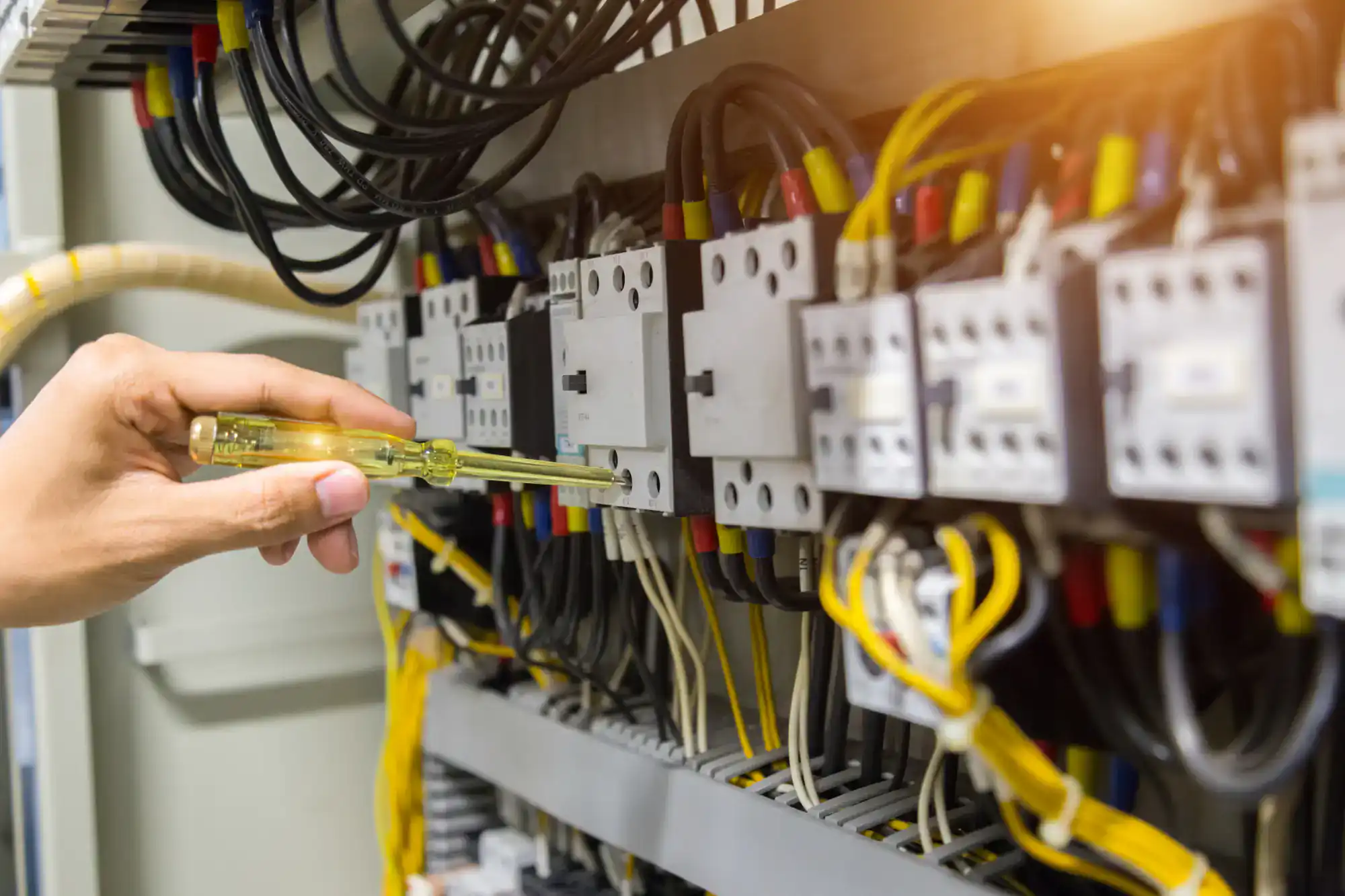
Finally, we look at the electrical panel. What we find there often tells us more about the project scope than anything else in the house.
If you’ve been searching for “bulb and tube wiring” and landed here, you’re in the right place. Bulb and tube wiring, knob and tube wiring, and K&T wiring all refer to the same system — an early electrical wiring method that was standard in American homes from roughly the 1880s through the 1940s. The name comes from the ceramic knobs that held the wires in place and the ceramic tubes that protected them where they passed through framing. It’s easy to mishear or misremember, and the term shows up in conversations all the time.
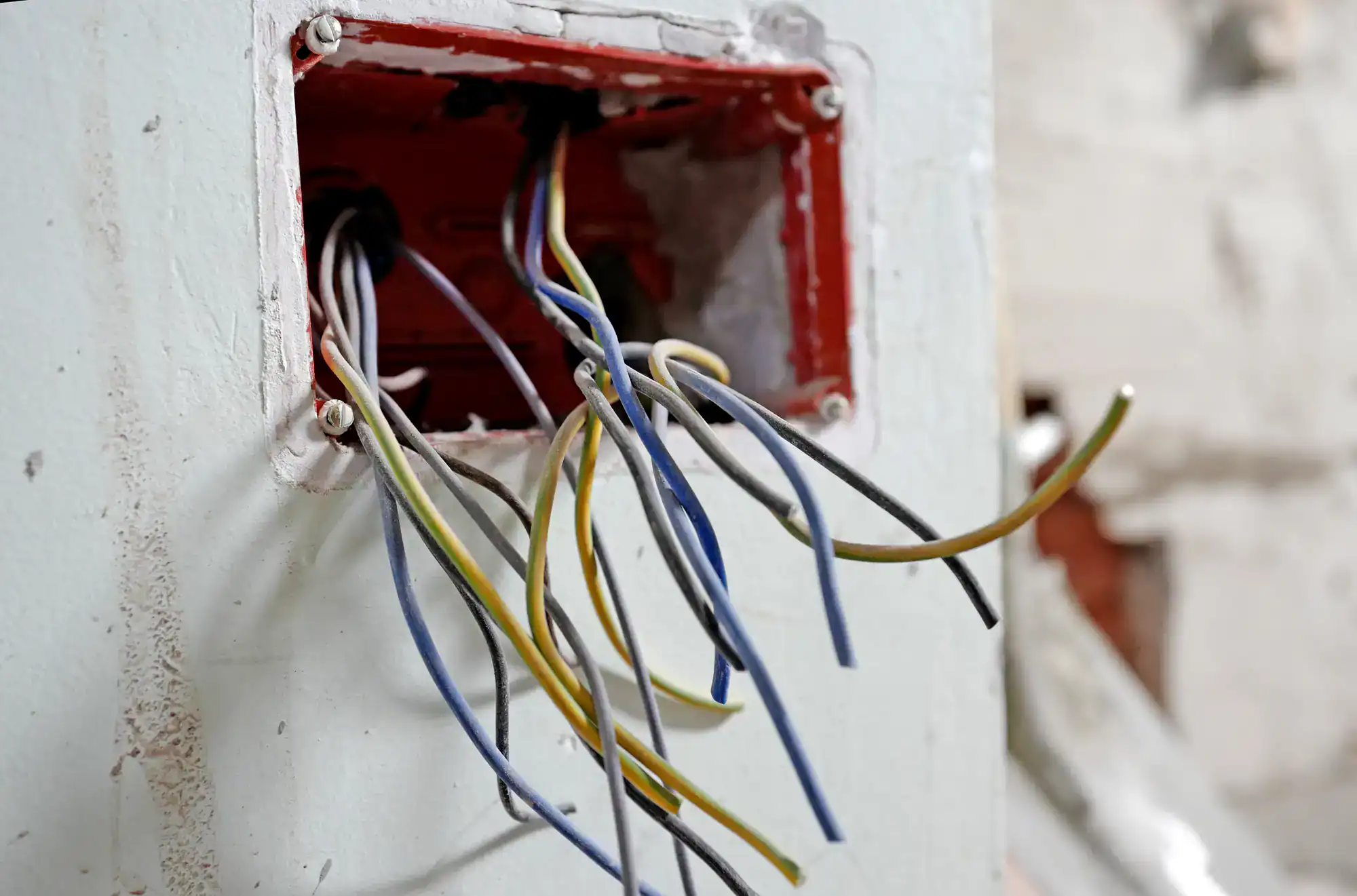
What it looks like in practice: individual cloth-insulated wires running through your walls and ceilings, supported by small white ceramic insulators, with no ground wire. If your home was built before 1950 and you have ungrounded two-prong outlets, there’s a reasonable chance you still have active knob and tube wiring somewhere in the system.
The reason it matters — beyond the wiring itself — is that homes wired with knob and tube were typically built with 60-amp or 100-amp electrical service. Modern households routinely need 200-amp service. That gap between what the original system was designed to handle and what you’re actually running through it today is part of why insurers pay close attention to it, and part of why scope decisions often end up being broader than homeowners initially expect.
In Providence County, the density of pre-1940 housing means this isn’t a rare situation. It’s a common one. Knowing what you’re actually dealing with — and what the wiring is connected to — is the first step toward understanding what your project will actually require.
Want live answers?
Connect with a Lightning Electric expert for fast, friendly support.
The cost to rewire a house with knob and tube wiring in Rhode Island typically ranges from $12,000 to $36,000, depending on the scope of the project. That’s a wide range, and it’s wide for a reason — the variables that drive scope decisions are genuinely different from home to home.
What most cost guides won’t tell you is that the biggest factor isn’t square footage. It’s how much of the original wiring is still active, how accessible it is, and whether the walls need to be opened to reach it. Those three things together determine whether you’re looking at the lower end of that range or the higher end.

Before you get a single quote, go look at your electrical panel. What you find there will tell you more about your project scope than any cost calculator.
If your home still has an original fuse box — the kind with screw-in fuses rather than breakers — that’s a significant signal. Fuse boxes and knob and tube wiring were installed together as a system. They were sized for each other. When a home still has its original fuse box, it almost always means the original wiring is still active throughout the house, because the two were never updated independently. In that situation, addressing the wiring without addressing the panel typically results in a code-compliance mismatch that won’t pass inspection — and won’t satisfy your insurer.
That’s why full rewires come up so often in older Providence County homes. It’s not that electricians are upselling. It’s that the fuse box and the wiring are part of the same outdated system, and fixing one halfway leaves the other problem in place.
If a panel upgrade has already happened — meaning someone at some point replaced the fuse box with a modern breaker panel — the picture is different. In that case, targeted removal of active knob and tube circuits may be viable, depending on what the inspection reveals. The panel upgrade is a meaningful indicator that some modernization has already occurred, which can limit the scope of what’s left to address.
This is the kind of nuance that only surfaces during an actual inspection. It’s also why getting an assessment from a licensed electrician with real experience in older Rhode Island homes matters more than reading cost averages online. Rhode Island’s Master Electrician licensing requires 8,000 hours of hands-on experience — and that experience, in homes like the ones throughout Providence County, is what makes the difference between a scope estimate that’s accurate and one that blows up mid-project.
We use cameras inserted through existing outlets to locate and assess wiring from inside the walls — without opening the plaster. For homeowners in historic neighborhoods where horsehair plaster is irreplaceable, that matters. No other electrician in the area uses this technology, and for homes in College Hill, Pawtuxet Village, or the Rumford corridor, it’s often the difference between a manageable project and a renovation.
This is the question almost every homeowner asks, and the honest answer is: it depends on your insurer as much as it depends on your wiring.
Partial replacement — addressing one or two circuits, or a specific area of the home — costs less upfront. But many insurers won’t accept partial removal as a condition of reinstating coverage. They want full removal, documented by a licensed electrician who pulled permits and passed inspection. If your insurance company issued a 30-to-60-day notice, there’s a reasonable chance they’ve already defined what “done” looks like — and partial may not meet that definition.
That said, partial removal isn’t always off the table. If the inspection reveals that only a limited number of circuits are still active, and the panel has already been upgraded, targeted removal of those specific circuits may satisfy both the code requirements and the insurer’s conditions. It comes down to what the inspection actually finds — not what sounds like the cheaper option going in.
What we consistently tell Providence County homeowners is this: don’t try to pre-determine your scope before the inspection. The homeowners who get into trouble are the ones who call around looking for a quote on a partial fix before anyone has actually looked at their home. They get a low number, commit to it mentally, and then face a much larger scope once the walls are opened and the full picture becomes clear.
We pull permits and pass inspections on every applicable job, and we provide documentation your insurer can actually use — because getting the work done is only half of it. Getting your coverage reinstated is the other half, and that requires a paper trail.
If you’re under an insurance deadline, we offer evenings and weekend appointments. Financing is also available through Synchrony Bank for projects where the full scope puts the cost out of reach upfront.
The scope decision for a knob and tube wiring project isn’t something you can make from a cost guide. It gets made during an inspection — by someone who knows what active versus inactive wiring looks like, what an original fuse box signals about the rest of the system, and how to assess accessibility without tearing open walls that took a century to build.
Rhode Island has some of the oldest housing stock in the country. Providence County sits at the center of that reality. If your home was built before 1950, the wiring question isn’t hypothetical — it’s a matter of when, not if.
If you’re ready to get a straight answer on what your project actually involves, Lightning Electric is the place to start. We’ve spent 30 years working in homes exactly like yours, and we’re not going to guess over the phone.
Summary:

Article details:
Share: