
For over 30 years, we’ve powered Rhode Island with expert electrical services delivered with a personal touch. Discover our story and commitment to quality.
Contact Info
- List Item
For over 30 years, we’ve powered Rhode Island with expert electrical services delivered with a personal touch. Discover our story and commitment to quality.
Contact Info
Most commercial property owners in Providence County don't know Rhode Island law draws a hard line on who can legally touch electrical work — and what happens when a contractor blurs it.

You’re looking for a commercial electrical contractor in Providence County, and you’ve already figured out that “licensed and insured” is something every contractor claims. What you probably haven’t figured out yet — because nobody talks about it — is that those two words don’t mean what most people think they mean. A contractor can be fully licensed and still send unlicensed workers to your property to do the actual job. Rhode Island law has something to say about that, and it directly affects your liability. Here’s what you actually need to know before you hire anyone.
Rhode Island issues several types of electrical licenses, and the differences between them matter more than most buyers realize. The Certificate A — the electrical contractor’s license — is the credential that authorizes unlimited electrical work, including the commercial-grade systems found in office buildings, retail spaces, restaurants, and mixed-use properties throughout Providence County. It requires a minimum of six years of hands-on electrical experience, at least two of which must be served as a licensed journeyperson, followed by a state-administered exam: 80 multiple-choice questions covering electrical theory, wiring methods, grounding and bonding, electrical codes, and safety, with a four-hour time limit.
The Certificate B — the journeyperson electrician’s license — is a step below. It’s a legitimate license, but it carries limitations. A journeyperson can perform electrical work under the supervision of a licensed contractor, but they cannot operate an electrical contracting business or take on commercial projects independently. Journeyperson licensees are also required to complete 15 hours of continuing education every two years to keep their license current, which means licensed electricians are required by law to stay up to date on code changes.
Both licenses are issued and overseen by the Rhode Island Department of Labor and Training. Contractors are legally required to display their license number on every advertisement, contract, bid, and applicable permit — so if a contractor can’t point you to a license number, that’s a problem worth taking seriously.

Rhode Island General Laws § 5-6-2 is the statute that governs this. It says, plainly, that no person, firm, or corporation may enter into, engage in, solicit, advertise, bid for, or work at the business of installing, maintaining, servicing, and testing wires, conduits, apparatus, fixtures, or other appliances for carrying or using electricity — without a license. That applies to every person performing the work, not just the company that signed the contract.
This is where a lot of commercial property owners in Providence County get caught off guard. They hire a licensed contractor, assuming everyone who shows up on-site is covered under that license. That’s not how it works. The Certificate A is held by the contractor — often the business owner — who may never set foot on your property. The people actually doing the work might be licensed journeypersons, or they might be unlicensed helpers brought in to keep labor costs down. Rhode Island law doesn’t allow for the latter, but it happens.
Under § 5-6-32, the Rhode Island DLT director has the authority to issue cease-and-desist orders and impose financial penalties against both the unlicensed worker and the contractor who employed them. Under § 5-65-10(c), first-violation fines can reach up to $5,000. Registration can be suspended until the violation is resolved. A separate provision sets a $1,000 fine for failure to adhere to contractor registration requirements.
Here’s the part that directly affects you as a property owner: if unlicensed work is performed on your building and something goes wrong — a fire, an injury, a failed inspection — your insurance carrier may deny the claim. The work was done in violation of state law. Providence County has a significant amount of older commercial building stock, some of it with aging electrical infrastructure that was already operating close to its limits. Unlicensed work on a system like that isn’t just a legal problem. It’s a safety problem.
Knowing this, the right question to ask any contractor isn’t just “are you licensed?” It’s “are all of the people you’re sending to my property licensed under Rhode Island law?” Those are two very different questions, and the answer to the second one tells you a lot more.
Permits aren’t optional on commercial electrical work in Rhode Island, and the consequences of skipping them aren’t minor. When a contractor pulls a permit, the work gets scheduled for inspection by the local authority having jurisdiction. That inspection is what confirms the installation meets current National Electrical Code standards and Rhode Island’s specific requirements. When a contractor skips the permit, that checkpoint disappears — and the liability for the unverified work stays with the property.
For commercial buildings in Providence County, this plays out in a few specific ways. If you’re leasing space to a tenant and the tenant fit-out included unpermitted electrical work, you may face remediation orders when the issue surfaces — and it usually does surface, either during a subsequent renovation, a property sale, or an insurance claim. Remediation means tearing out compliant-looking work to verify what’s actually behind the walls, then redoing anything that doesn’t pass. That’s expensive, disruptive, and entirely avoidable.
There’s also the insurance dimension. Commercial property policies generally require that improvements and alterations be performed in accordance with applicable codes and regulations. Unpermitted electrical work is, by definition, work that hasn’t been verified as code-compliant. If that work contributes to a loss, the insurer has grounds to dispute the claim. For a commercial building owner in Providence, Cranston, Pawtucket, or anywhere else in Providence County, that’s a significant exposure.
The contractors who skip permits usually do it to save time or to avoid scrutiny on work that wouldn’t pass inspection. That’s worth keeping in mind when a bid comes in noticeably lower than the others. The savings often reflect corners being cut somewhere — and permits are one of the easiest corners to cut when a contractor assumes the property owner won’t notice or won’t ask.
We pull permits on every applicable job and see the inspection through to completion. That’s not something we mention to sound thorough. It’s what Rhode Island law requires, and it’s the only way to make sure the work we do actually protects your building long-term.
Want live answers?
Connect with a Lightning Electric expert for fast, friendly support.
Most people know what a licensed electrician is. Fewer know what an Electrical Inspector Certified designation means — or why it matters when you’re hiring a commercial electrical contractor in Providence County.
Electrical inspectors are the people who evaluate finished electrical work against Rhode Island’s code requirements. Being Electrical Inspector Certified means holding a credential that demonstrates knowledge of inspection standards from both sides of the process — as the contractor performing the work and as the professional qualified to evaluate it. Our team at Lightning Electric holds both the Master Electrician license and the Electrical Inspector Certified designation, along with membership in the IAEI Roger Williams Chapter, which is the Rhode Island chapter of the International Association of Electrical Inspectors.
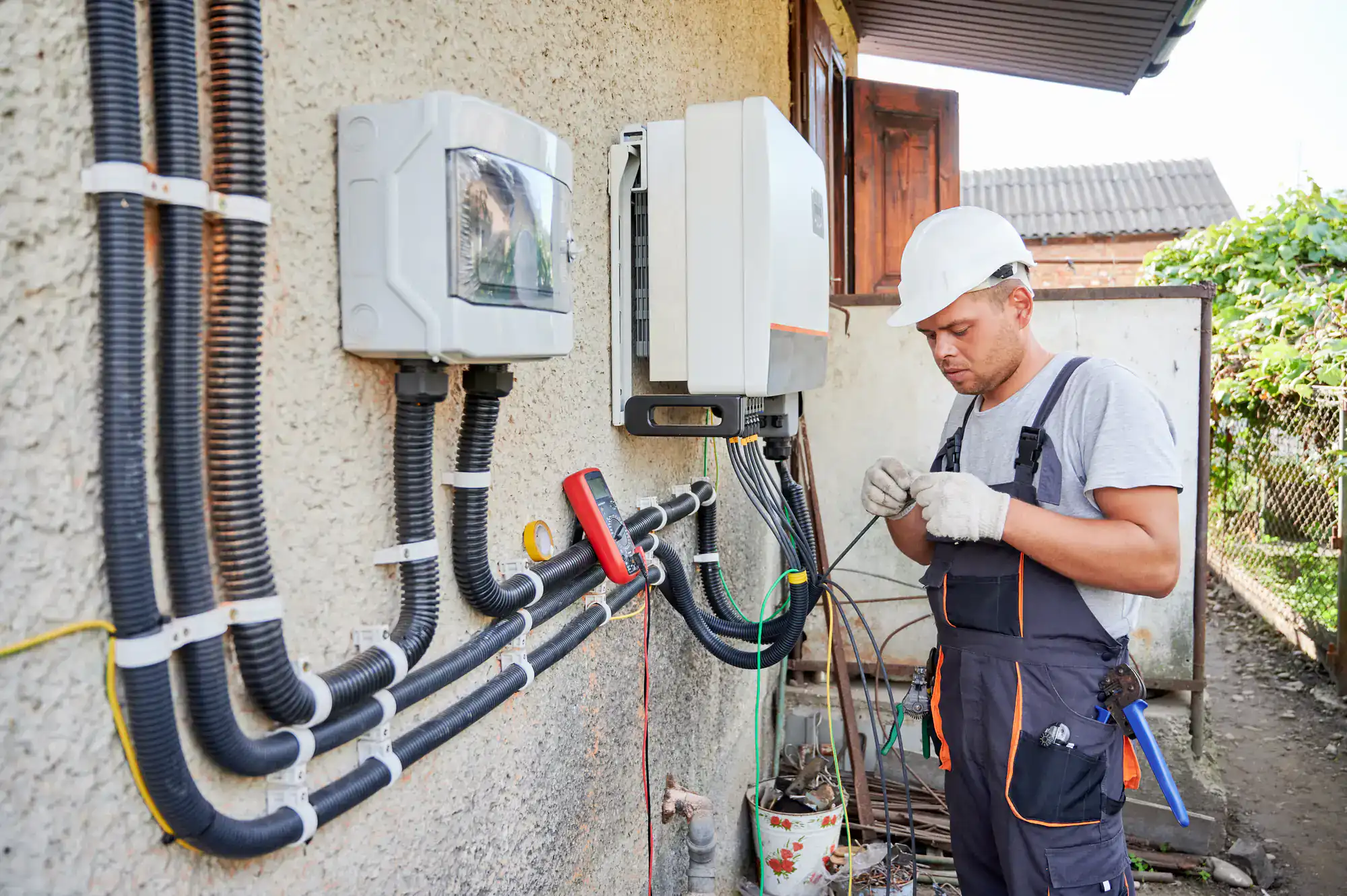
The International Association of Electrical Inspectors is the professional organization for the people who inspect electrical work. Membership isn’t a marketing badge — it’s a commitment to ongoing education, peer accountability, and staying current on the evolving code standards that govern electrical installations across Rhode Island.
For commercial property owners in Providence County, this matters for a practical reason: the inspectors who will evaluate your contractor’s work are operating under the same standards that IAEI membership requires its members to know. When your contractor is also an IAEI member, the gap between what gets installed and what passes inspection tends to be much smaller. They’re not guessing at what an inspector wants to see. They know, because they’re part of the same professional community.
Rhode Island’s commercial building stock adds another layer of complexity here. Providence County has a significant concentration of older buildings — some of them well over a century old — with electrical infrastructure that reflects the code standards of their era, not today’s. When a tenant fit-out, a panel upgrade, or a new commercial installation happens in a building like that, the work has to be designed and executed with an understanding of how the existing system interacts with the new installation. That requires a level of code fluency that goes beyond simply knowing how to run conduit. It requires understanding what an inspector is going to look for when they walk in, and making sure the work is already there when they do.
We’re also fully compliant with the NFPA Certification Code of Ethics, which covers professional conduct, safety standards, and code compliance. That’s not a credential most contractors mention, because most contractors don’t think about their work in those terms. We do, because the buildings we work in — and the people who use them — depend on it.
Rhode Island makes this reasonably straightforward, and you should use the tools available to you. The Rhode Island Department of Labor and Training maintains licensing records for all certified electricians in the state. Any contractor operating legally in Rhode Island is required to display their license number on their advertisements, their contracts, their bids, and any applicable permits. If a contractor can’t provide a license number, or if the number they provide doesn’t match an active Certificate A in the DLT’s records, that’s a clear signal to walk away.
Beyond the license itself, there are a few other things worth confirming before you sign a contract. Ask specifically whether all of the workers who will be on your property are licensed under Rhode Island law — not just the contractor of record. Ask whether permits will be pulled for the work and who is responsible for scheduling and passing the inspection. Ask for a Certificate of Insurance, not just a verbal assurance that the contractor is insured. A legitimate contractor will have no hesitation providing documentation for any of these.
For commercial projects in Providence County — whether that’s a panel upgrade in a Cranston office building, a tenant fit-out in a Providence mixed-use property, a parking lot lighting repair in Pawtucket, or an EV charging installation at a North Providence business — the stakes of getting this wrong are real. Rhode Island Energy offers commercial installation incentives covering up to 100% of EV charging installation costs, but only a licensed contractor who understands the rebate application process can navigate that for you. An unlicensed contractor can’t legally participate in those programs at all.
At Lightning Electric, we carry full liability and workers’ compensation coverage, and we provide a Certificate of Insurance upon request. Every electrician we send to your property is licensed under Rhode Island law. We’ve been doing this work in Rhode Island for over 30 years, and we understand the specific regulatory environment, the older building stock, and the inspection standards that commercial work in this state requires. If you want to verify our credentials before we talk, you can — and we’d expect you to.
Rhode Island has clear laws about who can perform commercial electrical work, what credentials they need to hold, and what happens when those requirements aren’t met. Most property owners don’t know the details until something goes wrong — and by then, the options are more expensive and more complicated than they needed to be.
The short version: verify the license, confirm every worker on-site is licensed, make sure permits are being pulled, and get a Certificate of Insurance before anyone starts. Those four steps won’t guarantee a perfect project, but they’ll eliminate most of the ways a commercial electrical job goes sideways in Rhode Island.
If you’re evaluating contractors for a commercial project in Providence County and want to talk through what the work actually involves, Lightning Electric is here. We’ll give you a straight answer, a project-specific quote, and documentation of every credential we’ve mentioned here.
Summary:
Article details:
Share: