

For over 30 years, we’ve powered Rhode Island with expert electrical services delivered with a personal touch. Discover our story and commitment to quality.
Contact Info
- List Item
For over 30 years, we’ve powered Rhode Island with expert electrical services delivered with a personal touch. Discover our story and commitment to quality.
Contact Info
A knob and tube rewire isn't as mysterious as it sounds. Here's what the process looks like from the first inspection to the final sign-off in your Providence County home.
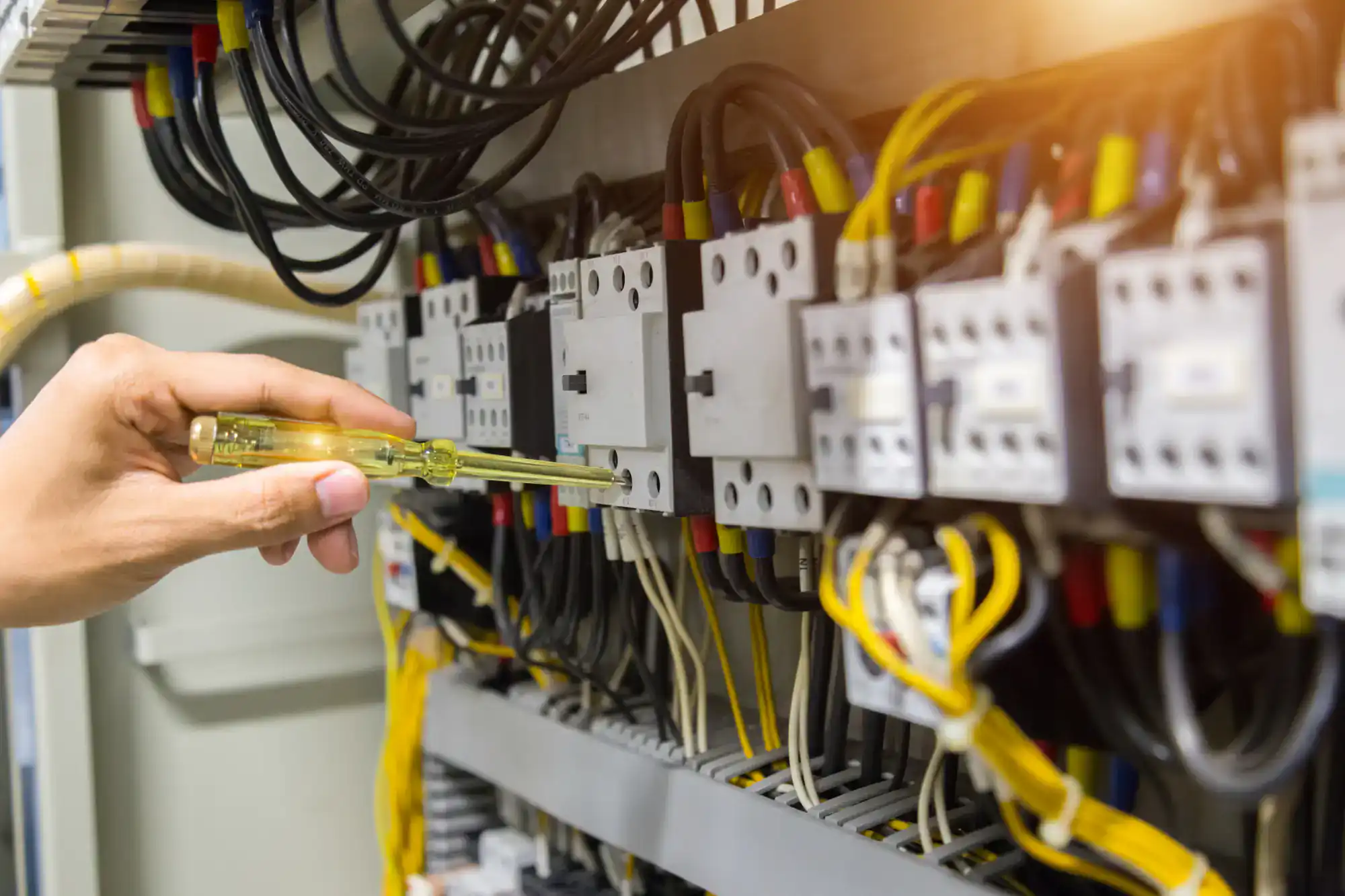
Most homeowners don’t go looking for information about knob and tube wiring. Something forces the conversation — an insurance notice, a home inspection report, or an insulation contractor who won’t touch the attic until the old wiring is gone. Suddenly you’re researching a project you didn’t plan for, trying to figure out what it actually involves and whether the price tag is justified.
This isn’t a scare piece about fire hazards. You already know the wiring is old. What you probably want to know is what a rewire actually looks like from start to finish — and whether there’s a smarter or cheaper way to handle it.
The danger with knob and tube wiring isn’t really about the system itself — it’s about what’s happened to it over the decades. When it was installed, it was designed to dissipate heat through open air inside wall cavities and attic spaces. That’s how the system worked.
The problem is that most homes in Providence County with original knob and tube wiring have also been renovated, insulated, and modified many times since then — and almost none of those changes accounted for how the old wiring was supposed to function.
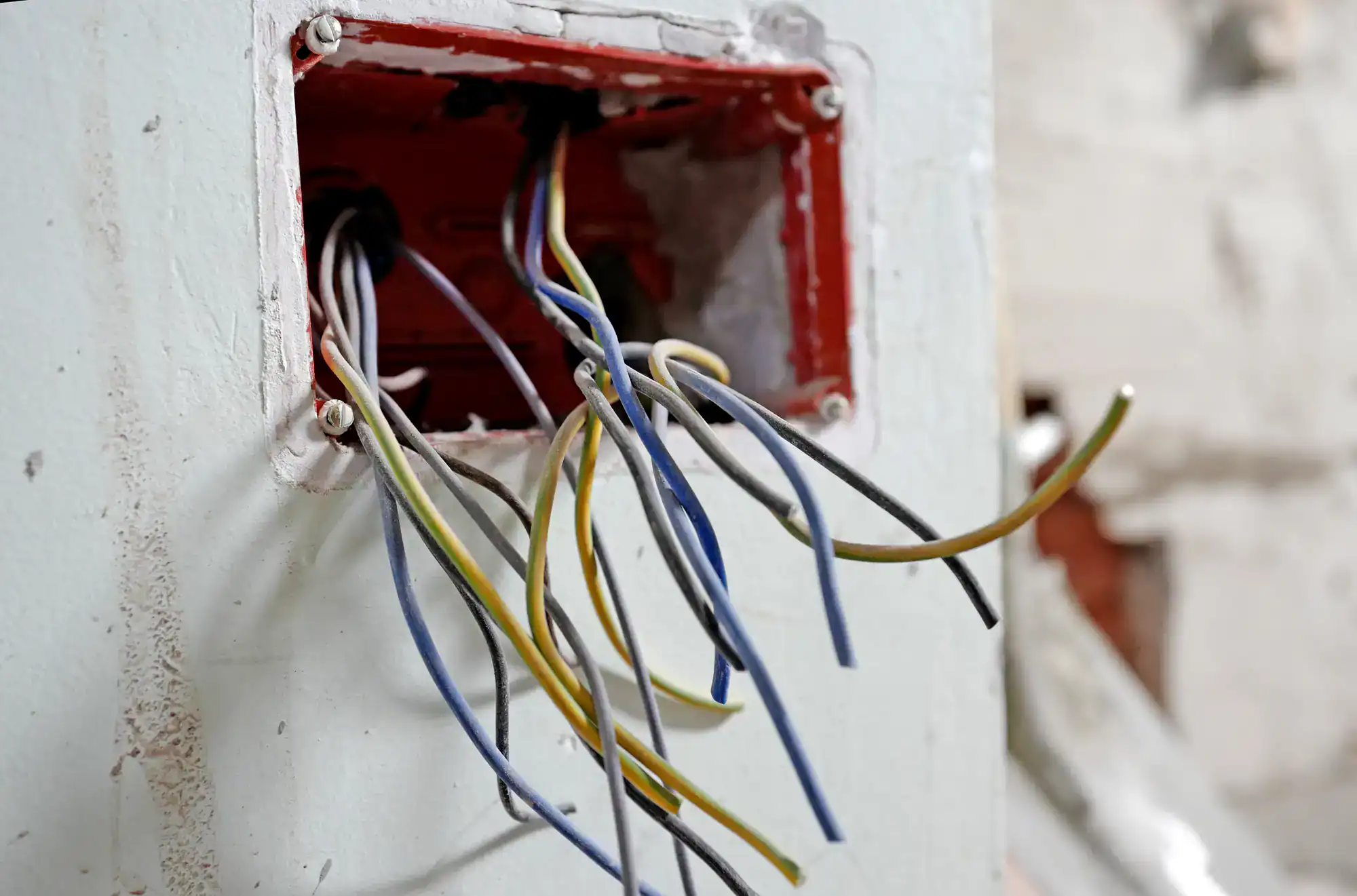
There are three specific conditions that turn old wiring into a real hazard. First, the original cloth-and-rubber insulation on the conductors breaks down over time — it cracks, it flakes, and eventually it exposes bare copper wire inside your walls. Second, blown-in or rolled insulation added during energy upgrades buries the wires and traps heat the system was designed to release. Third, decades of amateur modifications — spliced circuits, added outlets, Romex connected directly to old conductors — create hot spots and poor connections that no one can see.
Any one of those conditions is a problem. In a Providence County home built before 1940, you’re likely dealing with all three.

When an insurance company or an electrician asks whether your home has “active” knob and tube wiring, they’re asking a specific question: are those old circuits still energized and in use? Not all knob and tube wiring found in a home is still live. In some cases, previous owners had portions of the system abandoned in place — the wires are still there, but they’re no longer connected to anything carrying current. Dead runs are a different situation than active ones.
Active knob and tube wiring is what insurers care about. It’s what the National Electrical Code addresses in Article 394. And it’s what creates the fire risk, because live conductors that are deteriorating, buried under insulation, or poorly spliced are the ones that can arc, overheat, or ignite surrounding materials.
This distinction also matters during the inspection phase of a rewire. A thorough electrician won’t just look at what’s visible — they’ll map which circuits are still carrying current and which have been decommissioned. That mapping process is what separates a complete, well-scoped rewire from one that leaves live wiring behind because no one bothered to check.
In Providence County’s older multi-family homes — the triple-deckers in Federal Hill, the older two-families in Elmhurst and Mount Pleasant — this mapping step is especially important. Decades of patchwork modifications mean the wiring layout rarely matches what anyone would expect. If an electrician skips the inspection phase and goes straight to pulling wire, that’s a red flag. You want someone who can tell you exactly what’s live, where it runs, and what the full scope of replacement looks like before any work begins.
Here’s something that catches a lot of Providence County homeowners off guard. They’re planning to add attic insulation — a completely reasonable response to Rhode Island’s high energy costs and cold winters — and the insulation contractor tells them they can’t do the job until the knob and tube wiring is removed. It feels like an obstacle. It’s actually the law.
NEC Article 394.12 is direct about this: concealed knob and tube wiring relies on free air circulation inside wall cavities and attic spaces to dissipate heat. When you fill those spaces with blown-in, foamed-in, or rolled insulation, you eliminate the heat dissipation the system depends on. The result is elevated conductor temperature, which accelerates insulation breakdown and raises the risk of ignition. Insulation contractors who won’t work around active knob and tube wiring aren’t being overly cautious — they’re following code.
This means that for many homeowners, the knob and tube rewire isn’t just a safety project. It’s the prerequisite for an energy efficiency project you were already planning. When you look at the cost of a rewire alongside the long-term savings from proper attic insulation — especially with Rhode Island’s electricity rates running nearly 50% above the national average — the math looks different than it does when you’re only thinking about the wiring.
The sequence is always the same: rewire first, then insulate. There’s no way to do it in the other order without creating the exact hazard you’re trying to avoid.
Want live answers?
Connect with a Lightning Electric expert for fast, friendly support.
A full knob and tube rewire is a significant project, but it’s not the chaotic, wall-demolishing ordeal some homeowners imagine. When it’s done by an experienced crew using the right techniques, the process is methodical and far less disruptive than most people expect.
The project moves through distinct phases: a thorough inspection to map the existing system, the actual rewiring work, a panel assessment and upgrade if needed, permitting and code inspection, and finally the documentation your insurance company needs to reinstate or approve your coverage. Each phase matters. Skipping or rushing any of them creates problems down the road.

This is the question almost every homeowner asks at some point, usually after seeing the estimate for a full rewire. The logic makes sense on the surface: if the old wiring is still intact in some areas, why not just connect new Romex to it and call it done?
The honest answer is that splicing new wire to old knob and tube is technically possible in limited circumstances, but it almost never produces a result that actually solves the problem. Knob and tube wiring has no ground wire. Splicing modern cable to an ungrounded system doesn’t add a ground — it just extends an ungrounded circuit with newer materials. Your outlets still won’t be properly grounded. Your insurance company still won’t be satisfied. And the NEC creates additional complications around bonding when you try to attach a new equipment grounding conductor to an old two-wire system.
There’s also the scope problem. If you splice new wire to old in the kitchen, you’ve addressed one room. The deteriorating conductors in the walls of every other room are still there, still aging, still potentially buried under insulation. A partial fix gives you the cost of doing the work twice — once now for the splice, and again later when you have to finish the job properly.
What about partial rewiring — replacing only the worst circuits rather than everything at once? That’s a more legitimate conversation, and in some cases it makes sense as a phased approach. But it requires an honest assessment of which circuits are actually at risk and a clear agreement with your electrician about what scope of work is being done. Vague estimates lead to incomplete jobs. Get the scope in writing, in detail, before any work starts.
Most of the knob and tube wiring in a Providence County home isn’t visible. It runs inside wall cavities, through ceiling joists, and across attic spaces — which is exactly what the code means when it refers to “concealed” knob and tube wiring. This is the configuration Article 394 governs, and it’s the most common and most consequential type to deal with.
The challenge with concealed wiring is access. Traditional rewiring methods often require opening walls to trace and remove old conductors, which is a real problem in homes with original horsehair plaster. Once you start cutting into that material, you’re looking at significant repair work — and in the historic neighborhoods of Providence’s East Side, College Hill, and Fox Point, that original plaster is often worth preserving.
We use specialized camera technology to access and remove old wiring through outlets, without opening the walls. The camera lets us see what’s happening inside the wall cavity — which means we can identify problems that a traditional approach would miss unless everything was torn open. Your horsehair plaster stays intact. The work gets done more thoroughly, not less.
When it’s finished, we pull the permit, pass the inspection, and provide you with a Certificate of Insurance — the documentation your insurer needs to reinstate your coverage or approve a new policy. That last part is worth emphasizing. The permit and the inspection aren’t just bureaucratic steps. They’re the paper trail that proves the work was done to code by licensed electricians. For a homeowner facing an insurance deadline — and in Providence County, those deadlines are real, often 30 to 60 days — that documentation is the actual deliverable.
Every electrician we send to your home is a Rhode Island-licensed Master Electrician. No unlicensed helpers, no subcontractors. Rhode Island Master Electrician licensing requires 8,000 hours of hands-on experience, and our team is also Electrical Inspector Certified — meaning we understand the code from the inspection side, not just the installation side. That matters when your work needs to pass a municipal inspection.
If you’ve made it this far, you probably have a clearer picture of what a knob and tube rewire actually involves — and why the process matters as much as the outcome. The inspection phase isn’t optional. The permit isn’t a formality. And the splice-and-save approach almost never gets you where you need to go.
Providence County has some of the oldest housing stock in the country. More than half the homes in Providence were built before 1939. That’s not a liability — it’s a neighborhood full of well-built, character-rich houses that deserve to be wired properly. The rewire cost in Rhode Island typically ranges from $12,000 to $36,000 depending on the size of the home, and financing is available through Synchrony Bank for homeowners who need it.
If you’re ready to get a real assessment of what your home needs, Lightning Electric is based right here in Riverside and has been doing this work in Rhode Island for over 30 years. We’re ready to take a look.
Summary:

Share: