
For over 30 years, we’ve powered Rhode Island with expert electrical services delivered with a personal touch. Discover our story and commitment to quality.
Contact Info
- List Item
For over 30 years, we’ve powered Rhode Island with expert electrical services delivered with a personal touch. Discover our story and commitment to quality.
Contact Info
Not sure how to find a trustworthy licensed electrician in Rhode Island? This guide covers what to look for, what questions to ask, and what to watch out for.

Most people do not think about their electrical system until something goes wrong. A breaker that keeps tripping. An outlet that feels warm to the touch. A letter from your insurance company giving you 30 to 60 days to fix your knob and tube wiring, or lose your coverage. Whatever brought you here, you are in the right place. Rhode Island’s housing stock is among the oldest in the country, and the electrical challenges that come with it are real. This guide is designed to help you hire the right licensed electrician the first time, free from guesswork, runarounds, and regret.
Rhode Island has its own licensing system, and it does not accept licenses from any other state. That means if someone is doing electrical work in Rhode Island, they need to be licensed specifically here with zero exceptions. The Rhode Island Department of Labor and Training maintains an online lookup tool at dltweb.dlt.ri.gov where you can verify any electrician’s license before they ever walk through your door. It takes about 30 seconds and can save you a serious headache down the road.
Beyond the license itself, you want to confirm they carry liability insurance and workers’ compensation. If an uninsured electrician gets hurt on your property, you could be the one on the hook. Ask for a certificate of insurance before any work begins. A reputable contractor will have it ready without hesitation.

This is one of the most common questions homeowners ask, and it matters more than most people realize. In Rhode Island, a journeyman electrician, officially called a Class A Journeyperson, has completed at least four years and 8,000 hours of documented apprentice-level work under a licensed electrician, plus passed the state’s journeyman exam. That is a meaningful credential on its own.
A Master Electrician has gone further. To reach that level in Rhode Island, an electrician needs a minimum of six years of total experience, including at least two years working as a licensed journeyman, plus passing the Rhode Island electrical contractor exam. A Master Electrician is also the license required to run an electrical contracting business and pull permits in Rhode Island. When you hire a master electrician, you are hiring someone who has earned the highest working credential the state offers.
There is also a distinction worth knowing: some electricians hold an Electrical Inspector Certification on top of their master license. That combination signals a level of code knowledge that goes beyond what is required to simply do the work. It is the kind of expertise that understands not just how to wire something, but if it will pass inspection and why. For homeowners in Providence’s East Side, the triple-deckers of Pawtucket, or the pre-Civil War homes in Bristol, that level of knowledge is not a luxury. It is genuinely useful when your home’s electrical history is complicated.
Journeyman electricians in Rhode Island are also required to complete 15 hours of continuing education every two years to keep their license active. That ongoing education requirement exists because electrical codes evolve, meaning the electrician walking into your home should know what the current standards truly are, rather than just what they were when they first got licensed.
The right questions can tell you a lot about who you are dealing with before any work starts. The first thing to ask is straightforward: can you provide your Rhode Island license number so I can verify it? A licensed electrician will answer that without hesitation. If someone deflects, changes the subject, or tells you it is not necessary, that is your answer.
Ask if they will pull a permit for the work. Many homeowners do not realize that a wide range of electrical jobs, such as adding a circuit, upgrading a panel, or changing a service entrance, require a permit in Rhode Island. Work done without a required permit can create problems when you go to sell your home, void your homeowner’s insurance, or leave you personally liable if something goes wrong. A contractor who suggests skipping the permit to save time or money is not doing you a favor.
Ask for a written, itemized estimate before anything begins. Not a ballpark. Not a verbal agreement. A written scope of work with a clear breakdown of what is included. This protects both of you and eliminates the most common source of disputes between homeowners and contractors.
It is also worth asking how long they have been working in Rhode Island specifically. The state’s housing stock, particularly the density of pre-1950 homes in Providence, Cranston, East Providence, and Pawtucket, creates electrical conditions that are genuinely different from newer construction. Experience in Rhode Island homes means experience with the specific challenges those homes present: knob and tube wiring, undersized panels, aluminum branch wiring, and horsehair plaster walls that complicate rewiring work. That local context matters.
Finally, ask how they handle unexpected findings. In an older home, it is not unusual for an electrician to open a panel or access a junction box and discover something that was not visible from the outside. A good contractor will explain what they found, what it means, and what the options are before proceeding and before charging you for anything additional.
Want live answers?
Connect with a Lightning Electric expert for fast, friendly support.
If you own a home built before 1950 in Rhode Island, there is a real chance it still has knob and tube wiring, alongside an increasing chance your insurance company already knows it. Major carriers across New England have been flagging knob and tube systems during policy renewals and new applications, and the result is often a letter giving homeowners a tight deadline to remove it or face cancellation.
Knob and tube wiring is not inherently dangerous because it is old. It is a problem because it lacks grounding, it cannot safely handle modern electrical loads, and decades of insulation being piled on top of it in attics, wall cavities, and ceiling spaces creates conditions that significantly raise fire risk.
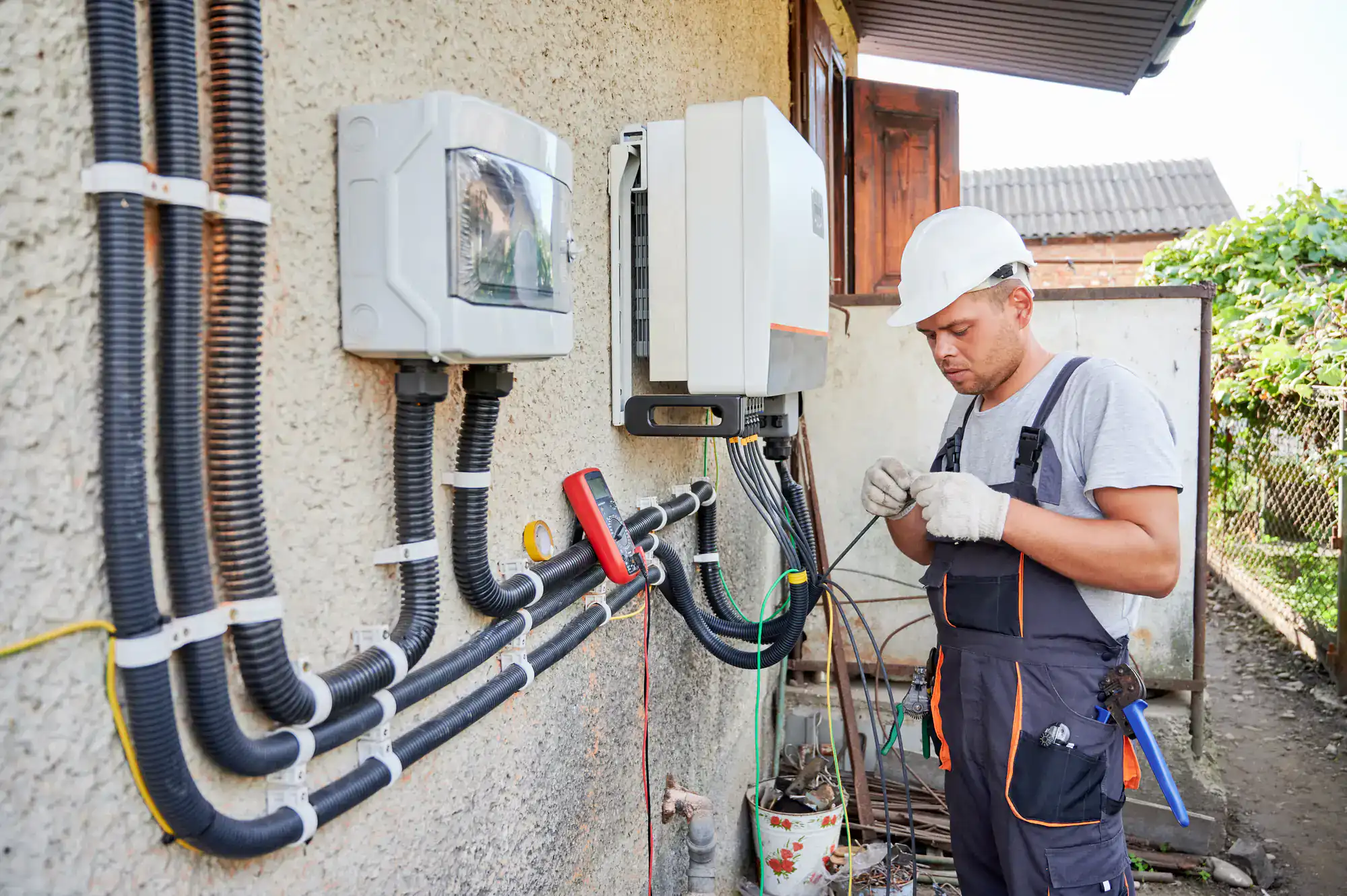
This is the question most Rhode Island homeowners are afraid to ask because they assume the answer is no. The standard industry approach to knob and tube removal involves cutting into walls, sometimes extensively, to locate and replace the old wiring. In a home with horsehair plaster, which is common throughout Providence’s East Side, Bristol’s historic district, and older neighborhoods across Pawtucket and East Providence, wall damage during rewiring can mean a separate, significant repair bill just to restore the surfaces.
We use a specialized camera system that goes through existing outlets to inspect, locate, and remove knob and tube wiring without opening walls. The horsehair plaster stays intact. Your home does not turn into a construction site. And when the work is done, you have documentation your insurer will accept, which is the whole point.
This approach is not common in the Rhode Island market. Most electricians will tell you that wall access is unavoidable. For us, it is a last resort, not a starting point. That distinction matters enormously to homeowners who have spent years maintaining a historic home and do not want to undo that work just to satisfy an insurance requirement.
If you have received a letter from your insurer giving you 30 to 60 days to remove knob and tube wiring, the timeline feels urgent because it is. But the solution does not have to be as disruptive as you have probably been told. The key is finding an electrician who has both the equipment and the experience to do the job without unnecessary damage, combined with an understanding of what the insurer truly needs to see in order to reinstate or maintain your coverage.
Quite possibly, yes, and it is worth understanding why. The average American home was designed and wired for 100-amp electrical service. That was considered adequate for decades. But modern homes run HVAC systems, electric vehicle chargers, home offices, dishwashers, washing machines, and multiple refrigerators simultaneously. A 100-amp panel was not built for that, and neither were the panels in most Rhode Island homes built before 1970.
The symptoms are familiar to a lot of homeowners: breakers that trip when you run two appliances at the same time, lights that flicker or dim when the air conditioner kicks on, outlets that do not hold plugs securely, or a panel that feels warm to the touch. These are not just annoyances. They are signs that your electrical system is working harder than it was designed to.
A 200-amp panel upgrade gives your home the capacity to handle modern electrical demands safely. It also matters when you are selling. Rhode Island’s real estate market is active, and electrical issues flagged during a home inspection, such as undersized panels, double-tapped breakers, or Federal Pacific and Zinsco panels, are among the most common reasons deals get complicated. Addressing them proactively puts you in a much better position.
It is also worth knowing that certain Rhode Island programs, including the state’s RISE energy efficiency initiative, require a licensed electrical contractor to sign off before they will work in your home. If you are planning any energy upgrades like insulation, heat pumps, or weatherization, getting your electrical system assessed at the same time makes practical sense. The inspection is part of the process regardless, and combining it with any needed upgrades saves time and scheduling headaches.
We have been doing panel upgrades, service changes, and full rewiring projects across Rhode Island for over 30 years across the triple-deckers of Pawtucket, the colonials of Bristol, the Victorians on Providence’s East Side, and everything in between. The combination of old housing and modern demand is something we understand at a level that goes beyond the general.
Hiring the right electrician comes down to a few things that are not complicated once you know what to look for: a verifiable Rhode Island license, proof of insurance, written estimates, and someone with real experience in homes like yours. In a state where so much of the housing stock predates modern wiring standards, those basics matter more than they might anywhere else.
If you are dealing with knob and tube wiring, an aging panel, a generator question, or something that just does not feel right about your electrical system, the worst move is waiting. Most electrical problems do not resolve themselves; instead, they develop further.
Lightning Electric has been working in Rhode Island homes and businesses since 2003, with over 30 years of combined experience behind the team. If you are ready to get a straight answer and a written estimate from a licensed master electrician who knows this state’s homes, reach out to us directly. We will tell you plainly what you are dealing with and what it takes to fix it right.
Summary:
Article details:
Share: