

For over 30 years, we’ve powered Rhode Island with expert electrical services delivered with a personal touch. Discover our story and commitment to quality.
Contact Info
- List Item
For over 30 years, we’ve powered Rhode Island with expert electrical services delivered with a personal touch. Discover our story and commitment to quality.
Contact Info
If your insurance company found knob and tube wiring in your Riverside home, you're not alone. Discover what removal actually costs, how long it takes, and what Rhode Island code requires.
Your insurance company sent a letter. They found knob and tube wiring during the inspection, and now you have 30 days to fix it or they’re dropping your coverage. Or maybe you’re trying to sell your Riverside home and the buyer’s inspector flagged the old wiring as a deal-breaker. Either way, you need answers that actually help.
This isn’t about scaring you with what could go wrong. It’s about understanding what knob and tube wiring removal actually involves, what it costs in Rhode Island right now, and how long you’ll be dealing with electricians in your house. By the end, you’ll know exactly what to expect and what questions to ask before anyone touches a wire.
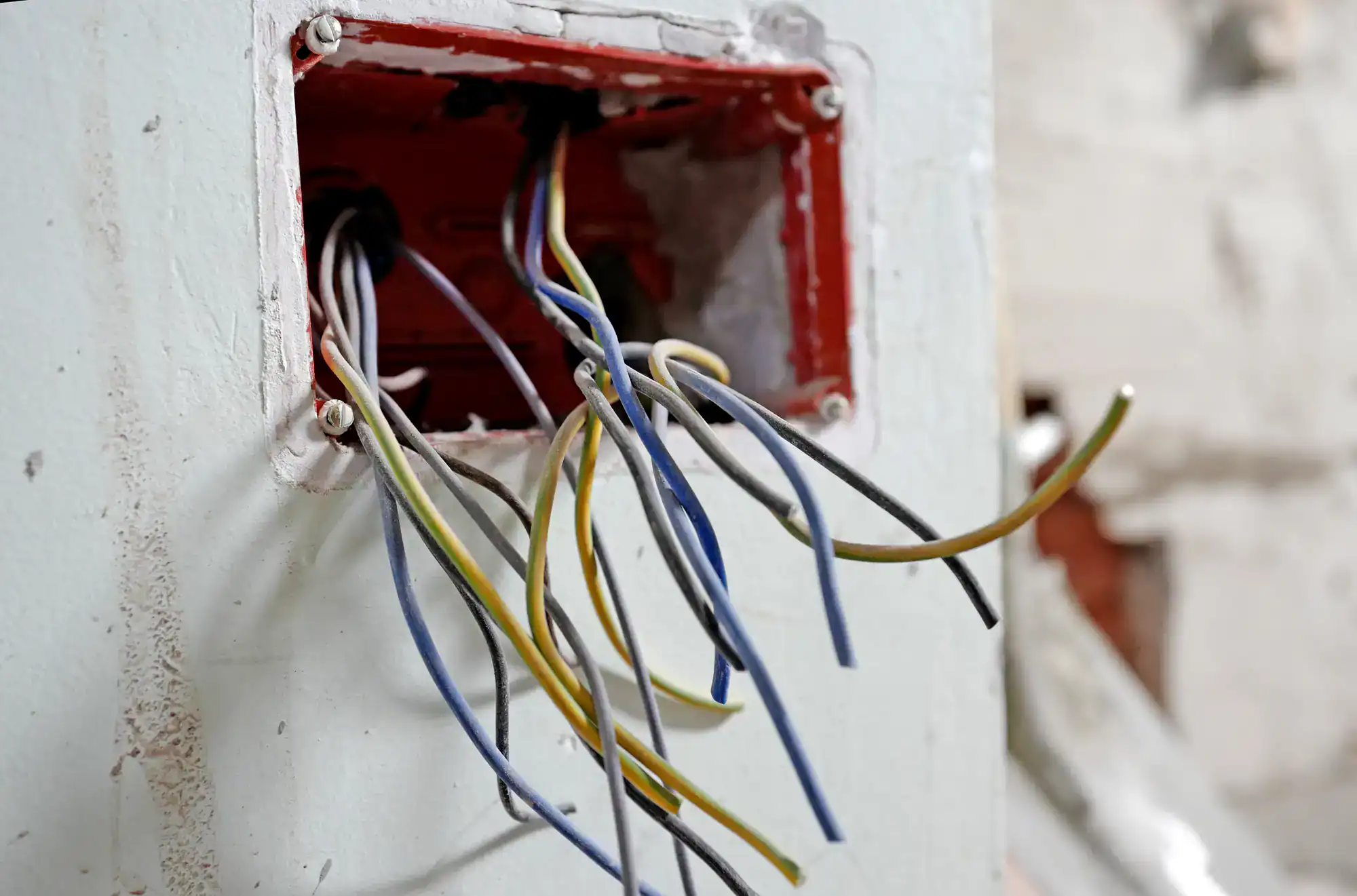
Knob and tube wiring is the original electrical system installed in homes built between the 1880s and 1940s. If your Riverside house was built before 1950, there’s a decent chance you have it somewhere. The system uses ceramic knobs to hold wires in place and ceramic tubes to protect them where they pass through wood framing. The wires themselves are wrapped in cloth or rubber insulation.
Here’s the thing. When it was installed, it worked fine for what people needed back then. A few lights, maybe a radio, an icebox. But that cloth insulation is now 80 to 100 years old, and it’s breaking down. The rubber cracks. The fabric deteriorates. What you end up with are exposed live wires sitting inside your walls.
The bigger issue is that knob and tube wiring has no ground wire. Modern electrical systems have three wires: hot, neutral, and ground. The ground wire is your safety net when something goes wrong. Without it, you’re at higher risk for electrical shock and fire. Your electronics aren’t protected from surges. And insurance companies in Rhode Island know all of this, which is why they won’t cover homes with active knob and tube wiring anymore.

Insurance companies aren’t trying to make your life difficult. They’re looking at the numbers, and the numbers say knob and tube wiring is a liability they won’t take on. The system wasn’t designed to handle the electrical load of a modern home. You’re running computers, televisions, microwaves, air conditioning, phone chargers, and a dozen other devices on wiring that was meant for a couple of light bulbs.
When you overload knob and tube wiring, it heats up. Add in deteriorating insulation and you’ve got a fire waiting to happen. Rhode Island insurance companies see this risk, and most of them have decided they simply won’t cover it. Some will give you 30 to 60 days to remove it completely. Others won’t even offer you a policy in the first place.
Here’s where homeowners sometimes get tripped up. Partial removal doesn’t count. If 90 percent of your home is updated but there’s still active knob and tube wiring in one room, your insurance company won’t cover you. They need documentation that all of it has been removed and replaced with modern, grounded wiring. If you ever have a fire and they find out you had undisclosed knob and tube wiring, they can deny your entire claim.
This isn’t just about getting a piece of paper from your electrician. It’s about making sure your home is actually safe and that you’re not risking everything you’ve built because of wiring that’s been behind your walls since before World War II. The insurance requirement is frustrating, yes. But it’s also pushing you toward something that genuinely protects your family and your investment.
The original knob and tube installations were often done well. Skilled electricians installed them carefully, and the porcelain components can last indefinitely. The problem isn’t the knobs and tubes. It’s everything else that’s happened in the last century.
First, the insulation breaks down. Cloth and rubber weren’t meant to last 100 years. They become brittle, crack, and fall off entirely in some places. Now you have bare copper wires running through your walls and attic. Any contact with wood, insulation, or other materials becomes a fire hazard.
Second, modifications pile up over time. Over the decades, homeowners and handymen have spliced into knob and tube wiring to add outlets, run new circuits, or connect modern fixtures. Most of these modifications weren’t done to code. You end up with unsafe connections, overloaded circuits, and wiring that’s been patched together in ways that inspectors would never approve today.
Third, insulation creates a new problem. Knob and tube wiring was designed to dissipate heat into open air. When homeowners added insulation to their attics and walls to save on energy costs, they covered the wiring. Now the heat can’t escape. The wires get hotter, the insulation around them deteriorates faster, and the fire risk goes up significantly.
Fourth, electrical load exceeds capacity. A home in 1920 might have used 30 amps total. Your home today probably needs 100 to 200 amps to run everything safely. Knob and tube systems top out around 60 amps. When you plug in your laptop, turn on the microwave, and run the dishwasher at the same time, you’re asking that old wiring to do something it was never built to handle. The wires heat up. Connections loosen. You’re creating conditions for electrical failure.
None of this means your house is going to burn down tomorrow. But it does mean you’re running on borrowed time with a system that gets less safe every year it stays in place.
Want live answers?
Connect with a Lightning Electric expert for fast, friendly support.
The question everyone asks first is how much this is going to cost. For most Riverside homeowners, complete knob and tube wiring removal runs between $12,000 and $36,000. That’s a wide range because every house is different.
If you’ve got a 1,200 square foot bungalow with an accessible attic and basement, you’re looking at the lower end. If you’ve got a larger home, plaster walls, limited access, or need a panel upgrade on top of the rewiring, you’re moving toward the higher end. The cost depends on how much wiring needs to be replaced, how easy it is to access, and what additional work your electrical system needs to meet current Rhode Island code.
Electricians typically charge per opening, which means each outlet, switch, or light fixture. You might see quotes anywhere from $100 to $350 per opening depending on complexity. Labor runs $50 to $100 per hour in Rhode Island. The timeline matters too, because the longer the job takes, the more you’re paying in labor.

The size of your home is the biggest factor. More square footage means more wiring to replace. A 1,500 square foot home takes less time and materials than a 3,000 square foot home. But size isn’t everything.
Accessibility is huge. If we can access the wiring through an unfinished basement or open attic, the job goes faster and costs less. We can fish new wires through walls without cutting into them. But if your basement is finished, your attic is packed with storage, or you have plaster walls that are difficult to work with, we need to make more access holes. That means more labor, more time, and more drywall repair when we’re done.
Your electrical panel might need an upgrade. Many homes with knob and tube wiring still have 60-amp panels. Modern homes need at least 100 amps, and 200 amps is becoming standard. If your panel is outdated, you’re adding $900 to $2,000 to the total cost for a panel upgrade. But you need it. There’s no point in running modern wiring to an old panel that can’t handle the load.
Permits and inspections add to the cost, but they’re not optional. Rhode Island requires permits for this kind of work, and we pull them and schedule inspections as part of the process. That’s how you get the documentation your insurance company needs. It’s also how you know the work was done to code.
Wall and ceiling repairs can add up if your home requires a lot of access holes. Some electricians include basic patching in their quote. Others charge separately for drywall work. Ask upfront what’s included and what isn’t so you’re not surprised when the bill comes.
Additional electrical work can be bundled in while we’re already running new wiring. If you’ve been thinking about adding outlets, installing recessed lighting, or upgrading to GFCI outlets in your kitchen and bathrooms, doing it during knob and tube removal can save money overall. You’re already paying for labor and access. Adding a few extra items while the walls are open makes sense.
Most complete knob and tube wiring removal projects in Riverside take one to three weeks. The timeline depends on the same factors that affect cost: the size of your home, how much wiring needs to be replaced, and how accessible everything is.
A small home with straightforward access might be done in a week. A larger home with plaster walls, finished spaces, and complicated wiring routes could take closer to three weeks or a bit longer. We can typically replace six to eight points (outlets, switches, lights, circuits) per day. If your home has 50 points that need replacing, you’re looking at roughly a week to a week and a half of actual work, plus time for inspections and any necessary repairs.
You won’t be without power the entire time. We can keep most of your home powered while we work. We’ll cap off the knob and tube circuits we’re replacing and turn them back on at the end of each day if possible. There might be a few hours here and there when certain rooms are without power, but you’re not sitting in the dark for two weeks.
The process usually goes like this. First, we inspect your entire electrical system to map out where the knob and tube wiring runs. We need to know what we’re dealing with before we start pulling wires. Next, we plan the routes for the new wiring. We’re looking for the cleanest paths that minimize wall damage. Then we pull permits and start the actual work: removing old wiring, running new grounded circuits, installing new outlets and switches, and connecting everything to your panel. Finally, the work gets inspected, you get your certificate, and you can send that documentation to your insurance company.
You can usually stay in your home during the work. We use plastic coverings and vacuums to control dust. We’ll clean up at the end of each day. It’s disruptive, but it’s not a situation where you need to move out for a month. You’re living around the work, not evacuating because of it.
If you’re dealing with knob and tube wiring in your Riverside home, the first step is getting a clear assessment from a licensed electrician. You need to know exactly how much wiring needs to be replaced, what the cost will be, and how long the project will take. Don’t wait until your insurance company gives you a deadline or a buyer walks away from your home sale.
Knob and tube wiring removal isn’t cheap, but it’s an investment in safety and in your home’s value. You’re eliminating fire risk, protecting your family, and making your home insurable and sellable. You’re also bringing your electrical system up to modern standards so you can actually use your appliances without worrying about overloading circuits that were installed when people still used iceboxes.
Choose an electrician who has experience with older Rhode Island homes and who understands how to minimize wall damage during the process. Ask for references, make sure they’re licensed and insured, and get everything in writing before work starts. When the job is done, you’ll have a Certificate of Insurance, peace of mind, and a home that’s finally ready for the 21st century. If you’re ready to move forward, we can help you get it done right.
Summary:

Article details:
Share: