
For over 30 years, we’ve powered Rhode Island with expert electrical services delivered with a personal touch. Discover our story and commitment to quality.
Contact Info
- List Item
For over 30 years, we’ve powered Rhode Island with expert electrical services delivered with a personal touch. Discover our story and commitment to quality.
Contact Info
Most Riverside homes built before 1950 still have knob and tube wiring. Here's why 2026 renovations start with electrical upgrades that protect your insurance, safety, and investment.
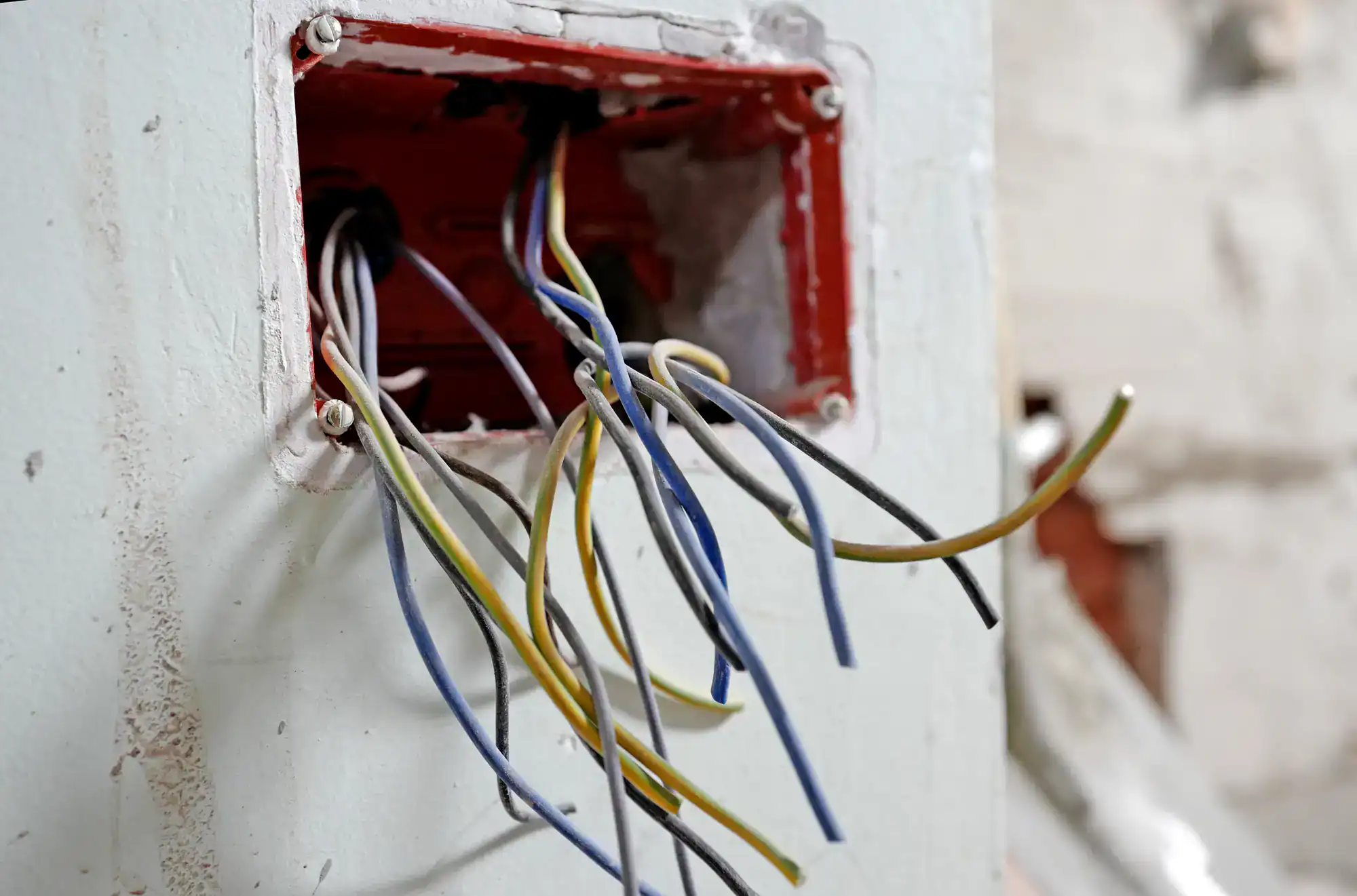
If you’re planning a renovation in Riverside this year, there’s something behind your walls that could stop the project before it starts. Homes built before 1950 often have knob and tube wiring—a system that insurance companies won’t cover, contractors can’t work around, and modern appliances can’t safely use. You might not see it, but it’s there. And in 2026, with electrical demands higher than ever, addressing it isn’t just smart—it’s necessary. Here’s what you need to know before you start tearing down walls or upgrading your kitchen.
Knob and tube wiring is exactly what it sounds like. Ceramic knobs hold individual wires in place. Ceramic tubes protect those wires where they pass through wooden framing. It was installed in homes from the 1880s through the 1940s, and plenty of Riverside properties still have it.
The median home in Riverside was built in 1962. But nearly 20% were constructed before 1940, and another 7% went up by 1949. That means a significant portion of the neighborhood is sitting on electrical systems that are 75 to 100 years old.
The wiring itself isn’t inherently broken. The problem is what happens over time. Insulation deteriorates. Modifications get made by people who didn’t know what they were doing. And the system was never designed to handle what you’re asking it to do in 2026.

The insulation around knob and tube wires is usually rubberized cloth or fabric. After decades in an attic or behind a wall, that material gets brittle. It cracks. It falls off. What you’re left with is exposed copper wire running through your home with nothing protecting it from wood, insulation, or anything else it touches.
That’s a fire hazard. But it’s not the only one.
Knob and tube systems don’t have a ground wire. Modern electrical systems use three wires: hot, neutral, and ground. The ground wire gives excess electricity a safe place to go if something goes wrong. Without it, you’re at higher risk of electrical shock and equipment damage. Your laptop, refrigerator, and phone charger all expect grounded outlets. Knob and tube can’t provide that.
Then there’s capacity. This wiring was designed when a household might have a few lights, a radio, and maybe an iron. Compare that to what you’re running now: smart thermostats, multiple computers, kitchen appliances, HVAC systems, and possibly an electric vehicle charger. The math doesn’t work. You’re asking a 60-amp system to handle loads that require 200 amps. When you exceed capacity, breakers trip. Wires overheat. Systems fail.
Rhode Island homes with knob and tube wiring often have another issue: improper modifications. Over the decades, homeowners and unlicensed handymen spliced in modern wiring, added circuits, or tried to “update” the system without replacing it. Those connections create additional hazards. You might not know they’re there until an inspector finds them—or until something goes wrong.
And if you’re planning to add insulation during your renovation, you’ve got a problem. Knob and tube wiring was designed to dissipate heat into open air. When you pack insulation around it, heat builds up. That increases fire risk significantly. Insulation contractors won’t work in spaces with active knob and tube for exactly that reason.
Here’s where it gets real. Many insurance companies in Rhode Island will not insure a home with active knob and tube wiring. Period. Others will drop your coverage if they discover it during an inspection. A few might offer coverage at a significantly higher premium, but even then, you’re one inspection away from losing it.
The reason is simple: risk. Insurance companies look at the fire hazard, the lack of grounding, the age of the materials, and the likelihood of improper modifications. They don’t want to take that bet. And they don’t have to.
If 90% of your home is updated but you still have knob and tube wiring in the attic or basement, that’s enough for an insurer to deny coverage. They’re not interested in partial solutions. Either the system is fully replaced, or you’re uninsurable.
This becomes a major issue if you’re buying or selling a home in Riverside. Buyers can’t get a mortgage without homeowners insurance. Sellers can’t close if the buyer’s lender won’t approve the loan. Even if you’re staying put, losing your insurance mid-policy because of a routine inspection leaves you exposed. If a fire happens and the insurance company finds undisclosed knob and tube wiring, they can deny your claim entirely.
Some homeowners try to work around this by only replacing visible wiring or upgrading circuits that inspectors can see. That’s a gamble. It doesn’t address the safety issue. And if there’s ever a claim, you’re risking everything.
The smarter move is full removal. That gets you insurance coverage at standard rates, eliminates the fire risk, and removes a major obstacle if you ever decide to sell. It also means you can move forward with renovations, insulation upgrades, and electrical additions without constantly worrying about what’s behind the walls.
In Riverside, where so many homes were built before modern electrical codes existed, this isn’t a niche problem. It’s a common one. And in 2026, with insurance companies tightening requirements and renovation projects on the rise, addressing it early saves you time, money, and stress down the line.
Want live answers?
Connect with a Lightning Electric expert for fast, friendly support.
If you’re already planning a renovation, now is the time to address your electrical system. Walls will be open. Contractors will be on site. Coordinating the work is easier, and the overall cost is lower than doing it separately.
Most Riverside homeowners pay between $12,000 and $36,000 to replace knob and tube wiring throughout an entire home. The range is wide because every house is different. A 1,200-square-foot bungalow with an accessible attic and basement sits at the lower end. A larger home with limited access, plaster walls, or complex layouts costs more.
Timing matters. Rewiring typically takes one to three weeks, depending on the scope. You’ll likely be without power during parts of the process, so plan accordingly. If you’re doing a gut renovation, we can work alongside other trades. If you’re keeping walls intact, we’ll fish wires through existing spaces to minimize damage.

The first step is an inspection. We map out where the knob and tube wiring runs. In Riverside homes built before 1950, it’s usually in the attic, basement, and walls—sometimes all three. You need to know what you’re dealing with before anyone touches anything.
Next, we plan the new wiring routes. If you have attic or basement access, we can often fish modern wiring through wall cavities without major demolition. If access is limited, we may need to open walls in strategic locations. That means some drywall or plaster repair afterward, but it’s manageable.
The old knob and tube wiring gets disconnected and, in most cases, left in place. Fully removing it would require opening every wall and ceiling, which isn’t practical or cost-effective. Instead, we cut it back so it’s out of the way, then install new circuits with modern wiring that includes a ground wire.
Your electrical panel will likely need an upgrade too. Homes with knob and tube wiring often have old fuse boxes or 60-amp panels. Modern homes need at least 100 amps, and 200 amps is becoming the standard. That upgrade adds to the cost but gives you the capacity to run everything your household actually uses: HVAC, kitchen appliances, electronics, and future additions like EV chargers or smart home systems.
Once the new wiring is in, we install updated outlets, switches, and fixtures. Everything gets tested. Then a local inspector signs off to confirm the work meets Rhode Island electrical codes. That inspection is important—it’s proof for your insurance company that the knob and tube wiring is gone and the system is safe.
You’ll want to coordinate this work with other renovation tasks. If you’re remodeling a kitchen or bathroom, we can install new circuits for appliances, lighting, and outlets while walls are open. If you’re adding insulation, the rewiring needs to happen first. Insulation contractors won’t work around active knob and tube, and for good reason.
Electrical demands in 2026 are fundamentally different than they were even ten years ago. Smart home devices run 24/7. Induction cooktops pull serious power. Heat pump systems for heating and cooling require dedicated circuits. If you’re charging an electric vehicle at home, that’s another 40 to 60 amps right there.
Your home wasn’t designed for this. Homes built in the 1940s had a few lights, a radio, maybe a refrigerator. The electrical system reflected that. Now you’re running computers, gaming consoles, security cameras, and high-efficiency appliances all at once. The old system can’t keep up.
Frequent breaker trips are a sign your panel is overloaded. Flickering lights when you turn on the microwave mean your circuits are maxed out. Warm outlets or a humming electrical panel are red flags. These aren’t just inconveniences—they’re safety issues.
Upgrading your electrical system now protects your investment. It makes your home safer. It gets you insurable. And it positions you for future needs. Whether that’s adding solar panels, installing a Level 2 EV charger, or just running your household without constantly resetting breakers, modern wiring gives you the capacity to do it.
Riverside’s housing stock is part of what makes the neighborhood appealing. Historic homes, established streets, proximity to Providence—it’s a great place to live. But those older homes come with older systems. And in 2026, with renovation activity picking up and insurance requirements tightening, addressing your electrical system isn’t something you can put off.
If you’re planning any kind of home improvement project this year, start with an electrical inspection. Know what you’re working with. Get a clear plan. And if knob and tube wiring is part of the picture, factor removal into your renovation budget. It’s not optional. It’s foundational.
Knob and tube wiring removal isn’t about chasing perfection. It’s about making your home safe, insurable, and functional for how you actually live. If you’re renovating in 2026, this is the time to address it. Walls will already be open. Contractors will already be on site. The work fits naturally into the project timeline.
You’ll walk away with a system that supports modern appliances, protects your family from fire hazards, and meets current electrical codes. Your insurance company will cover you. Your home inspector will sign off. And you’ll stop worrying about what’s happening behind the walls.
If you’re ready to move forward with an electrical upgrade in Riverside, we can help. We’ll inspect your system, map out a plan, and complete the work without turning your renovation into a construction nightmare. Reach out and get it done right.
Summary:
Share: