

For over 30 years, we’ve powered Rhode Island with expert electrical services delivered with a personal touch. Discover our story and commitment to quality.
Contact Info
- List Item
For over 30 years, we’ve powered Rhode Island with expert electrical services delivered with a personal touch. Discover our story and commitment to quality.
Contact Info
If you've been quoted wildly different numbers — or no numbers at all — this breakdown explains what Rhode Island homeowners actually pay and why.
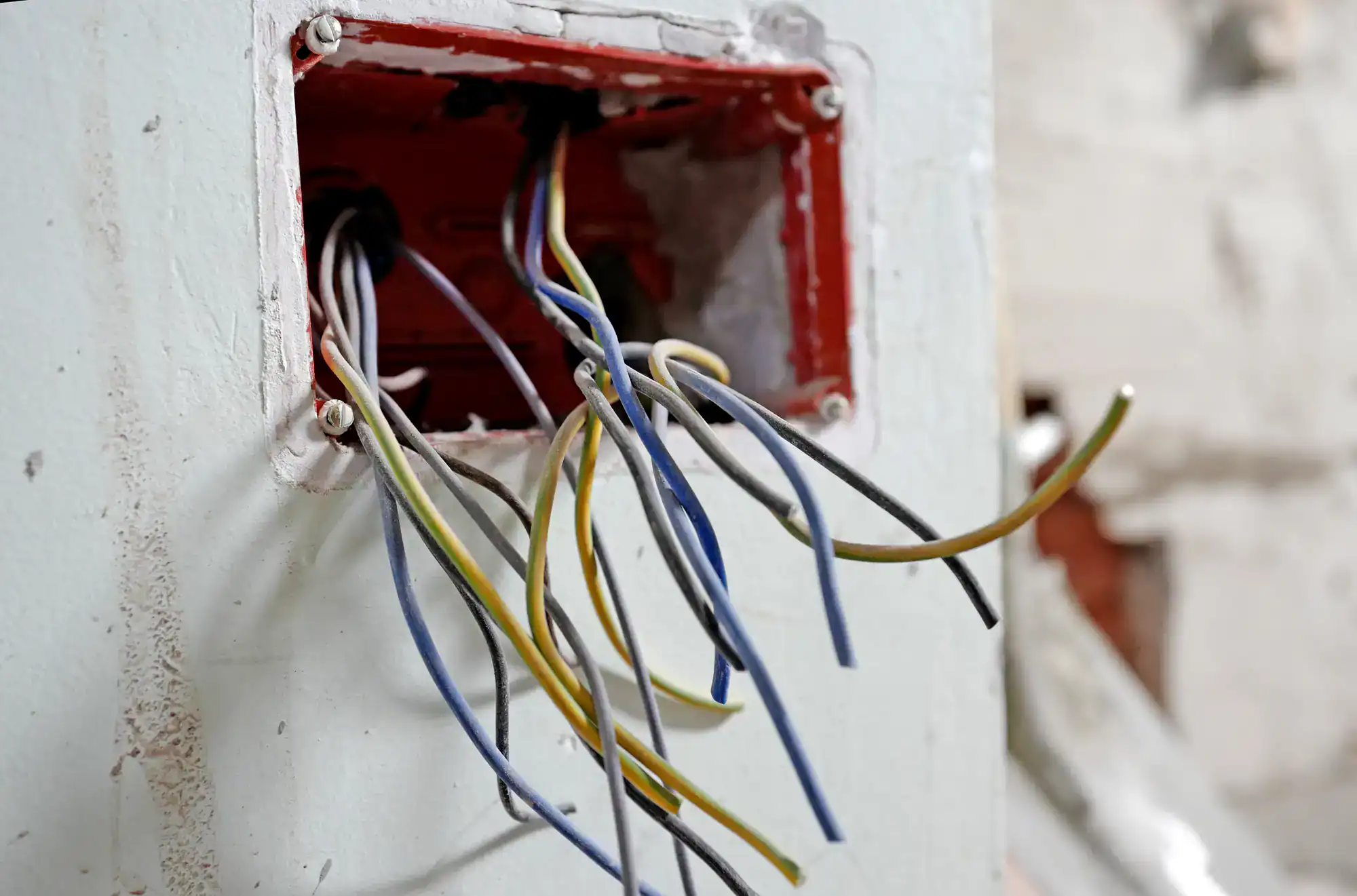
You searched for a number. You probably got a range so wide it was useless — somewhere between $3,000 and $65,000, depending on which website you landed on. That’s not helpful when you’re staring at an insurance cancellation notice or trying to figure out whether a home purchase makes financial sense.
Providence County has some of the oldest housing stock in the country. Knob and tube wiring isn’t a rare edge case here — it’s a routine discovery in triple-deckers, Victorians, and mill-era homes across Pawtucket, Central Falls, North Providence, and Providence itself. So let’s talk about what it actually costs to replace it in your area, what makes the price go up or down, and what you should know before you let anyone start pulling wire in your walls.
The national average for knob and tube wiring replacement runs between $12,000 and $36,600, with most whole-home projects landing somewhere in the middle of that range. For Providence County specifically, that window holds — most homeowners pay between $12,000 and $36,000 to replace knob and tube wiring throughout an entire home.
That range exists because no two jobs are the same. A 900-square-foot bungalow in Pawtucket is a very different project than a 2,400-square-foot Victorian on the East Side of Providence. The size of the home, how many circuits need replacing, whether the panel needs an upgrade, and how accessible the wiring is all push the number higher or lower.
Electrical permits — required for this work in Rhode Island — typically add another $200 to $900 depending on scope. We handle the permit process as part of our scope, so there are no surprise fees at the end.

Here’s what the national cost guides won’t tell you: Providence County homes are not average homes. The urban core — Providence, Pawtucket, Central Falls, North Providence — is dense with pre-1950 construction. Triple-deckers, balloon-frame Colonials, Victorian single-families, mill-era bungalows. These are homes that were built when 10-amp electrical loads were considered more than enough for a household.
They were never designed for the demands of a modern home running HVAC, a dishwasher, an EV charger, and multiple devices simultaneously. That age and construction style affects cost in a few specific ways.
Older Providence County homes often have wiring that’s been modified by multiple owners over the decades — amateur splices, mixed-generation circuits, and extensions that were never permitted. Mapping all of that before touching anything takes time, and doing it right matters. A contractor who skips that step is setting you up for a failed inspection.
Accessibility is another factor that hits Providence County homes harder than the national average suggests. Horsehair plaster walls — common throughout Federal Hill, the East Side, Fox Point, and Pawtucket’s historic neighborhoods — can’t just be opened up and patched like modern drywall. If an electrician’s only approach is to cut through walls, you’re looking at plaster repair costs on top of the electrical work. That’s a real number that often doesn’t show up in the initial estimate.
Finally, if your panel is undersized — which is extremely common in homes of this age — that upgrade typically adds $600 to $4,000 to the project. Many Providence County homes still have 60-amp or 100-amp panels that simply can’t support a fully rewired modern home. It’s worth asking about this upfront so it doesn’t catch you off guard mid-project.
This is one of the most common questions we hear, and it deserves a straight answer. Partial replacement is technically possible, but it comes with real complications — and it often doesn’t solve the problem that sent you looking for an electrician in the first place.
Insurance companies, in particular, are not satisfied by partial replacement. If your insurer flagged knob and tube wiring and gave you a 30-day window to address it, replacing a few circuits while leaving others active is unlikely to result in the policy approval you need. The same is true for home sales — a buyer’s inspector will note remaining knob and tube wiring regardless of how much was replaced.
There’s also a safety logic to full replacement that’s worth understanding. Knob and tube wiring was designed to dissipate heat through open air. The moment insulation comes into contact with it — which happens constantly in Providence County as homeowners upgrade their attic insulation for winter energy efficiency — that heat has nowhere to go. Partial replacement leaves the remaining wiring in the same vulnerable position.
And because the system has no ground wire, it stays incompatible with modern three-prong outlets no matter how many circuits you swap out. The honest answer is that full replacement costs more upfront but resolves the problem completely. If you’re going to do this work, it’s worth doing it once and doing it right.
We offer financing through Synchrony Bank specifically because we know this isn’t a small number, and we’d rather help you get it done properly than watch you spend money twice.
Want live answers?
Connect with a Lightning Electric expert for fast, friendly support.
Understanding the cost of knob and tube wiring replacement means understanding what you’re actually paying for. This isn’t a one-day job where someone shows up, pulls some old wire, and leaves. A properly done rewiring project involves mapping your existing system, pulling permits before work begins, sequencing the work so portions of your home stay powered throughout, and passing a final inspection before the job is considered complete.
That inspection piece matters more than most homeowners realize. In Rhode Island, all electrical work of this scope must be performed by licensed electricians and must pass a state inspection. That passed inspection — along with a Certificate of Insurance — is what your insurance company will ask for when you call to reinstate or update your coverage.

Every electrician in Providence County will offer a free estimate. What most won’t do is give you any sense of what you’re facing before they show up. That’s frustrating when you’re trying to decide whether to move forward on a home purchase, how to respond to an insurance letter, or whether you can realistically afford this project right now.
The cost of knob and tube wiring replacement in a Providence County home depends on real, knowable factors: the square footage of the home, the number of circuits, the accessibility of the wiring, the condition of the existing panel, and whether any wall or ceiling repairs will be needed. A contractor who has spent decades working inside Providence County’s older homes — triple-deckers in Pawtucket, Victorians on the East Side, mill-era houses in Central Falls — should be able to give you a meaningful range before they ever set foot in your door.
What you want to avoid is a vague estimate that says “replace knob and tube wiring” without specifying which areas, which circuits, and what’s included in the scope. That kind of estimate is how disputes happen — and how homeowners end up with a bill for partial replacement when they expected a complete job.
Ask for an itemized, written scope of work before anything starts. If a contractor won’t provide one, that tells you something. We provide written estimates that spell out exactly what’s being replaced and where. That’s not a selling point — it’s just how this work should be done.
Knob and tube replacement isn’t general electrical work. It requires specific experience with historic wiring systems, familiarity with Providence County’s older housing stock, and a working knowledge of what Rhode Island’s inspectors actually look for. Not every electrician who can install a ceiling fan has done this kind of project before — and the difference shows up in the quality of the work and whether it passes inspection.
Rhode Island law requires that all electrical work of this scope be performed by licensed electricians — licensed by the Rhode Island Department of Labor and Training. Every person on our crew holds a Rhode Island state license. There are no unlicensed helpers on our jobs, no subcontractors brought in to fill gaps. That’s a standard we hold to on every project.
Beyond basic licensing, look for an Electrical Inspector Certified credential and membership in a professional body like the IAEI Roger Williams Chapter — the Rhode Island chapter of the International Association of Electrical Inspectors. These aren’t marketing badges. They’re the credentials of people who are actively engaged in how Rhode Island’s electrical code is interpreted and enforced.
One more thing worth asking about: wall damage. In homes with horsehair plaster — which covers a significant portion of Providence County’s historic housing stock — the prospect of opening walls is a legitimate concern. We use specialized camera technology to locate and remove knob and tube wiring through existing outlets, which means your plaster stays intact. No other electrician in this area uses this technique. For homeowners in historic neighborhoods where original plaster is irreplaceable, that difference alone can change the total cost of the project significantly, since there’s no drywall or plaster repair work to add on top of the electrical bill.
The cost of knob and tube wiring replacement in Providence County is real, it’s significant, and it’s worth understanding before you commit to anything. Most whole-home projects fall between $12,000 and $36,000 depending on the size and condition of your home, whether a panel upgrade is needed, and how accessible the existing wiring is. Providence County’s older housing stock adds complexity that national averages don’t account for — but it also means there are contractors here who’ve seen every variation of this problem and know exactly how to handle it.
If you’re dealing with an insurance deadline, a home inspection finding, or an insulation project that got put on hold, the right next step is a conversation with someone who will give you straight answers. Lightning Electric has been doing this work in Providence County for over 30 years. We pull permits, pass inspections, provide Certificates of Insurance, and offer financing for homeowners who need it.
If you want to know what your specific home will cost, we’re ready to talk.
Summary:

Article details:
Share: