

For over 30 years, we’ve powered Rhode Island with expert electrical services delivered with a personal touch. Discover our story and commitment to quality.
Contact Info
- List Item
For over 30 years, we’ve powered Rhode Island with expert electrical services delivered with a personal touch. Discover our story and commitment to quality.
Contact Info
A home inspector flags it. Your insurer sends a letter. Now what? Here's what a proper knob and tube inspection actually tells you — and why it matters for your Providence County home.
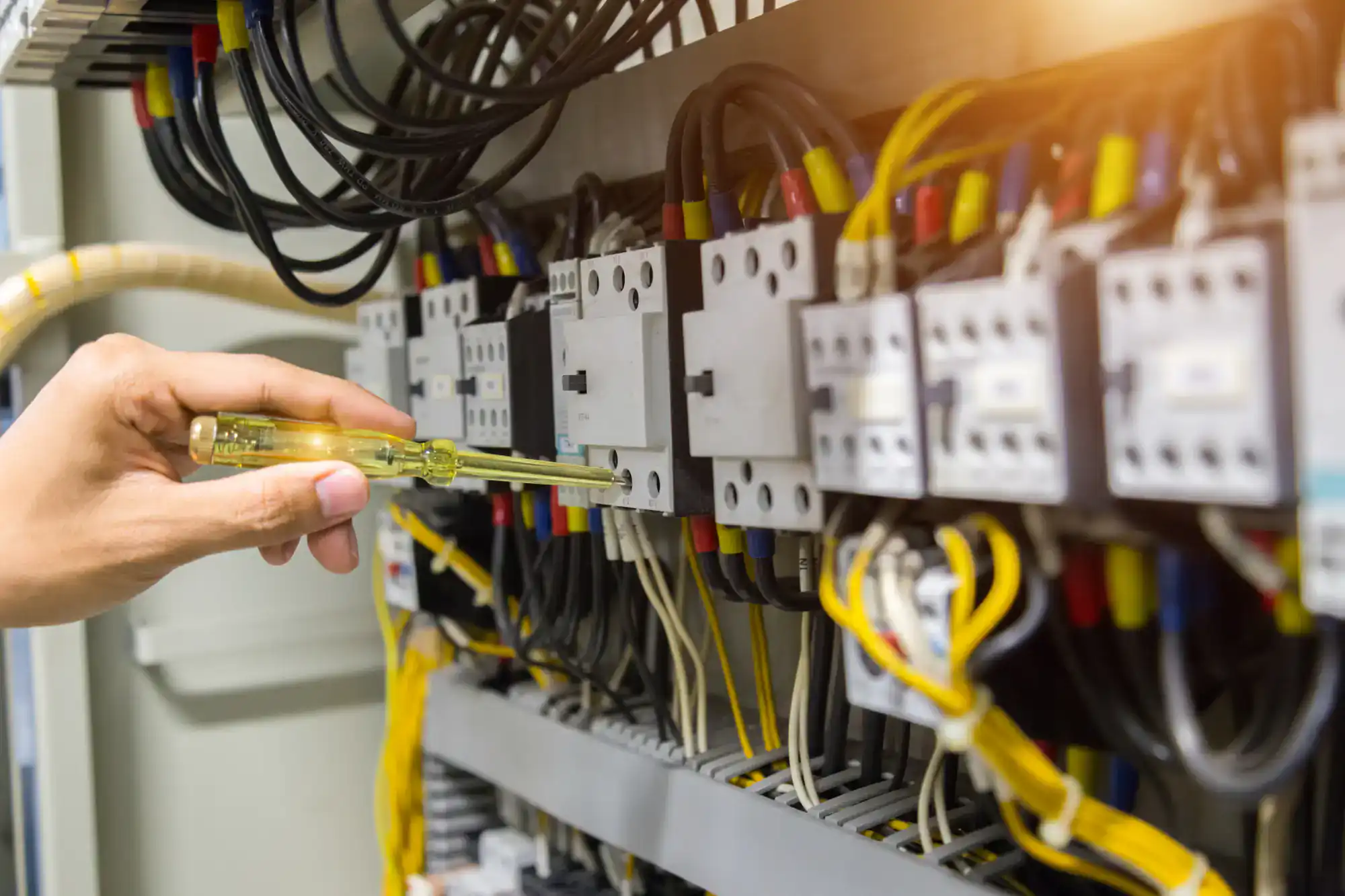
You probably didn’t go looking for this information. Something found you first — a home inspector’s report, a letter from your insurance company, or maybe a neighbor who just went through the whole process and came out the other side with a number that made your stomach drop. Whatever got you here, you’re now trying to figure out what you actually have, what it actually costs, and whether the situation is as urgent as everyone seems to think it is.
The honest answer is: it depends on what the inspection reveals. And that’s exactly what we’re going to walk through.
A general home inspector can tell you knob and tube wiring is present. What they can’t tell you is how much of it is active, whether it’s been modified by a previous owner, whether insulation has been packed around it, or whether the fuse box it runs through can handle the electrical load your household actually puts on it. That’s a different kind of assessment entirely — and it requires a licensed electrician.
When we inspect a home for knob and tube wiring, we’re not just doing a visual scan of the attic. We’re mapping the full extent of the system: where it runs through the basement, where it disappears into finished walls, which circuits are still live, and which have been bypassed or abandoned. That map is what determines the real scope of the job — and the real cost.

The system itself wasn’t inherently flawed. Knob and tube wiring was the standard installation method in American homes from the late 1800s through roughly the 1940s. It was designed to work under the conditions of that era. The problem is that those conditions no longer exist in most homes — especially the older Providence County properties built during that period.
The wiring relies on open air to shed heat. The ceramic knobs hold the wire away from wood framing, and the porcelain tubes protect it where it passes through joists — all so the wire can breathe. The moment you pack blown-in insulation around it, that heat has nowhere to go. This is one of the most common hazards we find in older Providence County homes, particularly in Pawtucket, North Providence, and the denser neighborhoods of Providence itself, where energy-efficiency upgrades are common and attic insulation is often added without anyone checking what’s already up there.
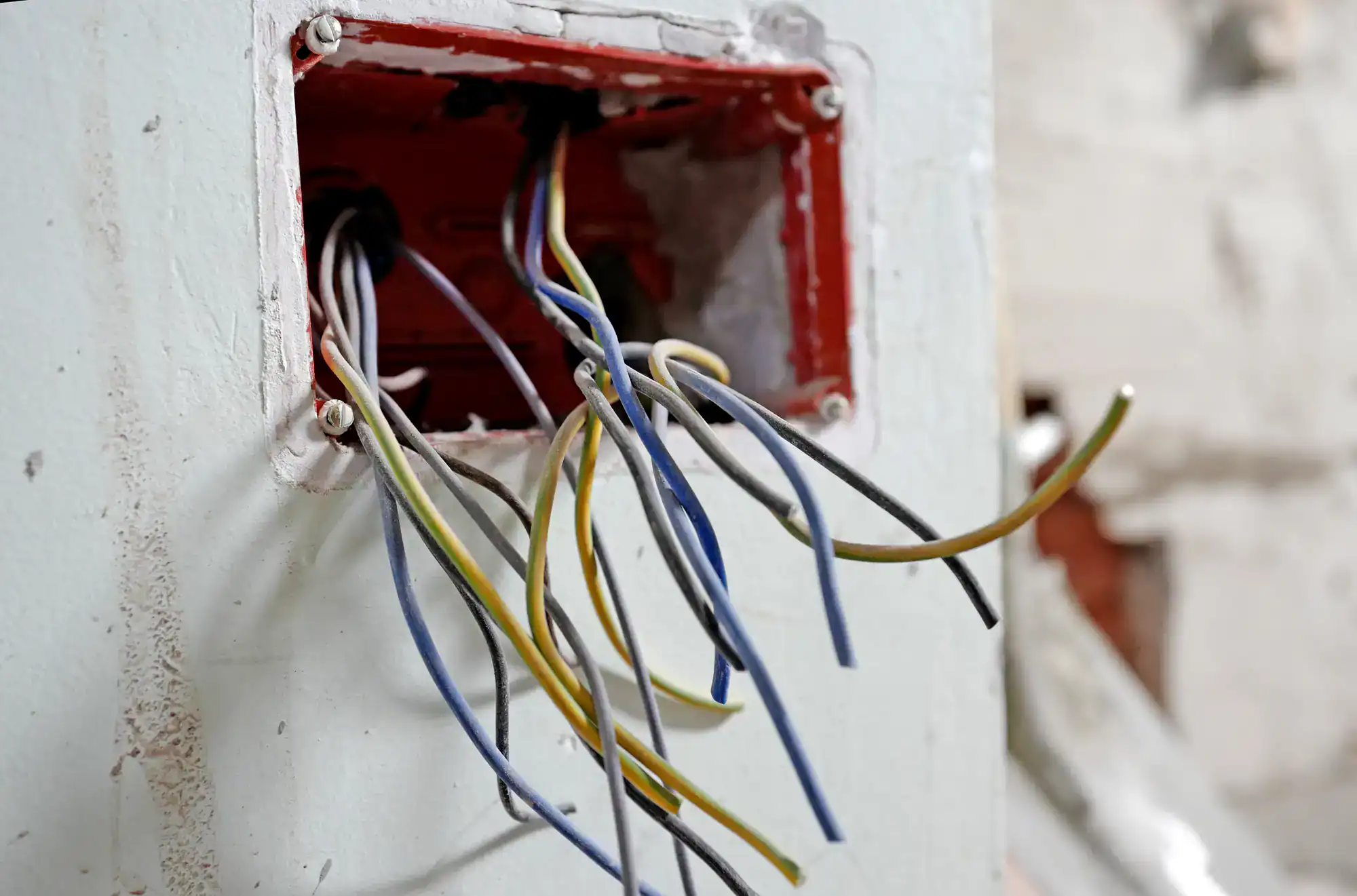
There’s also the grounding issue. Knob and tube contains only two wires — a hot and a neutral. Modern wiring includes a ground wire, which is what allows GFCI protection to function and what prevents electrical faults from turning into fires or equipment damage. Without it, your kitchen, bathrooms, and laundry room — all locations that require grounding — are running on a system that was never meant to handle them.
The third issue is modification. Older homes in Central Falls, Woonsocket, and Providence’s Federal Hill and Olneyville neighborhoods have often changed hands many times over the decades. Each owner may have added circuits, spliced wiring, or extended the system in ways that made sense at the time but created hidden hazards at the junction points. We regularly find connections wrapped in the wrong kind of tape, or new wiring spliced directly onto old knob and tube in ways that concentrate heat and risk at a single point inside a wall. A home inspector won’t find that. A proper electrical inspection will.
Knob and tube systems were designed for a world where a household’s total electrical demand was a few light bulbs and maybe a radio. They typically run through 60-amp fuse boxes — panels that were considered adequate at the time but are genuinely insufficient for the way people live now. Modern homes need 100-amp service at minimum, and most benefit from 200-amp service once you factor in central air conditioning, electric appliances, EV charging, and everything else drawing power on a daily basis.
This matters for the inspection because the fuse box condition is one of the first things we assess. A working fuse box isn’t the same as an adequate one. If the panel can’t support the load the home actually requires, replacing the wiring without upgrading the panel leaves a significant part of the problem in place. In most knob and tube replacement jobs we complete in Providence County, a panel upgrade is part of the scope — not because we’re looking to expand the project, but because the inspection makes clear that it needs to happen.
The panel assessment also affects your insurance situation. Many insurers that flag knob and tube wiring are equally concerned about undersized or outdated fuse boxes. Completing the wiring replacement without addressing the panel can result in a follow-up letter from your insurer asking about the panel specifically. It’s cleaner — and more cost-effective — to handle both at once, which is why we include the panel evaluation as a standard part of the initial inspection.
Rhode Island has adopted NEC 2020 as its state electrical code (RISBC-5), and all permitted electrical work in the state must comply. Pulling permits and passing inspections isn’t optional on these jobs — it’s how you protect yourself at resale, satisfy your insurer, and ensure the work is documented. We pull permits on every applicable job and schedule both the pre-work and post-work inspections as part of our standard process.
Want live answers?
Connect with a Lightning Electric expert for fast, friendly support.
The range you’ve probably seen — somewhere between $12,000 and $35,000 — is real, and the spread isn’t arbitrary. It reflects genuine differences in home size, wiring accessibility, panel condition, and the extent of existing knob and tube. The inspection is the only tool that tells you where your home falls within that range.
What we can tell you before we ever set foot in your home is what the major cost drivers are, so you’re not walking into the conversation blind. Home size matters — larger homes have more circuits to replace. Accessibility matters even more — a home where we can route new wiring through the attic and basement without opening finished walls costs significantly less to remediate than one where the wiring runs exclusively through plaster walls with no alternative path.

Providence County has some of the oldest housing stock in the United States. The pre-WWII homes concentrated in Providence, Pawtucket, Central Falls, and North Providence were built in an era when knob and tube was the only option, and many of them have never had a full rewiring. That means the wiring may be original — which is actually sometimes easier to assess cleanly than a home that’s been partially updated over the decades, because there’s less guesswork about what’s active and what isn’t.
On the other hand, Rhode Island’s historic preservation context creates a real concern for many Providence County homeowners: what happens to my plaster walls, my original trim, my architectural details? It’s a fair question, and the answer depends on the routing options available in your specific home. Where we can run new wiring through the attic or basement, we do — because it’s faster, cleaner, and avoids the drywall repair costs that can add $300 to $1,500 or more per patch when walls need to be opened. The inspection tells us what’s feasible before any work begins.
Permit costs in Rhode Island typically run $200 to $900 depending on the scope of the project. Pre- and post-work electrical inspections generally cost $100 to $200 each — both are required on a job of this scale, and both are part of what we coordinate on your behalf. If a panel upgrade is needed, that adds $600 to $4,000 to the total depending on the service size. These aren’t surprises we spring on you mid-project; they’re line items we walk through after the inspection, before you decide anything.
A significant number of the calls we receive about knob and tube replacement in Providence County start the same way: the homeowner just received a letter from their insurer. The letter flags knob and tube wiring, asks for a licensed electrician’s assessment, and gives a window — sometimes as short as 30 days — to respond with a plan or face policy cancellation.
If that’s your situation, here’s what you need to know. First, the 30-day window is real and the consequences of missing it are serious. Insurers who cancel a policy for unresolved knob and tube are required to notify your mortgage lender, which creates a separate and significant problem. The urgency is not manufactured.
Second, what your insurer is typically asking for is a statement from a licensed electrician confirming whether the knob and tube is active or inactive, where it’s located in the home, and what the remediation plan is. That statement comes from a proper inspection — not a visual walkthrough, not a phone estimate. We provide a Certificate of Insurance upon request, and we know that’s the next document your insurer will ask for once the electrical work is complete.
Third, partial remediation may or may not satisfy your insurer, depending on their specific requirements and the extent of active knob and tube in your home. Some policies require full replacement of all active wiring; others are satisfied by addressing specific high-risk areas (wet locations like kitchens and bathrooms, or wiring that’s been covered by insulation). The inspection gives us the information we need to tell you honestly which scenario applies to your home — and to give your insurer the documentation they need to move forward.
We offer emergency availability evenings, Saturdays, and Sundays, and we understand that a 30-day insurance deadline doesn’t care what day of the week it is. Financing is available through Synchrony Bank for homeowners who need to move quickly on a project of this scale.
The most important thing we can tell you is this: the inspection isn’t just a formality before the real work starts. It’s the thing that makes honest cost estimates possible, tells you whether your situation is urgent or manageable, and gives your insurer the documentation they need. Without it, every number you’ve heard is a guess.
Providence County’s older housing stock means we’ve done this work in homes a lot like yours — in Providence, Pawtucket, Cranston, North Providence, and the surrounding communities. We’ve seen what decades of partial updates, DIY modifications, and blown-in insulation do to these systems, and we know how to assess them accurately.
If you’re ready for a straight answer about what you actually have and what it’ll actually cost, Lightning Electric is the place to start.
Summary:

Share: