
For over 30 years, we’ve powered Rhode Island with expert electrical services delivered with a personal touch. Discover our story and commitment to quality.
Contact Info
- List Item
For over 30 years, we’ve powered Rhode Island with expert electrical services delivered with a personal touch. Discover our story and commitment to quality.
Contact Info
Your EV charger is in. Now the breaker keeps tripping. Here's why that happens in Providence County homes — and what to do about it.
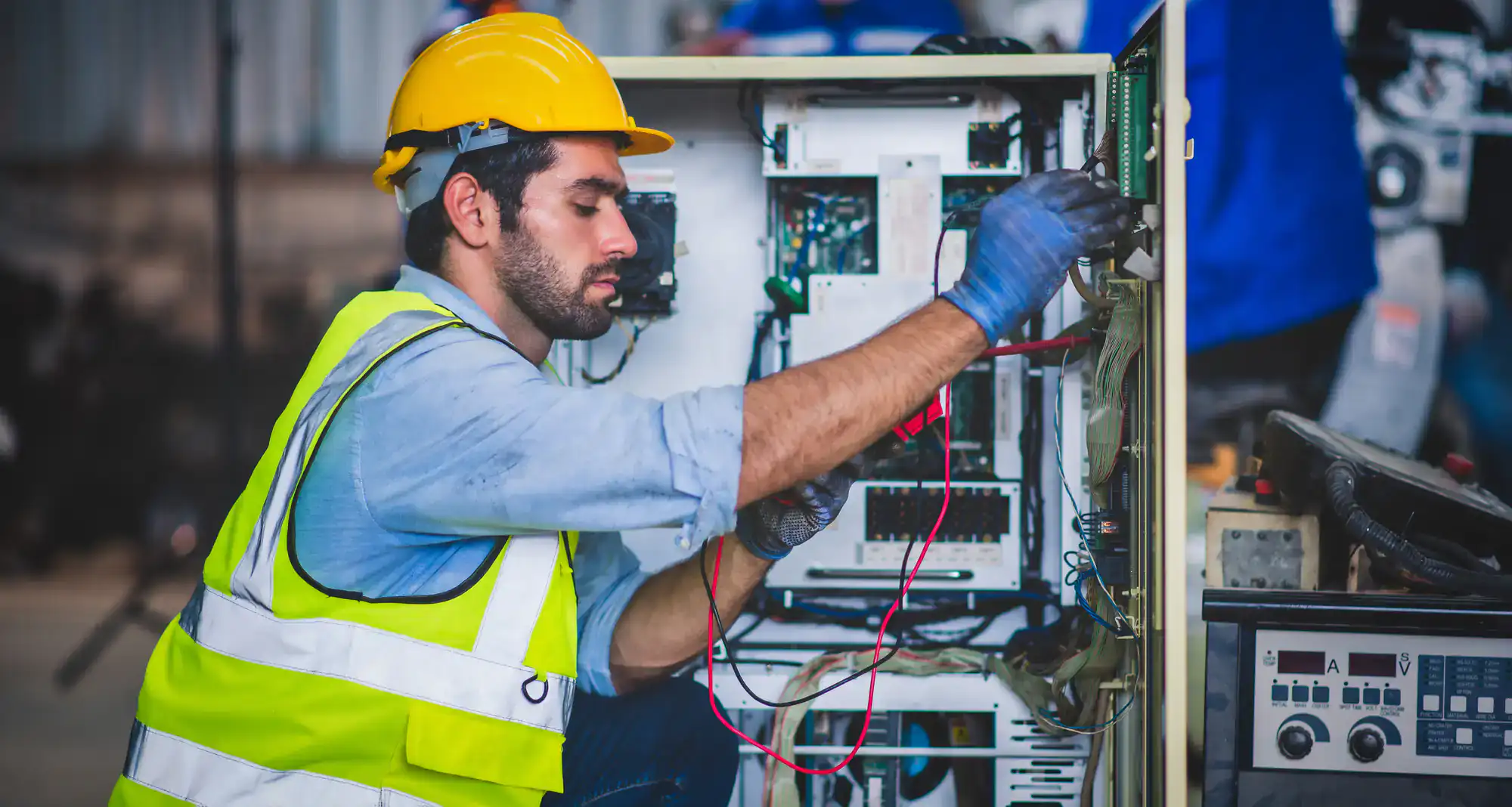
You got the EV. You hired someone to install the charger. Everything seemed fine — and then it wasn’t. The breaker started tripping. The lights in the kitchen flicker every time the car charges. An outlet in the garage stopped working entirely. You’re not imagining it, and no, your charger probably isn’t defective. What’s more likely is that your home’s electrical system was already stretched thin, and the charger was just the thing that made it obvious. This is a pattern we see constantly in Providence County, and it has everything to do with the age of the homes here — and what’s actually inside the walls.
A Level 2 EV charger draws a dedicated 240-volt circuit pulling 40 to 50 amps continuously. That’s not a small ask. For a home built in 1955 with a 100-amp service panel — which describes a significant portion of Providence County’s housing stock — adding that kind of sustained load can push a system that was already near capacity right over the edge.
The charger installation itself may have been done correctly. The circuit is properly wired, the breaker is the right size, the connections are solid. But the rest of the house is now running on whatever headroom is left, and there often isn’t much. That’s when the symptoms start showing up — not at the charger, but everywhere else.
This is the part most homeowners don’t expect. They assume that if the charger was installed by a licensed electrician, the house is fine. What they don’t realize is that a charger installation is not an electrical system assessment. Unless someone specifically evaluated your panel capacity, your wiring condition, and your overall load before the work began, the installation may have been completed without anyone actually checking whether your home could handle it long-term.

Rhode Island has some of the more rigorous electrician licensing requirements in New England. A Master Electrician license from the Rhode Island Department of Labor and Training requires a minimum of six years of experience, at least two of those as a licensed journeyman, plus passage of a state contractor exam. A journeyman license requires four years and 8,000 documented hours of apprentice-level work under a licensed Class A electrician, along with 576 hours of coursework and a state exam. Licenses must be renewed every two years with 15 hours of continuing education.
That structure exists for a reason. Electrical work in Rhode Island — especially in older homes — carries real risk when it’s done wrong. And the electrical contractor license framework is specifically designed to ensure that the person making decisions about your wiring, your panel, and your load capacity actually knows what they’re doing.
Here’s where it gets relevant to EV charger installations: not every electrician who holds a license has the same depth of experience with older residential systems. There’s a meaningful difference between someone who primarily works on new construction — where the panel is sized correctly, the wiring is modern, and everything is up to current code — and someone who has spent decades working inside homes that were built before the National Electrical Code looked anything like it does today.
In Providence County, where homes from the 1920s through the 1950s are genuinely common in neighborhoods like Pawtucket, North Providence, and Johnston, that distinction matters. A 100-amp panel in a 1948 home is a different situation than a 200-amp panel in a 2005 build. The load calculations are different, the wiring condition is different, and the risk profile is different. An electrician who understands that will approach an EV charger installation — or a repair after one — very differently than someone who doesn’t.
We hold a Master Electrician license and are also Electrical Inspector Certified. That dual credential means we don’t just know how to do the work — we know exactly what inspectors look for, which means the work we do passes the first time. We’re also members of the Rhode Island Electrical Inspectors IAEI Roger Williams Chapter, which keeps us current on code changes that directly affect how EV charger installations are evaluated and inspected in this state.
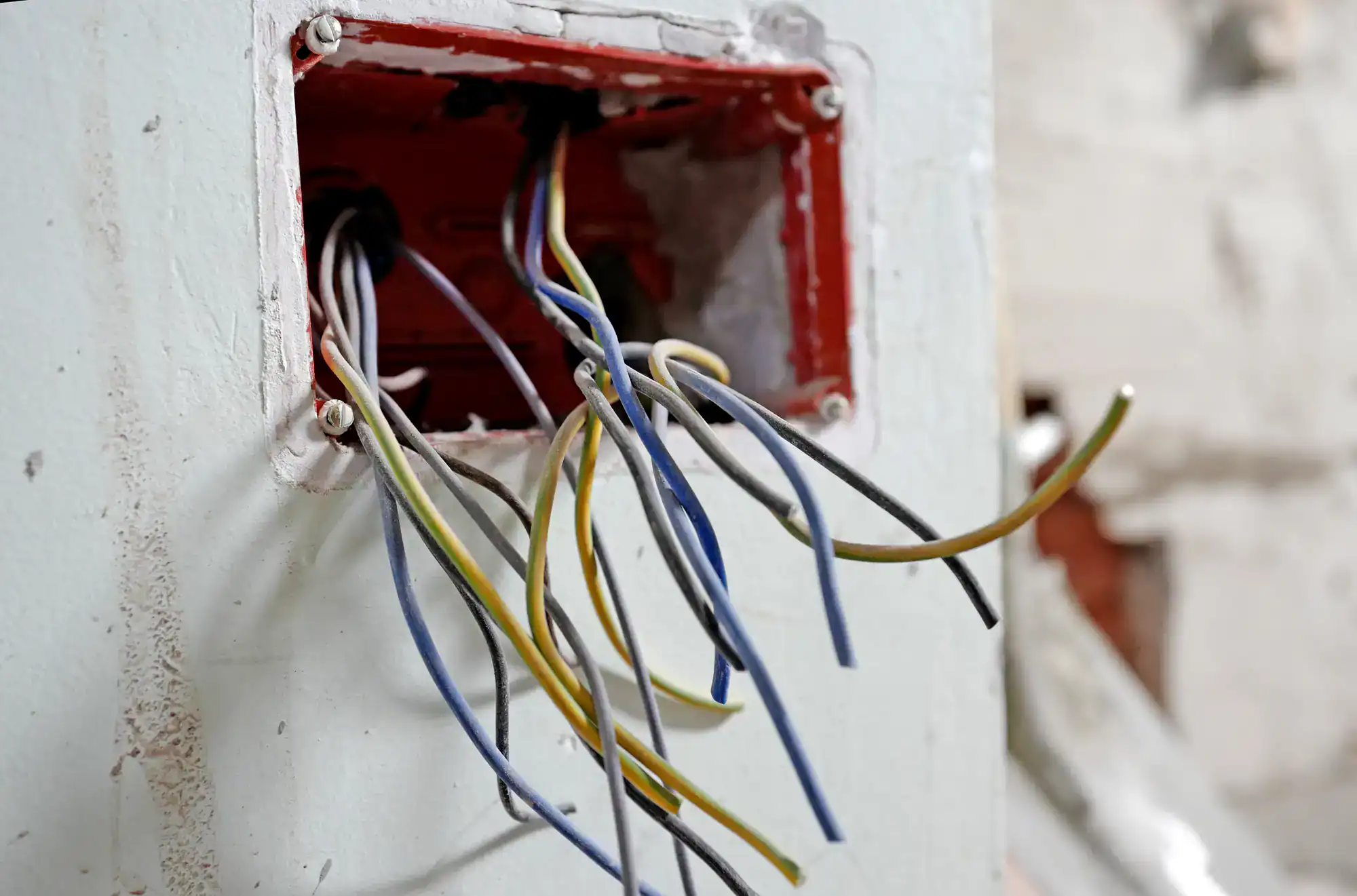
If your Providence County home was built before 1950, there’s a real possibility it still has knob and tube wiring in some or all of its circuits. Knob and tube is an older wiring method that uses separate hot and neutral conductors routed through ceramic knobs and tubes — no ground wire, no insulation jacket, and no tolerance for the kind of sustained high-draw loads that modern households put on electrical systems.
Adding a 240-volt EV charger to a home that still has knob and tube wiring in its branch circuits is a genuine fire hazard. The wiring wasn’t designed for this. The insulation degrades over time, connections loosen, and when you add a heavy continuous load on top of an already-stressed system, the risk of overheating increases significantly. This isn’t a theoretical concern — it’s the kind of thing that causes house fires.
The tricky part is that knob and tube wiring often coexists with updated wiring in the same home. A previous owner may have updated the kitchen and bathrooms but left the original wiring in the bedrooms, the basement, or behind walls that were never opened. From the outside, the house looks like it has modern wiring. It’s only when you open the walls — or when something goes wrong — that the original system becomes visible.
We offer knob and tube wiring removal and replacement, and it’s a service that very few Rhode Island contractors provide. Most electricians working in this market either don’t have the experience to handle it properly or don’t want the complexity of working inside walls with a mixed wiring system. We’ve been doing this work for over 30 years, and we know what to look for in homes that have been updated piecemeal over decades — which is exactly the situation in much of Providence County.
If you’re experiencing electrical problems after an EV charger installation and your home was built before 1960, knob and tube wiring should be on the list of things to investigate. It may not be the only issue, but it’s often part of the picture.
Want live answers?
Connect with a Lightning Electric expert for fast, friendly support.
When we get a call from a Providence County homeowner dealing with electrical problems after an EV charger installation, the first thing we do is assess — not assume. That means a load calculation to understand exactly what the panel is being asked to handle, a review of the wiring condition in the circuits that are showing symptoms, and a check of the grounding and bonding throughout the system.
The goal isn’t to sell you the most expensive fix. It’s to understand what’s actually wrong and give you an honest answer about what it takes to make it right. Sometimes that’s a panel upgrade. Sometimes it’s a dedicated circuit that wasn’t properly sized. Sometimes it’s a grounding issue in a subpanel that was never corrected. And sometimes it’s knob and tube wiring that needs to come out before anything else can be addressed safely.

This is the question we hear most often, and the honest answer is: it depends on what your panel is currently handling. A 100-amp panel that’s running a modest load — a small house, no electric appliances, no high-draw equipment — may have enough headroom to support an EV charger with the right circuit configuration. A 100-amp panel in a larger home with electric heat, a central AC unit, and a full kitchen of modern appliances is a different story entirely.
The only way to know is a proper load calculation. This isn’t complicated, but it is specific — it requires someone to actually look at what’s connected to your panel, calculate the demand, and determine whether there’s capacity for a 40-to-50-amp continuous load on top of everything else. Skipping this step is exactly how homeowners end up with a charger that works fine in March but trips the breaker every evening in July when the air conditioning is running.
Rhode Island’s electricity costs are already 46% above the national average — 29 cents per kilowatt-hour, with a 22.6% year-over-year increase. Running an overloaded electrical system doesn’t just create safety risk; it costs you money every month. A properly sized system, with the right panel capacity and correctly configured circuits, runs more efficiently and puts less stress on every component in it.
In some cases, a load management system can allow EV charging without a full panel upgrade by intelligently throttling the charger’s draw based on what the rest of the house is using at any given moment. This isn’t the right solution for every situation, but it’s worth knowing it exists before committing to a larger project. We’ll tell you which approach makes sense for your specific home — not the one that generates the most work for us.
Not every electrician who can install an EV charger is equipped to diagnose and repair the electrical problems that show up afterward — especially in older Providence County homes. Here’s what actually matters when you’re evaluating who to call.
Licensing is the starting point, not the finish line. In Rhode Island, a licensed electrician has met the minimum requirements to do electrical work legally. But a Master Electrician has gone significantly further — six or more years of experience, a state contractor exam, and the full scope of knowledge needed to evaluate an entire electrical system, not just a single circuit. When the problem involves a panel, a grounding system, and potentially decades-old wiring all interacting with a new high-draw device, you want someone at that level making the call.
Permits and inspections are not optional. Rhode Island municipalities require permits for EV charger installations, and that requirement extends to electrical repairs and upgrades that follow. Unpermitted work creates real problems — it can void your homeowner’s insurance, create liability if you sell the house, and leave safety hazards in place that no one ever formally verified. Every job we do that requires a permit gets one, and every inspection gets passed. That’s not a marketing claim; it’s how we’ve operated for over 30 years.
Experience with older homes is a genuine differentiator in this market. Providence County has one of the oldest housing stocks in New England. Working inside a home from 1935 or 1948 requires a different skill set than working on new construction. The wiring systems are different, the panel configurations are different, and the failure modes are different. We’ve spent three decades working in exactly these homes — in East Providence, North Providence, Pawtucket, Johnston, and across the county — and that experience is directly relevant when the job involves tracing electrical problems through a system that’s been modified, updated, and added to over multiple decades.
We also carry a Certificate of Insurance, available upon request, and financing through Synchrony Bank for projects where the scope of work is larger than expected. We’re not the cheapest option in Rhode Island, and we don’t try to be. What we offer is work done correctly, by licensed professionals, with permits pulled and inspections passed — and a straight answer about what your home actually needs.
If your EV charger installation went smoothly but your house hasn’t been the same since, you’re not dealing with a charger problem. You’re dealing with a home electrical system that was already at its limit — and now needs attention it probably should have gotten before the charger went in.
The good news is that these problems are fixable. A proper load calculation, an honest assessment of your wiring and panel, and the right repair or upgrade will get your system running the way it should — safely, efficiently, and without the breaker trips and flickering lights that have become part of your daily routine.
If you’re in Providence County and you’re ready for a straight answer about what’s actually going on in your home, reach out to Lightning Electric. We’ll tell you what we find, explain what it means, and give you a clear picture of what it takes to fix it.
Summary:

Article details:
Share: