

For over 30 years, we’ve powered Rhode Island with expert electrical services delivered with a personal touch. Discover our story and commitment to quality.
Contact Info
- List Item
For over 30 years, we’ve powered Rhode Island with expert electrical services delivered with a personal touch. Discover our story and commitment to quality.
Contact Info
If your older Rhode Island home has knob and tube wiring, preparation matters. Here is what to know before the work begins, alongside guidance on how to protect what makes your home worth preserving.
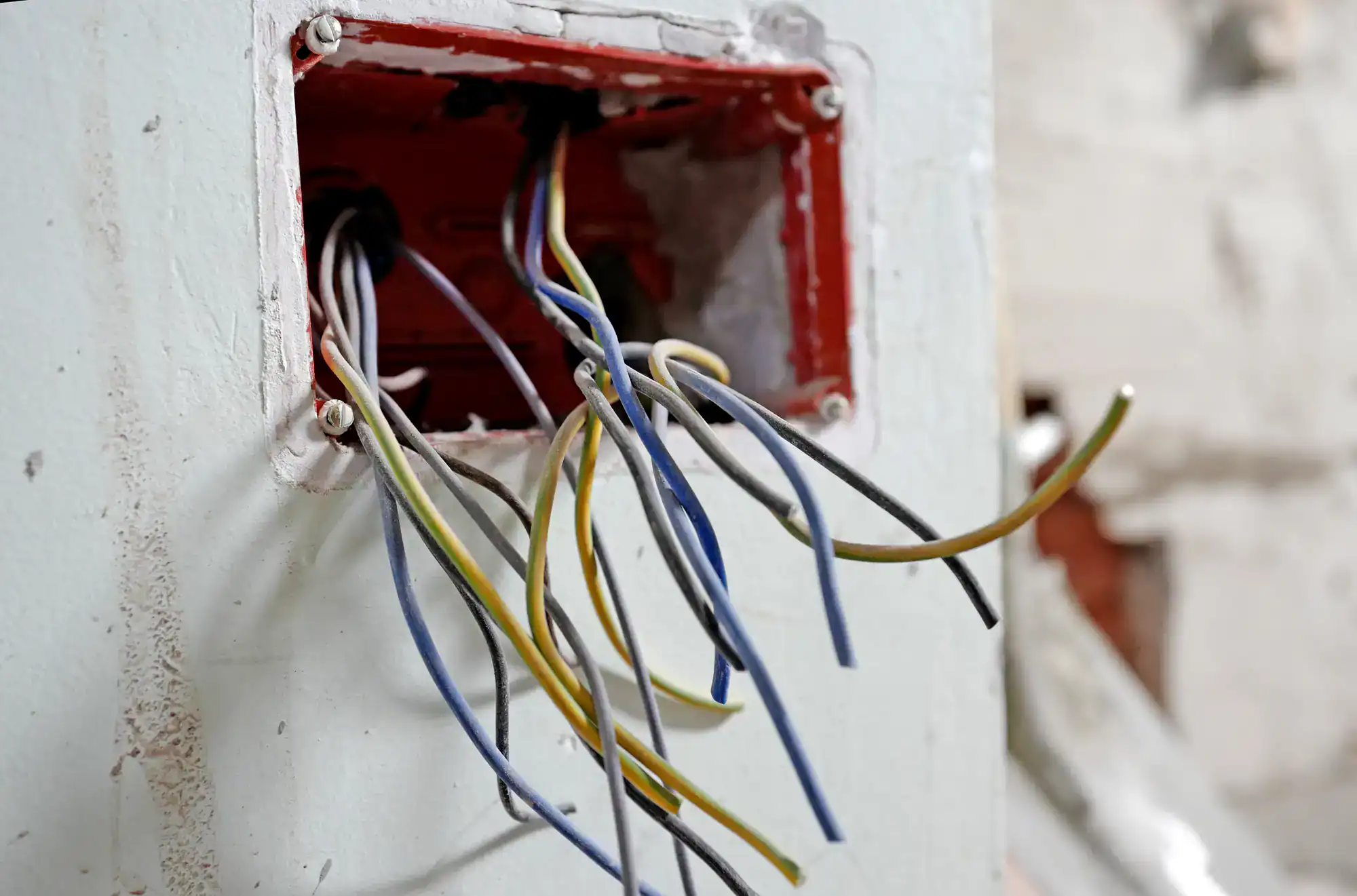
You did not buy a pre-1920 Colonial in College Hill or a Victorian in Bristol because it was easy to maintain. You bought it because it has character that newer construction simply cannot replicate, featuring original woodwork, plaster ceilings, and details that took craftsmen weeks to build. So when someone tells you the knob and tube wiring needs to come out, the first thing most historic homeowners want to know is not how much it costs, but if workers are going to tear their walls apart to do it. That is the right question to be asking. The answer depends entirely on who you hire and how they work.
Knob and tube wiring was the standard electrical system in American homes from roughly the 1880s through the 1940s. If your home was built before 1950, which describes a significant portion of the housing stock in Providence, Pawtucket, Newport, East Providence, and Bristol, there is a reasonable chance some version of it is still running through your walls.
The system gets its name from the ceramic knobs that anchor the wires to framing and the ceramic tubes that protect them where they pass through wood. In its original, unmodified condition, it was not inherently dangerous. The problem is that very little of it remains in its original, unmodified condition.
Over a century, these systems get patched, extended, overloaded, and buried under insulation, which is where the real risk begins. Rhode Island home inspectors flag knob and tube wiring routinely for good reason. When it surfaces during an inspection, the clock starts ticking on your insurance coverage, your home sale, or both.

Here is something most homeowners do not find out until it is already happening to them: once your insurer discovers active knob and tube wiring in your home, you typically have 30 to 60 days before your coverage is dropped. Not reduced. Dropped entirely.
If you are shopping for a new policy while the wiring is still in place, many insurers will not even write the application. This is not a hypothetical risk. It is a pattern playing out in older Rhode Island neighborhoods right now, affecting triple-deckers in Woonsocket, Federal Hill multi-families, and Newport cottages that have stayed in the same family for generations.
The insurer sends a notice, the homeowner has a month or two to act, and suddenly what felt like a someday project becomes an urgent one. What makes this harder is that partial replacement usually is not enough. Most homeowners assume that if they replace the wiring in one or two rooms, or just in the attic, they have satisfied the insurer’s requirement. In most cases, they have not.
Most insurance companies require complete removal of all active knob and tube wiring before they will approve or renew coverage. That means a full assessment of what is in your home, a clear scope of work, and documentation when the job is done. The documentation piece matters more than people realize. Your insurer is not going to take your word for it. They will want a Certificate of Insurance from the electrician along with confirmation that the work was inspected and passed.
If the electrician you hire does not understand that part of the process, or fails to pull the proper permits, you may end up with new wiring that still fails to satisfy your insurer. That is an expensive mistake to make twice. The 30-to-60-day window feels tight, but it gives you enough time to do this right if you start immediately. The worst thing you can do is wait, hope the insurer forgets to follow up, or hire the first electrician who answers the phone without asking the right questions first.
This is the question that stops most historic homeowners in their tracks, and understandably so. Horsehair plaster, which serves as the standard wall finish in pre-1950 Rhode Island homes, is genuinely difficult to repair once cut. It is not like drywall, where a patch blends seamlessly after a coat of paint. Horsehair plaster possesses a unique texture, composition, and age that modern materials cannot replicate. Damage it, and you are looking at a full restoration project on top of an electrical project.
Most electricians will tell you that opening walls is unavoidable. For most traditional contractors, that statement holds true because traditional knob and tube removal requires cutting access holes into walls and ceilings to locate and pull old wiring. Add the cost of drywall installation, plastering, and repainting on top of the electrical work, and a project that was already significant becomes considerably more expensive and disruptive.
We work differently. At Lightning Electric, we insert specialized cameras through your existing outlets to locate and remove wiring from inside the walls. No cutting, no major access holes, and zero drywall repair bills. Your horsehair plaster stays intact. If we ever need a small notch somewhere, it is minimal, looking nothing like the wall-opening approach that most electricians default to.
This technology-based approach keeps the scope of the project where it belongs, focusing entirely on the electrical work while getting you back to normal faster. When walls get opened, the project timeline extends because you are forced to coordinate with plasterers and painters after the electrician leaves, leaving you living in a partially finished home. Our camera-based method eliminates those complications.
Want live answers?
Connect with a Lightning Electric expert for fast, friendly support.
Preparation makes a meaningful difference in how smoothly a knob and tube removal goes. A homeowner who does a little groundwork ahead of time gives the electrician a clearer picture of the system, reduces the chance of surprises mid-project, and ends up with better documentation when the work is complete.
This does not mean you need to become an expert in electrical systems before making a call. It simply means taking a few practical steps that help the process move faster and give you more confidence in the outcome. The more you know going in, the better questions you will ask, and the better you will be able to evaluate who is qualified to do this work in a home like yours.

Start by pulling together whatever records you already have regarding your home’s electrical history. If you have paperwork from a previous inspection, a home purchase, or any prior electrical work, gather those files. Even if the paperwork is incomplete or old, it gives the electrician a helpful starting point to understand what has been touched and what has not.
Walk through your home and note where you spot wiring that looks different, comparing older cloth-covered wire to the plastic-sheathed Romex used since the mid-20th century. Check your basement, attic, and any unfinished crawl spaces, because knob and tube systems are most visible in those areas. You do not need to identify everything yourself, as that is the electrician’s job, but a rough sense of where you have noticed older wiring helps frame the conversation.
Take stock of your electrical panel. Older Rhode Island homes that still feature knob and tube wiring often rely on a 60-amp panel, which is heavily undersized by modern standards. A complete rewiring project frequently involves a panel upgrade at the same time, so knowing what you are working with before the assessment helps you grasp the full scope of recommended work.
Finally, locate any existing permits or inspection records for past electrical work. If previous owners had portions of the wiring updated, a permit should be on file with your local building department. This tells the electrician which circuits have already been replaced and which remain original, directly affecting how much work needs to be done and what the final documentation for your insurer will look like.
Not every licensed electrician has experience with historic homes, and not every professional understands what it takes to satisfy a Rhode Island insurer’s documentation requirements. Asking the right questions before you hire protects you from a situation where the work is completed but the paperwork is rejected, or where your plaster ceilings fail to survive the process.
Ask if they hold a Master Electrician license in Rhode Island. This is not a minor credential, as the state requires 8,000 hours of hands-on field experience to qualify. It serves as a meaningful bar separating experienced professionals from general contractors or handymen who dabble in electrical work.
Ask if they will pull the proper permits and if the local Authority Having Jurisdiction will inspect the work. If the answer to either of those is no, walk away immediately. Unpermitted electrical work will fail to satisfy your insurer and will surface as a major problem during any future home inspection.
Ask specifically how they access wiring located inside walls and ceilings. If the answer involves cutting access holes, ask about their exact plan for repairing those openings, and get that answer in writing before work begins. If you live in a home with horsehair plaster, you need to know what you are agreeing to before a single tool touches your walls.
Ask what documentation they provide at the end of the project. A Certificate of Insurance along with written confirmation that the work passed inspection are the two elements your insurer will most likely require. An electrician who has performed this work in Rhode Island before will know that without needing prompting.
We have been performing this work in Rhode Island for over 30 years, specializing in the older homes that define so much of this state’s character, spanning from Riverside to Little Compton, and from Providence’s historic neighborhoods to coastal communities where salt air compounds wear on aging wiring. We hold Master Electrician and Electrical Inspector Certified credentials, belong to the IAEI Roger Williams Chapter, and provide the exact documentation your insurer needs once the job concludes. Financing is also available through Synchrony Bank for homeowners wanting to spread out the cost of a larger project.
Knob and tube wiring removal in a historic Rhode Island home is a serious project, but it does not have to be a destructive one. The key lies in preparation: understanding what is inside your home, knowing what your insurer needs, and finding an electrician who has completed this work in similar houses while possessing the technology to do it without tearing up what you have spent years preserving.
If you have received a notice from your insurer, had a home inspection flag your wiring, or simply know it is time to address this issue, do not wait for the deadline to approach. The 30-to-60-day window moves fast, and qualified electricians book up quickly during busy seasons.
Lightning Electric is here to walk you through the process, assess what is in your home, and provide a clear picture of the required work before anything starts. Reach out to us directly to get the conversation started.
Summary:

Article details:
Share: