
For over 30 years, we’ve powered Rhode Island with expert electrical services delivered with a personal touch. Discover our story and commitment to quality.
Contact Info
- List Item
For over 30 years, we’ve powered Rhode Island with expert electrical services delivered with a personal touch. Discover our story and commitment to quality.
Contact Info
Rhode Island's commercial electrical code just changed. Here's what that means for your building, your permits, and your liability as a business owner.

If you own or manage a commercial property in Providence County, there’s a good chance your electrical system hasn’t been looked at since the last code cycle — maybe longer. That’s not unusual. But Rhode Island officially adopted NEC 2023 as its electrical code standard, effective December 1, 2025, and the mandatory compliance date for new permit applications is March 1, 2026. That’s a real deadline.
This isn’t about scaring you into spending money. It’s about making sure you’re not caught off guard during a permit pull, a lease renewal, or an insurance claim. Here’s what you actually need to know.
Rhode Island’s electrical code is governed by the Rhode Island State Building Code (RISBC-5), which formally adopted the National Electrical Code 2023 edition. This isn’t a minor update — NEC 2023 represents meaningful shifts in requirements around arc-fault protection, grounding and bonding, panel labeling, and overcurrent device ratings. It applies to all electrical work across all 39 municipalities in the state, including every city and town in Providence County.
The City of Providence’s Building and Inspection Services department confirmed the December 1, 2025 effective date. A three-month grace period runs through March 1, 2026, after which any new permit application must comply with the updated standard. If you’re planning electrical work — whether it’s a tenant fit-out, renovation, or service upgrade — the clock is already running.
Rhode Island also adopted the 2024 International Energy Conservation Code (IECC) effective November 14, 2024. For commercial properties in Providence County, this has real implications for lighting efficiency, HVAC electrical loads, and building envelope systems. Any significant renovation work now requires energy code compliance alongside electrical code requirements.

The short answer: it depends on what work is being done. Existing buildings aren’t automatically required to tear out compliant older installations simply because a new code cycle started. But the moment you pull a permit — for a panel upgrade, a lighting retrofit, a new circuit, anything — the work being done must meet the current code. That’s NEC 2023 now.
Here’s where it gets complicated for many Providence County properties. The county has a significant concentration of pre-World War II commercial and industrial buildings — the older storefronts along Atwells Avenue in Providence, the mill-era structures in Pawtucket, the mixed-use buildings throughout Federal Hill and Downtown Providence. Many of these were built when 60-amp service was considered generous. Modern commercial loads — HVAC systems, commercial kitchen equipment, POS systems, server infrastructure — can push those older panels well beyond their rated capacity.
A building that passed inspection under NEC 2017 may have deficiencies under NEC 2023. That doesn’t mean you’re in violation today, but it does mean that the next time a permit is pulled on that property, those deficiencies become the contractor’s — and your — problem to resolve. The smarter move is knowing where you stand before you’re under deadline pressure.
This comes up more often than it should. A contractor quotes a lower price, mentions the job is “small enough” to skip the permit, and the business owner agrees — often because they don’t want the hassle or the added cost. The problem is that in Rhode Island, most commercial electrical work requires a permit. New installations, alterations, repairs, and major modifications all fall under that requirement. The size of the job doesn’t change the rule.
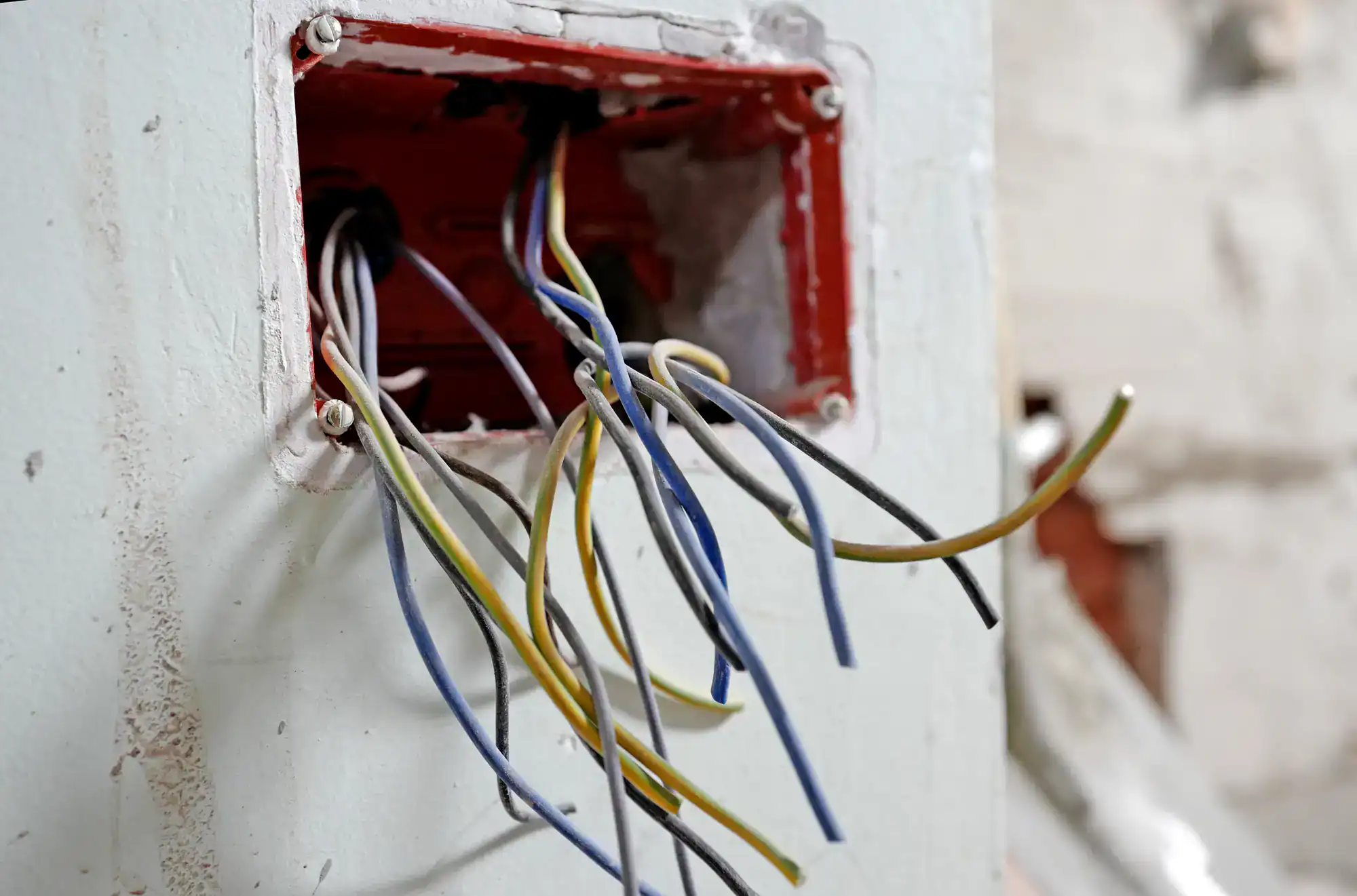
When unpermitted work is discovered — during a sale, a refinance, a lease renewal, or an insurance claim — the consequences land on the property owner, not the contractor. You may be required to open walls to expose the work for inspection. You may face fines. Your insurance company may deny a claim if the damage traces back to unpermitted electrical work. And if you’re a commercial tenant trying to renew or transfer your lease, unpermitted work can become serious liability.
The other piece of this is licensing. In Rhode Island, only a licensed electrician can pull an electrical permit. That means if your contractor skipped the permit, there’s a real chance they also weren’t operating with the proper credentials. Rhode Island’s Department of Labor and Training (DLT) licenses electricians at the journeyman and master contractor levels. A Class A Master Electrician license — the highest level — requires at least 8,000 hours of hands-on apprenticeship experience, 576 hours of classroom instruction, and passing a 100-question licensing exam. That’s the bar.
We pull permits and pass inspections on every applicable job. That’s not an upsell — it’s how the work gets done properly and how you stay protected.
Want live answers?
Connect with a Lightning Electric expert for fast, friendly support.
A commercial electrical inspection isn’t a formality. Inspectors compare your installation against NEC requirements, and they know exactly where corners get cut. Understanding what they’re looking for — before they show up — is one of the most useful things a business owner or facilities manager can do.
The most common violations found in commercial buildings aren’t dramatic. They’re the quiet ones: double-tapped breakers, inaccurate or missing panel schedules, improper grounding and bonding, and overcurrent devices with undersized interrupting ratings. These don’t announce themselves until something goes wrong.

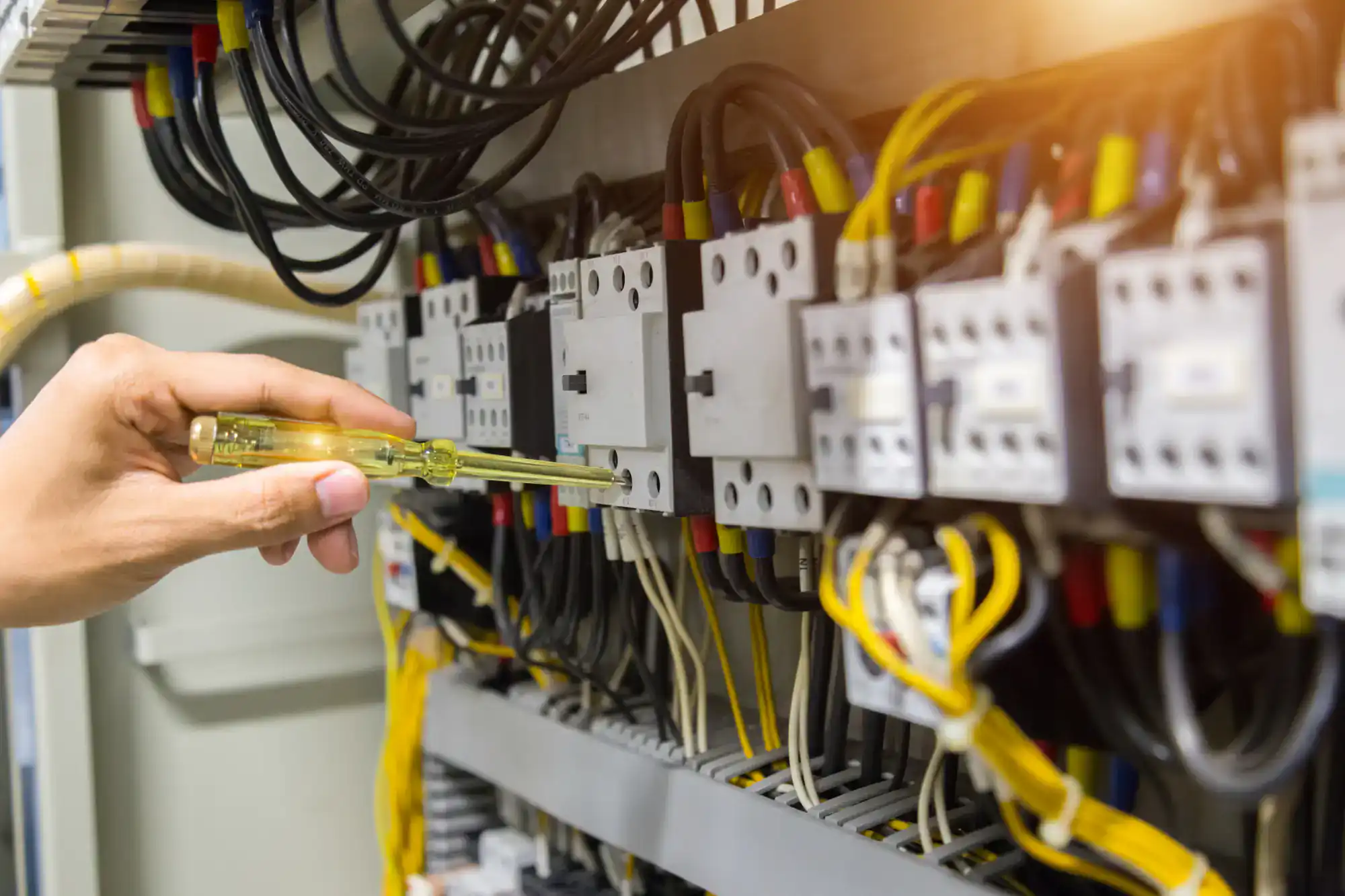
The electrical panel is almost always the first place an inspector looks, and it’s where the most violations surface in older Providence County commercial buildings. A few things that consistently get flagged: breakers that are double-tapped (two wires sharing a single breaker terminal when the breaker isn’t rated for it), panels without accurate circuit labeling, and service entrance equipment that’s undersized for the actual load the building is running.
Panel schedules — the labels that tell you which breaker controls which circuit — are required to be accurate and legible under NEC. In practice, many commercial buildings have panel schedules that were partially filled in years ago and never updated as circuits were added or changed. That’s a violation, and it’s also a safety issue for anyone who needs to isolate a circuit quickly.
Grounding and bonding is another frequent issue. The NEC requirements here exist because improper grounding is one of the leading causes of electrical fires and equipment damage. In older buildings, grounding systems may have been installed to a previous code standard that no longer meets current requirements — or they may have degraded over time without anyone noticing.
NFPA 70B is now mandatory, which means maintenance records for electrical systems carry real compliance weight. If your building has had regular electrical maintenance and you have documentation of it, that works in your favor during an inspection. If you don’t have records — or if the system hasn’t been touched in years — that’s worth addressing before you’re in a permit or inspection situation.
For commercial buildings, NFPA 72 also governs fire alarm and signaling systems. If your building has a fire alarm panel, it needs to meet specific installation and maintenance standards. This is often overlooked during routine electrical assessments because it feels like a separate system — but inspectors treat it as part of the overall electrical compliance picture.
A lot of commercial electrical problems in Providence County trace back to the same root cause: a building designed for one era of electrical demand trying to support a completely different one. A storefront on Westminster Street that was wired for basic lighting and a cash register now needs to support commercial refrigeration, a full POS system, security cameras, and climate control. The panel that was fine in 1985 isn’t fine anymore.
Service upgrades — increasing the amperage coming into your building and replacing the panel to match — are one of the most common commercial electrical projects we handle. For many businesses, this also means upgrading from a single-phase service to a three-phase system, which is required for certain commercial equipment and significantly more efficient for high-load operations like restaurants, manufacturing, and medical offices.
The process starts with a load calculation: figuring out what your building actually needs versus what it’s currently rated for. From there, the scope of the upgrade is determined — whether that’s a panel replacement, a service entrance upgrade, or both. All of this work requires permits, and all of it needs to be done by a licensed Master Electrician who understands commercial code. Rhode Island requires 15 hours of continuing education every two-year licensing cycle for both journeyman and master electricians, which means the code knowledge has to stay current.
One thing worth knowing if you’re in an older Providence County building: knob and tube wiring — the original wiring system used in structures built before the 1940s — is still present in a surprising number of commercial properties throughout the region. It’s not automatically a code violation in an existing building, but it’s incompatible with modern electrical loads and most insurers won’t cover a building that still has active knob and tube circuits. If your building has it, it needs to come out before a service upgrade makes sense. That’s a specialty we’ve been handling for over 30 years.
The code is clear. The licensing requirements are clear. What’s less clear, for most business owners, is how to tell a qualified commercial electrician from one who’s going to cut corners and leave you holding the liability.
Start with licensing. Ask for the contractor’s Rhode Island DLT license number and verify it. Ask whether they’ll pull a permit for the work. Ask for a Certificate of Insurance before anyone sets foot in your building. These aren’t aggressive demands — they’re standard operating procedure for any reputable commercial electrical contractor.
We’re members of the Rhode Island IAEI Roger Williams Chapter — the professional body for electrical inspectors in this state. Our team includes Electrical Inspector Certified professionals, which means we apply the same standard to our work that an inspector will apply when they sign off on it. If you’re a Providence County business owner trying to figure out where your building stands before a permit, a lease renewal, or a code inspection, Lightning Electric is the place to start.
Summary:

Article details:
Share: