

For over 30 years, we’ve powered Rhode Island with expert electrical services delivered with a personal touch. Discover our story and commitment to quality.
Contact Info
- List Item
For over 30 years, we’ve powered Rhode Island with expert electrical services delivered with a personal touch. Discover our story and commitment to quality.
Contact Info
Not sure what to do about knob and tube wiring in your Rhode Island home? Here's an honest breakdown of your three real options — and what each one means for your insurance, your walls, and your wallet.

You found out you have knob and tube wiring. Maybe it came up during a home inspection, maybe your insurance company sent a letter, or maybe a contractor mentioned it while doing something else entirely. Now you’re trying to figure out what it actually means for you.
The honest answer is: it depends on your situation. And that’s exactly what most articles skip over. They either tell you it’s a disaster waiting to happen or wave it off entirely. Neither one helps you make a real decision.
Here’s a clear look at what your options actually are — and what each one means for your home, your insurance, and your next steps.
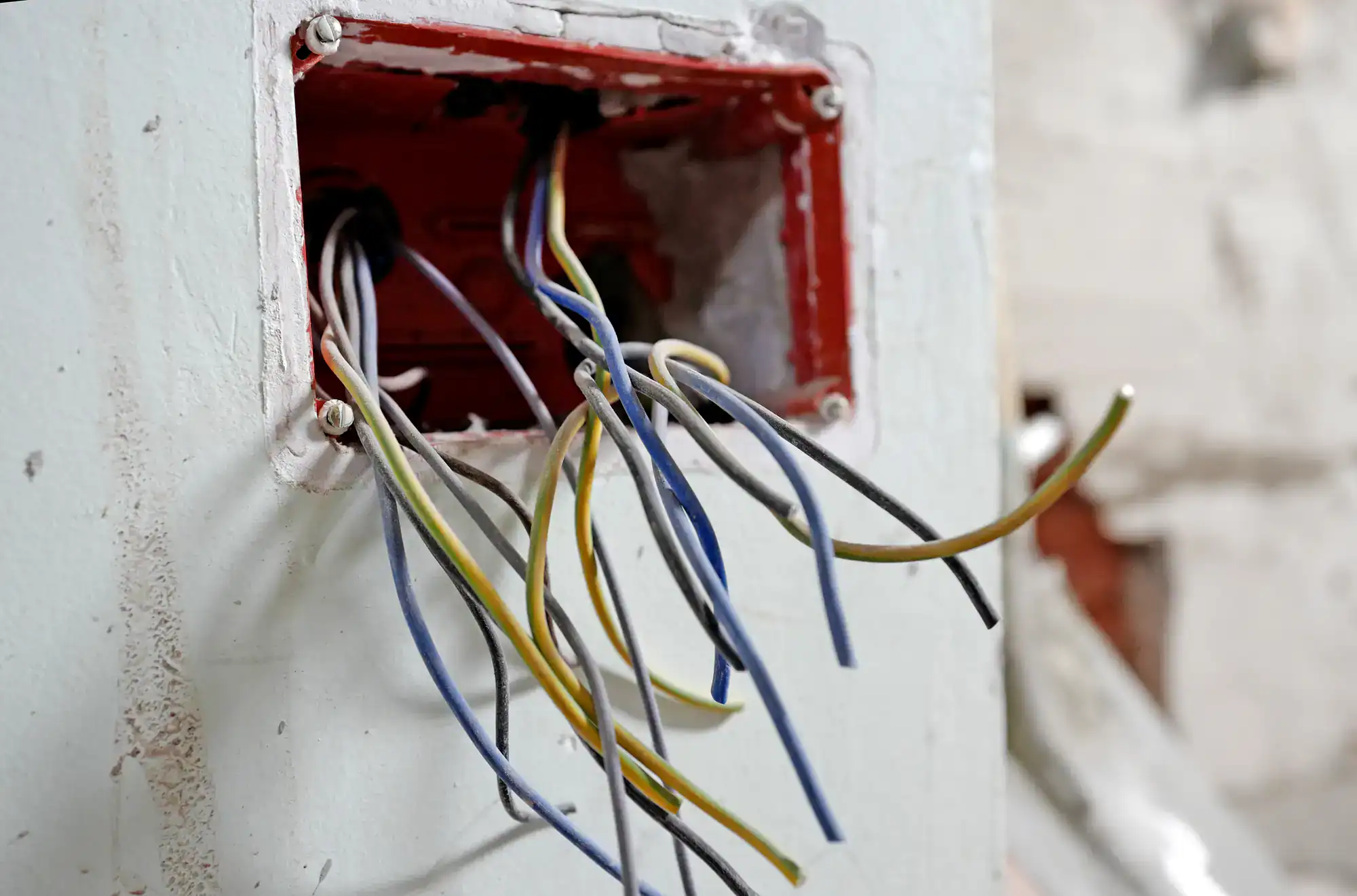
Knob and tube wiring was the standard way homes were wired from roughly the 1880s through the 1940s. It uses ceramic knobs to hold wires along framing members and ceramic tubes to protect wires where they pass through wood. The system only has two conductors — a hot wire and a neutral — with no ground wire. That’s the third prong on every modern outlet, and its absence is one of the core reasons insurers and inspectors take this wiring seriously.
Rhode Island has the third-oldest owner-occupied housing stock in the country, with a median age of 59 years. In Providence County specifically, roughly 43% of homes were built during or before the knob and tube era. That’s not a fringe situation — it’s the majority of the housing stock in older neighborhoods across Providence, Pawtucket, Cranston, North Providence, and Woonsocket. If you own a pre-1950 home here, there’s a very real chance some version of this wiring is still in your walls.

The wiring itself isn’t automatically dangerous the day it was installed. The problem is what happens to it over the next 80 to 100 years. The rubber-and-cloth insulation that wraps the wires degrades with age, heat, and contact with other materials. When that insulation cracks or crumbles, the wires underneath are exposed — and exposed wires near wood framing are exactly the kind of thing that starts house fires.
There’s another issue that’s specific to how Providence County homes have aged. Knob and tube wiring was designed to dissipate heat by running through open air. It was never meant to be surrounded by insulation. When homeowners added attic insulation over the decades — which is a completely reasonable thing to do in a New England winter — they often buried knob and tube wiring in the process. That traps heat around the wires and accelerates the breakdown of the insulation.
Many Providence County homes have exactly this situation: old wiring, newer blown-in insulation, and nobody who connected the two problems. The other thing worth knowing is that this wiring was designed for the electrical loads of a century ago. A 1920s household ran a few lights and maybe an icebox. Today’s home runs dishwashers, air conditioners, electric vehicle chargers, and a dozen devices simultaneously.
Knob and tube circuits weren’t sized for any of that, and overloading them is a real risk — especially in homes where previous owners added outlets or appliances without upgrading the underlying wiring. None of this means your house is about to burn down tonight. But it does mean the risk isn’t static. It gets worse over time, and it gets worse faster when insulation is involved.
This is the most common thing homeowners say when they’re trying to talk themselves out of a big project: the house has been standing for 80 years and nothing has burned down, so the wiring must be fine. It’s an understandable thought. It’s also the wrong way to read the situation.
The absence of a fire isn’t evidence of safety — it’s evidence of luck continuing. The insulation on knob and tube wiring doesn’t fail all at once. It degrades gradually, and the risk accumulates quietly over years until a single overloaded circuit or a moment of heat becomes the tipping point.
There’s also the practical reality that “nothing has gone wrong yet” doesn’t satisfy your insurance company, your home inspector, or a future buyer. Insurance carriers in Rhode Island are increasingly unwilling to cover active knob and tube wiring, and many are issuing 30-day ultimatums to homeowners — replace it or lose coverage. Missing that window doesn’t just mean shopping for a new policy. If your coverage lapses, your lender gets notified, and that can put your mortgage in jeopardy.
The wiring being old and quiet for decades doesn’t change any of that math. The point is to be honest that the “leave it alone” option has a narrowing window, and the window closes faster than most people expect once an insurer flags it.
Want live answers?
Connect with a Lightning Electric expert for fast, friendly support.
Once you know you have knob and tube wiring, you’re essentially looking at three paths: leave it in place, patch specific circuits, or replace the whole system. Each one sounds reasonable on the surface. In practice, they’re not equally viable — and the right answer depends heavily on whether your wiring is active, what your insurer is asking for, and whether you’re planning to sell the home.
Here’s what each option actually looks like in the real world.

In some cases, yes — but the conditions are specific. If the wiring has been properly deactivated and disconnected, it’s generally not an active safety hazard. When homes are rewired, electricians often leave the old deactivated wiring in place rather than physically removing it from the walls. That’s standard practice, and inactive wiring that’s been properly bypassed isn’t the same risk as active wiring carrying a live current.
The catch is that “inactive” has to be verified and documented by a licensed electrician, not assumed. Insurance companies that flag knob and tube wiring typically require a formal statement from a certified electrician confirming whether the wiring is active or inactive, where it runs, and what the plan is if any of it is still live. A homeowner’s belief that the old wiring isn’t being used doesn’t satisfy that requirement.
If your wiring is genuinely inactive and properly documented, leaving it in place may be acceptable to your insurer. But you need that documentation in writing — and you need it from someone with the credentials to sign off on it. For Providence County homeowners dealing with insurance renewals or a home sale, this is not a step you can skip or handle informally.
The other scenario where “leave it” becomes complicated is when the wiring is active but hasn’t caused a problem. Some insurers will accept a certification letter from an electrician stating the system is in safe condition. Others won’t — they require replacement regardless. Before you assume a certification letter will resolve the situation, find out exactly what your specific insurer requires. Many carriers in Rhode Island have moved to a hard replacement requirement, particularly when insulation has been added around the wiring.
This is the option that sounds like a reasonable middle ground and often isn’t. The idea is straightforward: identify the worst circuits, replace those, and leave the rest. It’s less disruptive, less expensive upfront, and feels like a proportionate response to a problem that’s been sitting quietly for decades.
The problem is that partial replacement rarely satisfies the two things that actually force homeowners to act: insurance requirements and home sale disclosures. Most insurers want all active knob and tube wiring removed, not just the circuits in the kitchen or the ones near the insulation. If your insurer has flagged the wiring and given you a deadline, a partial replacement is unlikely to close that loop. You’ll spend money on the work and still face the same policy pressure afterward.
There’s also a technical issue that gets overlooked. Knob and tube wiring has been patched, extended, and modified in Providence County homes for over a century. What that means in practice is that many homes don’t have clean, identifiable circuits anymore — they have a patchwork of old wiring, newer additions, and junction connections that may not meet current code. Partial replacement in that environment can create new hazards: improper connections between old and new systems, mixed grounding, and junction boxes that aren’t accessible for inspection.
The home sale scenario is similarly unforgiving. Buyers’ inspectors in Rhode Island are trained to flag knob and tube wiring, and they will note it regardless of whether it’s been partially replaced. A buyer who sees “some K&T wiring remains active” in an inspection report is going to use that as a negotiating point — or walk away. Partial replacement doesn’t neutralize the liability; it just reduces the scope of the problem while leaving the disclosure obligation intact.
If you’re weighing the partial route to save money, the better conversation to have is about financing. Full replacement with a payment plan is often more financially manageable than it first appears, and it actually resolves the problem rather than deferring it.
The decision really does come down to your specific situation — but for most Providence County homeowners with active knob and tube wiring, full replacement is the only path that actually closes the loop with insurers, survives a home inspection, and stays resolved. Leaving it alone or patching pieces of it tends to buy time, not solutions.
What full replacement looks like matters too. Modern techniques — including camera-guided removal through outlets — mean that in most homes, the work can be done with minimal intrusion into walls. Horsehair plaster, original woodwork, and historic finishes can often be preserved. The job requires permits and a final inspection, which is what gives you the documentation your insurer will ask for when the work is done.
We’ve been doing this work in Providence County for over 30 years. If you’re working through this decision and want a straight answer about what your home actually needs, we’re happy to take a look and tell you exactly what you’re dealing with — no pressure, no runaround.
Summary:

Article details:
Share: