
Changing Knob and Tube Wiring in Providence County: What “Updating” Actually Means

If someone told you your knob and tube wiring was "updated," you might still have a problem. Here's what that word actually means — and what it doesn't.

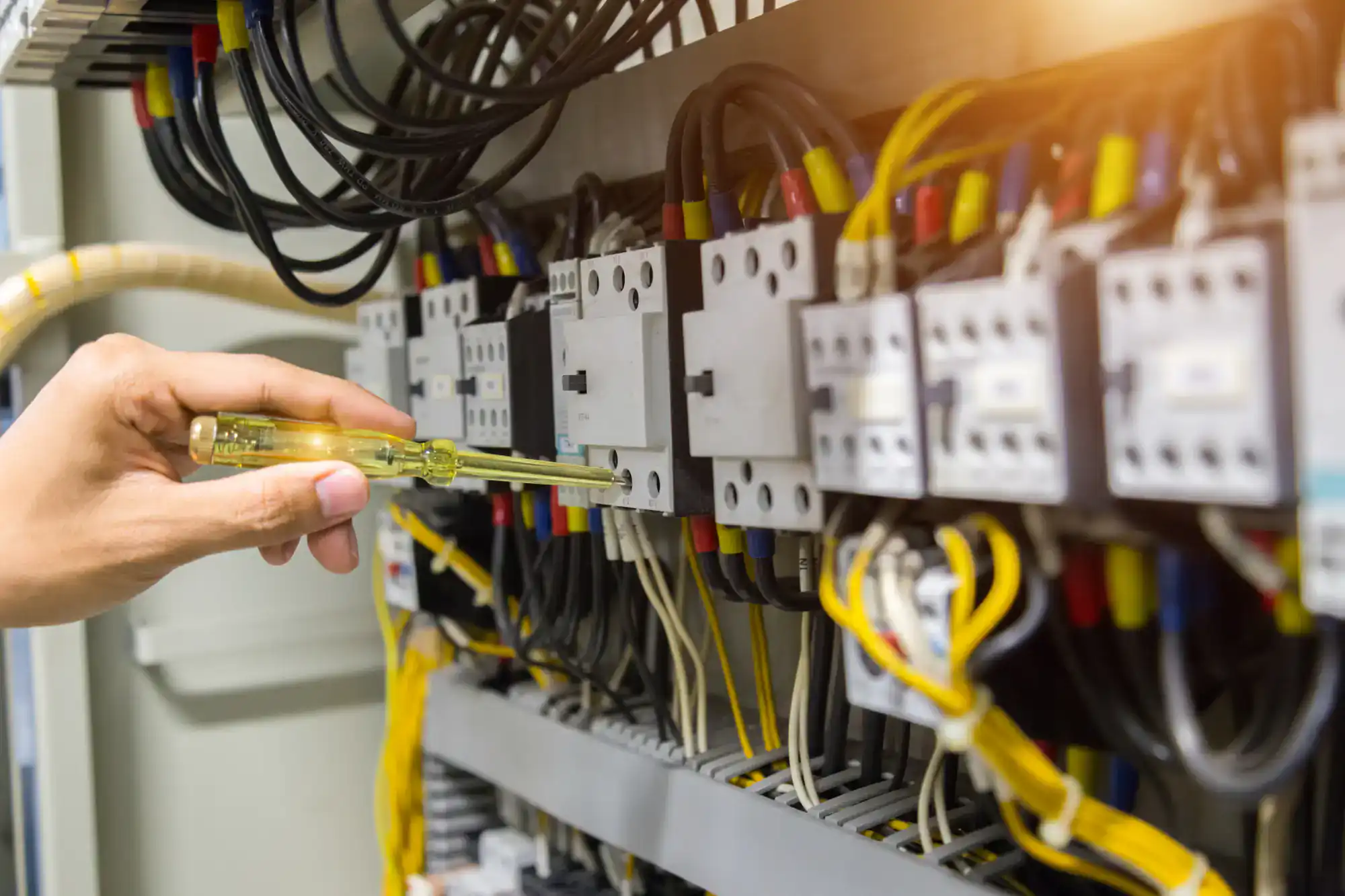
A hand holding a screwdriver tests or repairs an electrical control panel filled with wires, switches, and circuit components—just the kind of work skilled electricians in Rhode Island handle daily.

You’ve probably heard the term “knob and tube wiring” by now — from a home inspector, an insurance letter, or a neighbor who just went through the whole ordeal. And if someone along the way told you it was “updated,” you might have exhaled and moved on. But here’s the thing: “updated” doesn’t mean the same thing to every electrician. It doesn’t mean the same thing to your insurance company, either.

Before you assume the problem is handled — or before you hire someone to handle it — it’s worth understanding what changing knob and tube wiring actually involves, and what it doesn’t.

What "Updating" Knob and Tube Wiring Actually Covers

“Updating” is not an electrical term. It has no standard definition in any code book, no consistent meaning across contractors, and no legal weight with your insurance company. One electrician might use it to describe installing GFCI outlets throughout the house. Another might mean a partial rewire of a few circuits. A third might mean a full replacement of every wire, junction box, and panel in the home. All three of them could hand you a receipt that says “updated wiring” — and all three jobs would leave your home in a very different condition.

This matters because the reason most Providence County homeowners are dealing with this in the first place isn’t curiosity. It’s pressure — from an insurer, a home inspector, or a buyer who wants the wiring resolved before closing. And if the work that was done doesn’t meet the standard those parties are actually looking for, you’re back to square one, potentially with money already spent.

A technician in blue overalls and a yellow shirt uses HVAC gauges to check an outdoor air conditioning unit—much like skilled electricians in Rhode Island—tools visible in his belt.

Why GFCI Outlets Don't Solve the Knob and Tube Problem

GFCI outlets — the ones with the small reset buttons you see in bathrooms and kitchens — are a legitimate safety upgrade. They detect ground faults and cut power to the circuit before a shock can cause serious harm. Installing them in a home with older wiring is not a bad idea. But it is not the same as replacing knob and tube wiring, and treating it as such is one of the most common misunderstandings we run into.

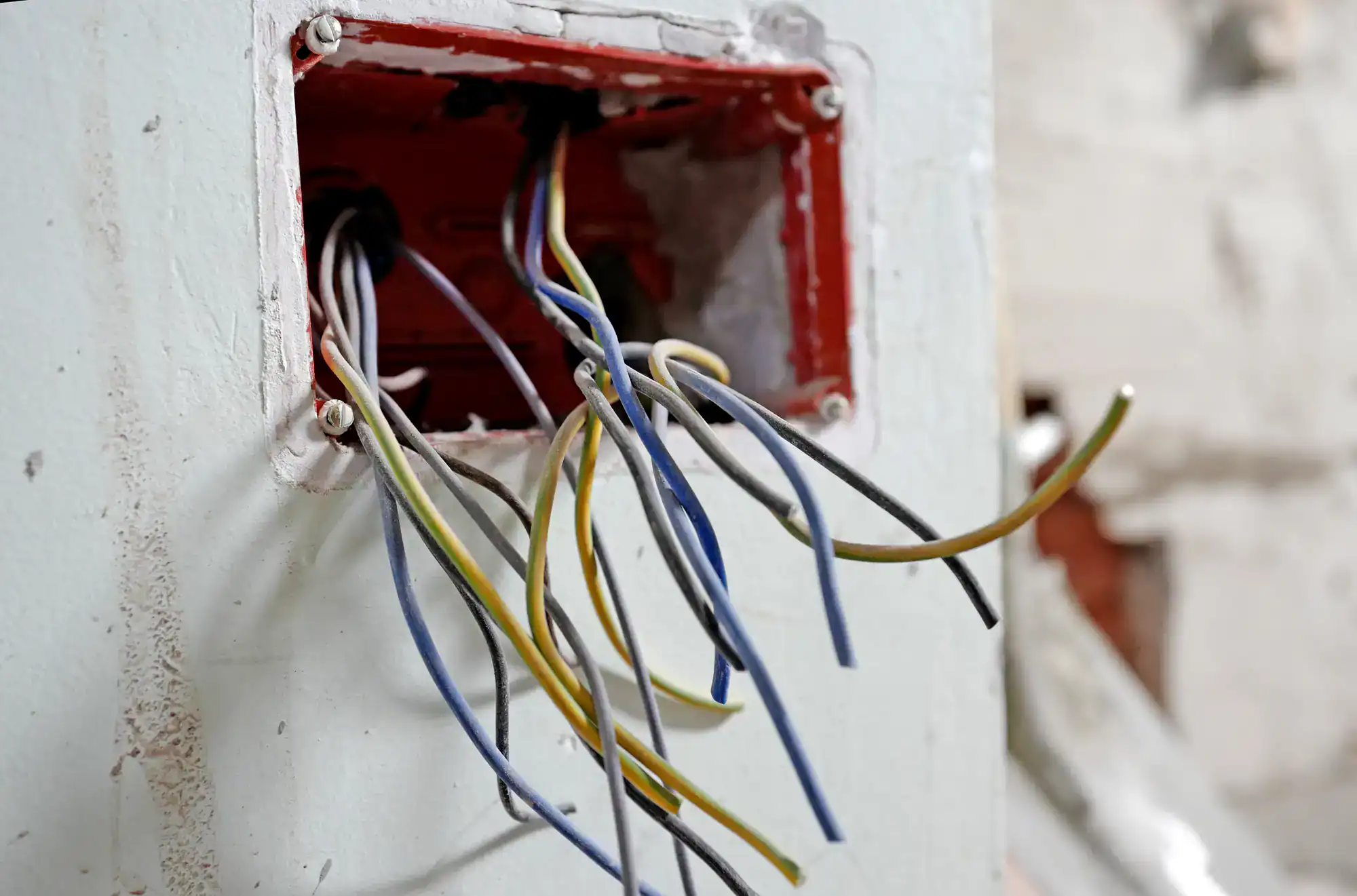
Here’s why. Knob and tube wiring has two conductors: a hot wire and a neutral wire. There is no grounding conductor — the third prong your modern appliances and electronics require. GFCI outlets can provide a layer of protection at the outlet itself, but they don’t add a ground wire to the circuit. The underlying wiring is still ungrounded. The rubber-coated cloth insulation on those old wires is still aging, still becoming brittle, still at risk of cracking inside your walls where no one can see it.

More importantly, GFCI outlets do nothing to resolve the specific code issue that affects most older homes in Providence County, RI: knob and tube wiring surrounded by insulation. The 2008 National Electrical Code explicitly prohibits K&T wiring in hollow spaces — walls, ceilings, attics — where insulating material has been added. This isn’t a technicality. It reflects a real physical problem: knob and tube was engineered to dissipate heat into open air. When you pack insulation around it, the heat has nowhere to go. That’s a documented fire hazard, and it’s exactly the scenario that plays out when a Rhode Island homeowner adds blown-in insulation to an older home before anyone checks the wiring.

If your home has been insulated in recent years and you still have active knob and tube wiring, GFCI outlets don’t change your situation under the code. And they almost certainly won’t satisfy an insurer who has flagged the wiring as a condition of coverage.

Active vs. Inactive Knob and Tube: The Distinction That Changes Everything

One of the first things we determine when we assess your home is whether the knob and tube wiring is active or inactive. This distinction matters more than most homeowners realize, and it’s often the source of confusion when an inspector or insurer asks about it.

Inactive knob and tube wiring has been disconnected from the electrical panel and is no longer carrying current. It may still be physically present in the walls — old wire doesn’t always get pulled out — but it’s not live. Inactive K&T is generally not a code violation in the same way, and many insurers treat it differently than active wiring.

Active knob and tube wiring is still connected and still carrying current. It may be powering lights, outlets, or entire circuits throughout the home. This is what insurers are asking about when they send a cancellation notice, and this is what needs to be addressed. The problem is that many homeowners don’t actually know which they have. They know the house is old. They may know someone did “some electrical work” at some point. But whether the old wiring is still live? That takes an assessment by someone who knows what they’re looking at.

In Providence County, where a significant portion of the housing stock was built before World War II — neighborhoods like College Hill, Federal Hill, Elmwood, and the East Side are full of homes from that era — it’s genuinely common to find active K&T circuits running alongside newer wiring that was added over the decades. A partial rewire done in the 1970s or 1980s may have replaced some circuits and left others untouched. The only way to know what you’re dealing with is a thorough assessment, not an assumption.

Want live answers?

Connect with a Lightning Electric expert for fast, friendly support.

Knob and Tube Wiring Replacement: What the Full Process Actually Looks Like

A true knob and tube wiring replacement is a complete electrical system overhaul. It’s not a patch, and it’s not an afternoon project. Understanding what it actually involves helps you ask better questions, set realistic expectations, and recognize when a proposal is leaving something out.

At its core, the process involves removing the old wiring, replacing the electrical panel — typically upgrading from an old fuse box to a modern breaker panel with at least 100 amps of capacity — and running new insulated wire throughout the home. Outlets, switches, and fixtures get replaced in the process. Depending on the home’s construction, accessing the old wiring may require opening walls, ceilings, or floors. In a pre-war home with plaster walls, that access work requires care and experience to minimize damage.

An electrician wearing gloves uses testing tools to check wiring and circuits inside an open electrical control panel, a common task for electricians in Rhode Island.

Do You Need a Permit to Replace Knob and Tube Wiring in Rhode Island?

Yes — and this is not optional, not a formality, and not something you want to skip.

Replacing knob and tube wiring in Rhode Island requires electrical permits and inspections. This is true whether you’re doing a partial replacement of specific circuits or a full home rewire. The permit process exists so that a licensed electrical inspector can verify the work was done correctly and to code. Without it, you have no documentation that the work was done at all — at least not documentation that means anything to an insurance company or a future buyer.

This is one of the clearest ways to tell a quality job from a corner-cutting one. An electrician who pulls permits and passes inspections is putting their work on the record. An electrician who suggests skipping the permit process — or who doesn’t mention it at all — is leaving you exposed. If your insurance company cancels your policy over knob and tube wiring and you pay to have it replaced, the last thing you want is to hand them a receipt with no permit number and no inspection sign-off.

We pull permits and pass inspections on every applicable job. Our electricians are also Electrical Inspector Certified, which means we understand exactly what Rhode Island inspectors are looking for before the inspection ever happens. That knowledge shapes how the work gets done, not just how it gets documented.

The permit and inspection trail also matters when you eventually sell the home. Rhode Island buyers and their lenders are increasingly scrutinizing electrical work on older properties. A properly permitted and inspected rewire is an asset. Unpermitted work — even good unpermitted work — is a liability that can surface at the worst possible moment.

How Long Does Knob and Tube Wiring Replacement Take in an Older Providence County Home?

This depends on the home, and anyone who gives you a firm number without seeing the property first is guessing. That said, a full rewire of a typical single-family home can take a week or more. Larger homes, homes with complicated access conditions, or multi-unit properties — and Providence County has a significant number of triple-deckers, those three-unit homes built throughout the late 1800s and early 1900s — can take longer.

The construction type matters a great deal here. A pre-war home with original plaster walls is a different job than a home with drywall. Plaster is harder to patch, more fragile to work around, and more likely to require careful, deliberate access rather than a straightforward cut-and-pull approach. After 30 years of working in Rhode Island’s older housing stock, we’ve learned how to minimize that disruption — how to get wire where it needs to go without turning a rewire into a renovation.

If you’ve received a 30-day notice from your insurance company, timeline becomes urgent in a very specific way. Thirty days sounds like a lot until you factor in scheduling, assessment, permitting, the work itself, and the inspection. It’s manageable — but it requires moving promptly, not waiting another two weeks to start making calls. We offer emergency service availability evenings, Saturdays, and Sundays for exactly this reason. When there’s a hard deadline, we work around it.

For homeowners concerned about cost, we offer financing through Synchrony Bank. A knob and tube replacement is a significant project, and we’d rather help you get it done right than watch you delay because the timing isn’t perfect — especially when delaying can mean losing your coverage entirely.

What to Do Next If You Think Your Knob and Tube Wiring Wasn't Properly Replaced

If you’re reading this because something feels unresolved — an insurance letter, a home inspection, a nagging sense that the “update” you paid for didn’t actually fix anything — trust that instinct. The confusion around knob and tube wiring is real, and it’s often created by vague language that leaves homeowners thinking a job is done when it isn’t.

The right next step is a thorough assessment by a licensed Master Electrician who will tell you clearly what’s active, what’s been properly replaced, and what still needs attention. A straight answer about what you’re actually dealing with.

If you’re in Providence County and you want that straight answer, Lightning Electric is a good place to start. We’ve been doing this work in Rhode Island’s older homes for over 30 years, we pull permits on every applicable job, and we’ll tell you exactly what we find.

Summary:

A lot of Providence County homeowners have been told their knob and tube wiring was “updated” — and walked away thinking the problem was solved. But “updated” isn’t a defined electrical term, and what it covers can range from a full replacement to a few new outlets that don’t actually fix anything. This post breaks down what changing knob and tube wiring really involves, why partial fixes often fall short, and what a proper replacement looks like from start to finish. If you’re dealing with an insurance letter, a home inspection flag, or just a nagging feeling that something wasn’t done right, this is worth reading before you call anyone.

Article details:

Share: