
For over 30 years, we’ve powered Rhode Island with expert electrical services delivered with a personal touch. Discover our story and commitment to quality.
Contact Info
The electrician's role is changing fast. From smart home integration to knob and tube removal, see how modern electrical work protects and powers Riverside, RI homes.
Your home’s electrical system used to be simple. Wires, outlets, breakers. You called an electrician when something stopped working or started sparking. That world is gone. Today, your electrician in Riverside, RI is installing smart thermostats that learn your schedule, removing century-old knob and tube wiring that insurance companies won’t cover, and integrating automation systems that let you control your entire home from your phone. The role has expanded, the stakes are higher, and the difference between an electrician who understands modern technology and one who doesn’t shows up fast. Let’s talk about what’s actually changing and why it matters for your home.
The electrician you hire today handles work that didn’t exist a decade ago. Smart home integration isn’t a side project anymore. It’s standard. Homeowners want lighting that adjusts automatically, thermostats that cut energy waste, and security systems that send alerts to their phones. That requires an electrician who knows how to wire smart switches that need neutral connections, install dedicated circuits for EV chargers, and integrate devices across different platforms without overloading your panel.
Then there’s the Rhode Island reality. Many homes here were built before 1950. That means knob and tube wiring, outdated panels, and electrical systems that weren’t designed for the load modern life demands. Insurance companies know this. They’re denying coverage or requiring upgrades within 30 days of purchase. Your electrician needs to know how to replace that wiring without tearing your house apart, upgrade your panel to handle today’s appliances, and make sure everything passes inspection the first time.
Smart home devices pull power constantly. Even when they’re “off,” they’re connected, waiting for your command. Add up a smart thermostat, automated lighting in six rooms, a video doorbell, security cameras, and voice assistants, and you’re putting real demand on circuits that might already be maxed out.
We start by assessing your panel’s capacity. If you’re still running on 100 amps and your home has central air, electric heat, or you’re planning to add an EV charger, you’re going to need an upgrade. Most modern homes should be on 200-amp service. That gives you room to grow without constantly tripping breakers or creating fire hazards.
Next comes the wiring. Many smart switches require a neutral wire at the switch location. Older homes don’t have that. We either need to run new wire or recommend wireless alternatives that don’t require rewiring. It’s not plug-and-play. It’s actual electrical work that has to meet code.
Then there’s integration. You might have devices from different manufacturers—Google, Amazon, Apple, Samsung. They need to communicate. That means ensuring your Wi-Fi network is strong enough, placing access points correctly, and sometimes running Cat6 cable for hardwired connections that won’t drop signal. We become part tech integrator, part electrical contractor. Both skills matter.
The goal is a system that works seamlessly. You walk in, lights turn on. You leave, thermostat adjusts. You get an alert if someone’s at the door. None of that happens reliably if the electrical foundation isn’t solid. That’s where our expertise separates a system that frustrates you from one that actually makes life easier.
You can buy a smart thermostat at any big-box store. The package says “easy installation.” What it doesn’t say is that if your HVAC system uses a heat pump, has multiple zones, or your thermostat location doesn’t have a C-wire for continuous power, that “easy” install becomes a problem fast. You’re dealing with live wires, HVAC controls, and equipment that can fail expensively if wired wrong.
Same goes for smart lighting. Replacing a standard switch with a smart one seems straightforward until you realize the switch needs a neutral wire and your 1940s house doesn’t have one at that location. Now you’re either running new wire through walls or you’re stuck. We know how to fish wire without destroying plaster, how to work around old lath, and how to bring your wiring up to code in the process.
Then there’s the safety piece. Smart devices connect to your home’s electrical system. If your panel is outdated, your circuits are overloaded, or your grounding isn’t proper, you’re creating hazards. Electrical fires don’t announce themselves. They start behind walls, in panels, at connections that weren’t made correctly. As a licensed electrician in Rhode Island, we carry insurance, pull permits, and make sure the work gets inspected. When something goes wrong with DIY electrical work, your homeowner’s insurance can deny the claim. That’s not a risk worth taking to save a service call.
Beyond safety, there’s functionality. Smart home systems work best when they’re integrated properly from the start. We can plan your system so devices communicate efficiently, circuits aren’t overloaded, and you have room to add more technology later without starting over. We’ll label your panel correctly, document what’s on each circuit, and set you up for future upgrades. That’s not something you get from a YouTube tutorial.
The difference between a smart home that works and one that constantly glitches often comes down to whether a professional handled the electrical side. Devices are only as reliable as the power feeding them. Get that right, and everything else follows.
Want live answers?
Connect with a Lightning Electric expert for fast, friendly support.
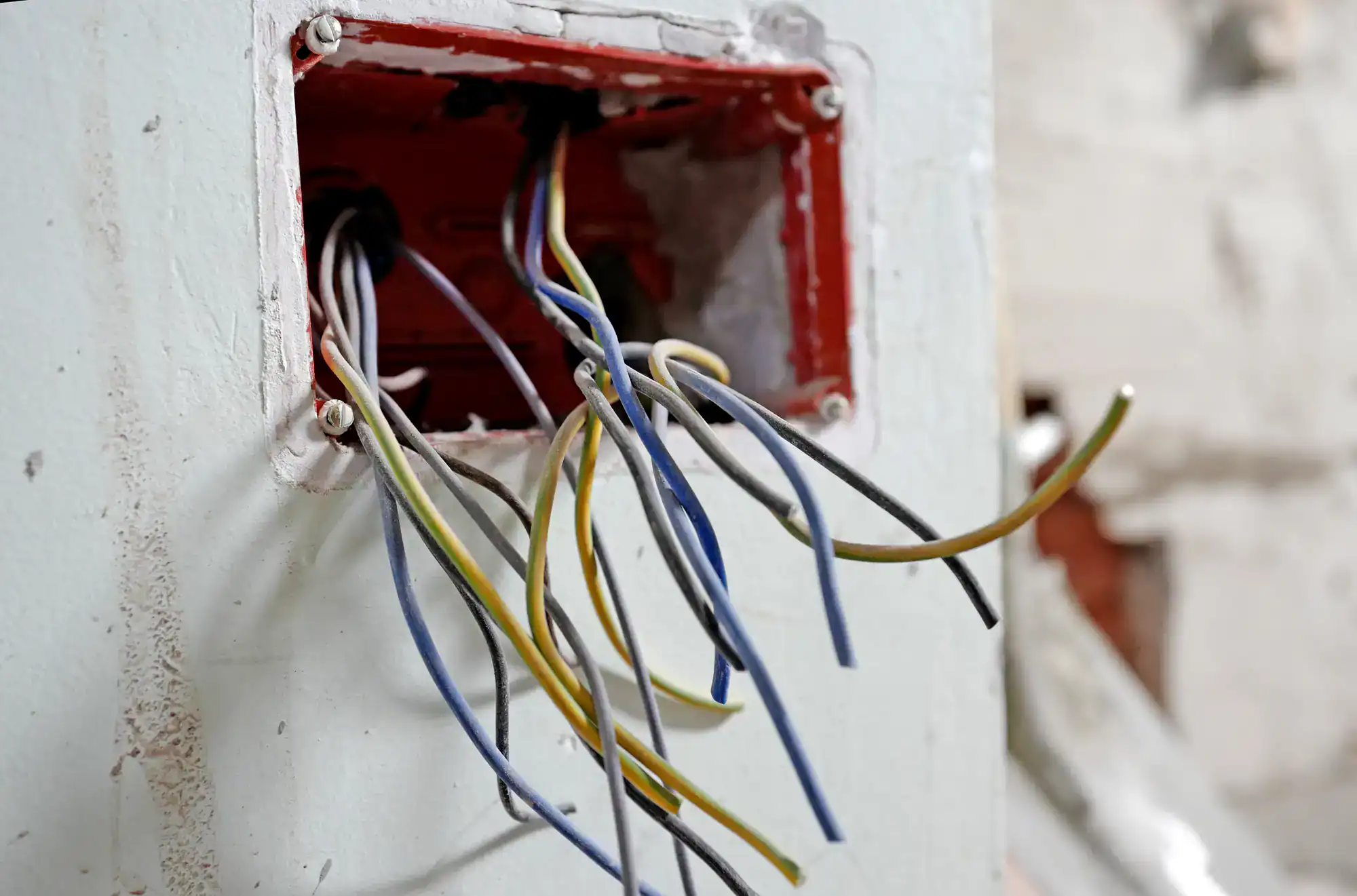
If your home was built before 1950, there’s a good chance knob and tube wiring is still running somewhere in your walls, attic, or basement. You might not see it. You might not think about it. But your insurance company does. Most insurers in Rhode Island won’t cover homes with active knob and tube wiring. If they find it during an inspection, they’ll give you 30 days to remove it or they’ll cancel your policy. If your mortgage company finds out you lost coverage, they’ll force-place insurance at rates that can triple your cost.
That’s the insurance problem. The safety problem is worse. Knob and tube wiring has no grounding. The insulation breaks down over time. It wasn’t designed for the electrical load modern homes require. Even if it seems to be working fine, it’s a fire hazard. And it’s blocking you from doing other work. You can’t add insulation in areas with knob and tube wiring. You can’t upgrade your electrical system properly without addressing it.
Removing knob and tube wiring isn’t a one-size-fits-all job. Every home is different. The wiring might run through attics, behind plaster walls, under floorboards, or all three. We start with an inspection to map out exactly where the old wiring exists and what needs to be replaced.
The next step is planning new wiring routes. The goal is to bring modern, grounded wiring to every part of your home while minimizing wall damage. In many Rhode Island homes, that means working around plaster and lath construction, which is more delicate than drywall. We know how to fish wire through existing walls, use access points strategically, and patch openings so you’re not left with a construction zone.
Once the plan is set, the old wiring gets disconnected and removed. New wiring gets run to code. That means grounded circuits, proper wire gauge for the load, and connections that will pass inspection. Your panel might need an upgrade too, especially if you’re going from an old 60-amp or 100-amp service to the 200-amp standard most homes need today.
After the new wiring is in, everything gets tested and inspected. Rhode Island has strict electrical codes. We make sure the work meets those standards and that the local inspector signs off. Once that’s done, you get documentation—usually a Certificate of Insurance and inspection approval—that you can provide to your insurance company to reinstate or maintain coverage.
The timeline for a complete knob and tube upgrade in Riverside, RI typically runs one to three weeks, depending on the size of your home and how much wiring needs replacement. It’s not a quick fix, but it’s the only real fix. Partial removal doesn’t solve the insurance problem or the safety risk. You need the whole system brought up to modern standards.
Ignoring knob and tube wiring doesn’t make it go away. It makes the consequences show up later, usually at the worst possible time. If you’re buying a home, the inspection report will flag it. Your lender might refuse to close until it’s addressed. If you’re selling, buyers will either walk away or demand a price reduction that far exceeds what the upgrade would have cost.
If you’re staying in your home and your insurance company discovers knob and tube wiring during a routine inspection or after a claim, they’ll cancel your policy. You’ll have 30 days to find new coverage, and most insurers won’t touch a home with active knob and tube wiring. The few that will charge significantly higher premiums. If you can’t get coverage and you have a mortgage, your lender will force-place insurance on your home. That coverage is expensive, often two to three times what you were paying, and it only protects the lender’s interest, not your belongings.
Then there’s the fire risk. Knob and tube wiring wasn’t built for modern electrical loads. When you plug in a microwave, a space heater, a laptop, and charge your phone all on the same circuit, that old wiring overheats. Insulation that’s been deteriorating for 70 or 100 years doesn’t protect the way it should. Connections loosen. Wires arc. Fires start behind walls where you can’t see them until it’s too late.
Even if you never have a fire, knob and tube wiring limits what you can do with your home. You can’t safely add insulation in areas where it’s present. You can’t install modern electrical systems like whole-home surge protection or smart home devices without addressing the underlying wiring first. You’re stuck with a system that’s holding your home back.
The cost to remove knob and tube wiring and upgrade to modern, grounded wiring varies depending on your home’s size and layout, but it’s a fraction of what you’ll pay in higher insurance premiums over time, lost home value, or fire damage. More importantly, it’s the difference between a home that’s safe and one that’s waiting for a problem to happen.
The electrician you choose needs to handle two very different challenges. One is understanding Rhode Island’s historic housing stock—how to work with plaster and lath, how to replace knob and tube wiring without destroying your walls, how to upgrade panels in homes that were never designed for modern electrical loads. The other is understanding where technology is going—how to install smart home systems that actually work, how to integrate devices across platforms, how to future-proof your electrical system so you’re ready for EV chargers, battery backup, and whatever comes next.
Not every electrician can do both. You need someone with deep experience in older homes and current knowledge of smart technology. You need licensing, insurance, and a track record that proves they’ve done this work hundreds of times. You need clear pricing, proper permits, and inspections that pass the first time.
If you’re in Riverside, RI and you’re dealing with outdated wiring, planning smart home upgrades, or just want your electrical system checked by someone who knows what they’re looking at, we’ve been handling exactly this kind of work for over 30 years across Rhode Island.
Summary:
Share: