
Generator Installation in Foster, RI

Your Well Pump Stops When Power Goes Out

Automatic standby generators keep water flowing, heat running, and your home protected during Foster’s extended rural outages—without you lifting a finger.
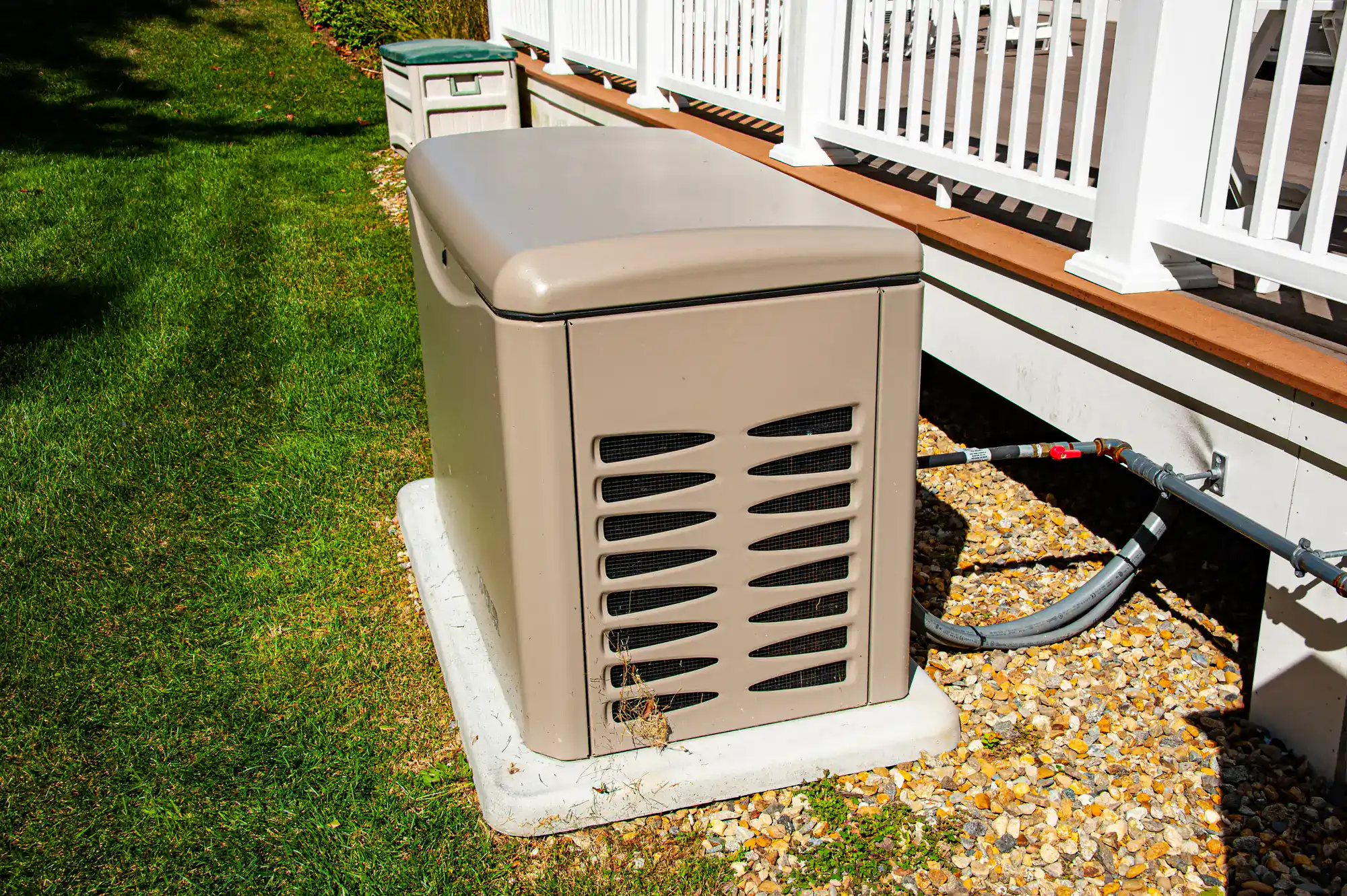
A beige standby generator sits on a concrete pad next to a house with white railing in RI, surrounded by grass and small rocks, with cables connected—installed by skilled electricians Providence County trusts.
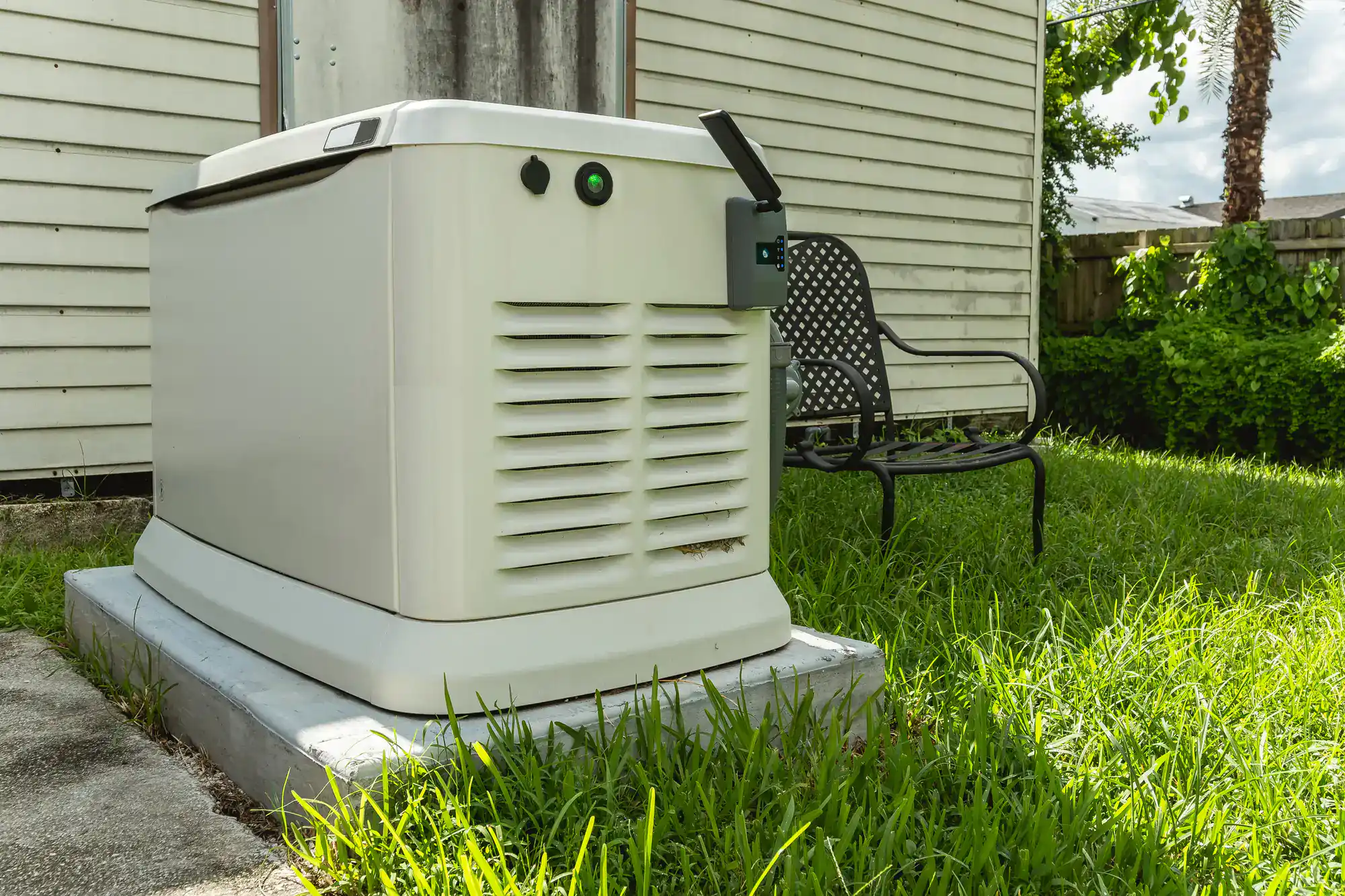
A standby home generator, installed by expert electricians in Providence County, RI, sits on a concrete pad next to a house with white siding, a metal outdoor bench, and green grass nearby.

Home Generator Install Foster, RI

Water, Heat, and Power When Everyone Else Goes Dark

You’re not dealing with a quick 20-minute outage in Foster. When storms hit, you’re looking at hours or days without power because of how far you are from substations and how many trees line the service routes. That means no water from your well pump, no heat, no way to flush toilets, and food spoiling in the fridge.

A standby generator installation in Foster, RI changes that completely. The system detects when your power drops, starts itself within seconds, and keeps your essential circuits running until the grid comes back. You’re not scrambling for extension cords or rationing gas for a portable unit.

Your well pump gets the 240 volts it needs. Your heating system stays on. Your refrigerator keeps running. The sump pump doesn’t quit. You go about your day while your neighbors are dealing with the fallout of another multi-day outage that’s become standard in rural Rhode Island.

Certified Generator Installer Foster, RI

We've Been Wiring Rural Homes Since 1949

We’ve been handling electrical work in Rhode Island for over 70 years, and we’ve seen what happens when rural homes lose power for extended stretches. We’re an authorized Generac dealer, which means we’re trained on the equipment, certified to install it correctly, and held to a standard that protects you.

We’re also members of the Rhode Island Electrical Inspectors IAEI Roger Williams Chapter and fully compliant with NFPA’s code of ethics. That’s not marketing language—it’s the licensing and insurance that keeps your installation safe and legal. We’ll provide our certificate of insurance when you ask for it, and every job comes with a one-year parts and labor warranty.

Foster’s electrical needs are different from suburban neighborhoods. Your panel might need an upgrade. Your well pump draws serious amperage. You might have a workshop, a barn, or septic alarms that need backup power. We size systems based on what actually runs in your home, not what sounds good in a sales pitch.

A person in RI pours green engine oil from a bottle into a blue funnel connected to a yellow portable generator, often used by electricians in Providence County, placed on a concrete surface outdoors.

Generator Electrician Foster, RI

Here's How a Standby Generator Installation Actually Works

First, we come out to your property in Foster, RI and assess your electrical panel, your fuel source, and what you actually need to keep running during an outage. Most rural homes prioritize the well pump, heating system, refrigerator, and a few lighting circuits. Some add sump pumps, septic systems, or medical equipment. We calculate the load and size the generator accordingly.

Next, we handle the installation. That includes mounting the generator on a concrete pad outside, running the fuel line (usually natural gas or propane), and installing an automatic transfer switch inside your electrical panel. The transfer switch is what detects the outage and signals the generator to start. It also switches your home back to utility power once the grid is restored.

We pull permits, schedule inspections, and make sure everything is up to code. The generator connects to your existing fuel supply, so there’s no refueling or maintenance during an outage. Once it’s live, the system tests itself weekly to make sure it’s ready when you need it.

You don’t flip a switch or press a button. The generator kicks on automatically, powers your home, and shuts off when the utility company gets your lights back on. That’s the whole point—it works without you being home or even awake.

An electrician wearing a hard hat and gloves installs or repairs electrical wiring connected to a wall-mounted control box outdoors—a common task for electricians in Providence County, RI, as he handles cables secured in black tubing.

Explore More Services

About Lightning Electric

Standby Generator Installation Foster, RI

What's Included in a Generator Installation in Foster

Every home generator install in Foster, RI starts with load calculation. We don’t guess what size unit you need—we measure the actual draw from your well pump, HVAC system, and appliances. Undersizing a generator means it won’t start your well pump. Oversizing it means you’re paying for capacity you’ll never use.

We install the automatic transfer switch, which is the brain of the system. It monitors your utility power and switches to generator power the moment it detects an outage. When utility power comes back, it transfers you back and shuts the generator down. You’re never without power long enough to notice.

The generator itself sits outside on a concrete pad. We connect it to your natural gas line or propane tank, run the electrical conduit to your panel, and test the whole system before we leave. Rhode Island winters are brutal, and Foster sees its share of Nor’Easters and ice storms. These systems are built to start in subzero temps and run for days if needed.

We also handle any panel upgrades if your current setup can’t support the transfer switch or additional circuits. Older homes in Foster sometimes need a service upgrade to 200 amps before a generator can be safely installed. We’ll tell you upfront if that’s the case and what it’ll cost.

A white standby home generator sits on a concrete pad in a grassy backyard, surrounded by lush green trees and bushes—installed by expert electricians in Providence County, RI.

How long does a generator installation take in Foster, RI?

Most residential standby generator installations in Foster, RI take one to two days, depending on your electrical panel and site conditions. If your panel needs an upgrade or we’re running a new gas line, it might stretch to three days. We’re not rushing through the work—we’re pulling permits, installing transfer switches, mounting the generator, and making sure everything passes inspection.

The actual generator hookup is straightforward if your panel and fuel source are ready. The transfer switch goes inside your electrical panel and takes a few hours to wire correctly. The generator gets mounted on a concrete pad outside, usually within 18 inches of your home’s exterior wall to keep the gas line run short and code-compliant.

Weather can slow things down in Foster, especially in winter. We’re not pouring concrete pads in freezing temps, and we’re not working in lightning storms. But once we start, we finish. You’ll have a working system that’s tested and ready before we leave your property.

It depends entirely on what you’re running during an outage. Most homes in Foster, RI need at least a 14-16kW generator to cover the well pump, heating system, refrigerator, and basic lighting. If you’re adding central air, a second fridge, or a sump pump, you’re looking at 20-22kW. Whole-house systems that run everything—including electric dryers, ranges, and workshops—usually need 24kW or higher.

Your well pump is the big variable. A 1-horsepower pump draws around 2,000 watts when running, but it needs 4,000-6,000 watts to start. If your pump is 1.5 or 2 horsepower, that startup load climbs fast. We measure the actual amperage draw on your equipment instead of guessing, because undersizing a generator means it won’t start your pump when you need water most.

We’ll walk your property, check your panel, and calculate the load before recommending a size. Some homes can get by with a smaller unit if they’re willing to skip the AC or second fridge during outages. Others need the capacity because they’re running medical equipment or can’t afford to lose a freezer full of food. We size it based on your actual needs, not what’s easiest to sell.

A complete standby generator installation in Foster, RI typically runs between $13,500 and $16,500 for most residential systems, including the generator, transfer switch, concrete pad, fuel line connection, permits, and labor. Smaller systems in the 14-16kW range sit closer to the lower end. Larger whole-house units with panel upgrades or longer gas line runs push toward the higher end or beyond.

If your electrical panel is outdated or undersized, you might need a service upgrade to 200 amps before we can safely install a transfer switch. That adds $2,000-$4,000 depending on the scope of work. If we’re trenching a new propane line or running conduit across difficult terrain, that affects cost too. Every property in Foster is different, and we price each job individually after seeing what’s involved.

We don’t finance in-house, but most generator manufacturers and third-party lenders offer payment plans if you’d rather spread the cost out. We’ll provide a detailed written estimate before any work starts, so you know exactly what you’re paying for. No surprises, no upsells after we’ve already started the job.

Yes. Any permanent standby generator installation in Foster, RI requires an electrical permit, and most require a building or mechanical permit as well, depending on the fuel source and placement. We pull the permits as part of the installation process, and we schedule the inspections with the local building department to make sure everything is compliant before you start using the system.

The electrical inspection covers the transfer switch wiring, the generator connection, and the grounding. The building inspection covers the concrete pad, setback distances from property lines, and clearance from windows or vents. If you’re connecting to a propane tank, the gas line installation gets inspected separately. It sounds like a lot, but it’s standard procedure and it protects you if there’s ever an insurance claim or a resale inspection.

Some homeowners try to skip permits or hire unlicensed contractors to save money. That’s a mistake. If the system isn’t permitted and something goes wrong—fire, carbon monoxide, electrical failure—your homeowner’s insurance can deny the claim. Worse, you’ll have to rip it out and reinstall it correctly if it’s ever flagged during a home sale. We do it right the first time so you don’t deal with that headache later.

Yes, as long as the generator is sized correctly and the transfer switch is wired to include the circuit that powers your well pump. Most well pumps in Foster, RI run on 240 volts and need a generator with enough starting wattage to handle the initial surge when the pump motor kicks on. That surge is usually two to three times the pump’s running wattage, and it’s the reason you can’t just plug a well pump into a small portable generator.

A properly installed standby generator handles that surge without issue because it’s hardwired into your electrical panel and sized for your home’s actual load. When the power goes out, the transfer switch detects it, starts the generator, and powers the circuits you’ve designated—including the one feeding your well pump. You’ll have water within 30 seconds of losing utility power, and you won’t have to do anything manually.

If your current electrical panel doesn’t have a dedicated circuit for the well pump, or if the pump shares a circuit with other high-draw equipment, we’ll address that during installation. The goal is reliable water during outages, and that means making sure the pump has clean power and enough capacity to start and run without tripping breakers or overloading the generator.

Standby generators need professional maintenance once a year, usually in the fall before storm season hits. That service includes changing the oil and oil filter, replacing the air filter, checking the battery, inspecting the fuel lines, and running the system under load to make sure it’s operating correctly. Most manufacturers require annual maintenance to keep the warranty valid, and it’s worth doing even after the warranty expires because it catches small problems before they become expensive failures.

Between professional services, the generator runs a self-test every week for about 15 minutes. That test keeps the engine lubricated, charges the battery, and confirms the system is ready to run if the power goes out. You’ll hear it running briefly, but it’s not using much fuel and it’s not something you need to monitor or manage. It’s fully automatic.

If you’re comfortable with basic maintenance, you can handle oil changes yourself and save some money. But the annual inspection should be done by someone who knows what to look for—loose connections, fuel leaks, error codes, or worn components that could cause the system to fail during an outage. We offer maintenance plans for Foster, RI homeowners who want to keep their generators in top shape without thinking about it.

Other Services we provide in Foster