
For over 30 years, we’ve powered Rhode Island with expert electrical services delivered with a personal touch. Discover our story and commitment to quality.
Contact Info
You need the wiring gone so your insurance company stops threatening to drop you. But you don’t want someone tearing into your walls, leaving you with holes to patch and plaster dust everywhere for months.
That’s where most electricians create a second problem while solving the first. They’ll remove the knob and tube wiring, sure—but they’ll leave your walls looking like a construction zone. And if you’ve got horsehair plaster, which most Portsmouth homes built before 1940 do, good luck finding someone who can match it.
We use a specialized camera system that goes through your existing outlets to locate and remove old wiring from inside the walls. No cutting. No notching. Your walls stay intact, your plaster stays original, and you get the documentation your insurance company needs to reinstate coverage. That’s it.
We’ve been handling electrical work across Rhode Island since the early ’90s. We’ve worked in hundreds of older homes throughout Newport County, where nearly 30% of properties were built before 1939.
Portsmouth is Rhode Island’s second-oldest municipality, and that means a lot of beautiful historic homes with outdated electrical systems. We’ve seen every variation of knob and tube wiring you can imagine—some of it still functional, most of it not safe by today’s standards.
The camera system we use isn’t something every electrician has. We invested in it specifically because we got tired of watching homeowners deal with unnecessary wall damage. It’s become our signature approach, especially in historic areas like Portsmouth where preserving original materials actually matters.
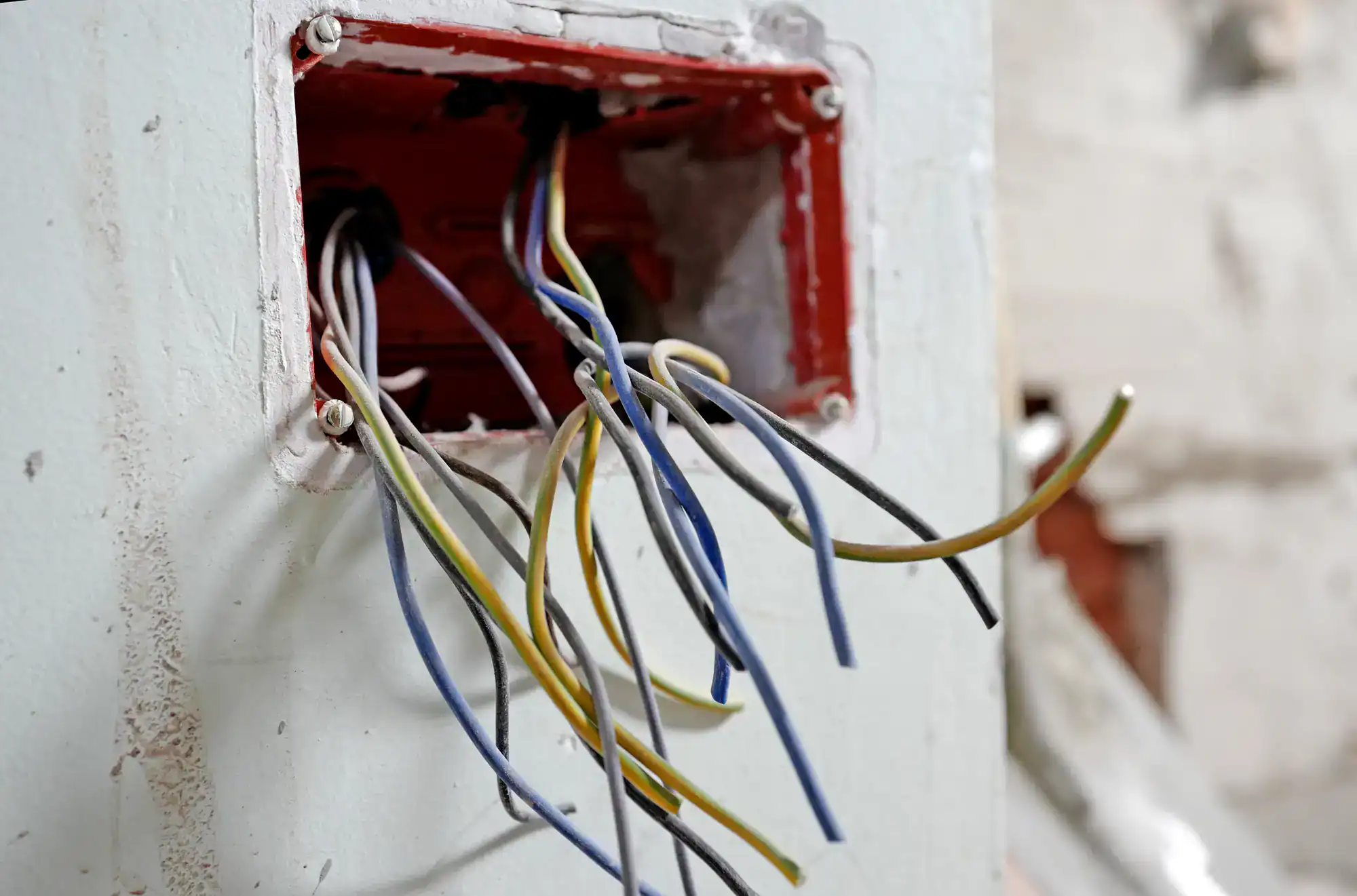
We start with an inspection using our camera system. The camera goes through your outlets and into the walls so we can see what’s actually there—where the wiring runs, whether there’s mouse damage, if there are covered junction boxes or open joints that need attention.
Once we map everything out, we remove the old knob and tube wiring through the same access points. No need to open up your walls because we’re working from the inside. If we do need to make a small access point—and sometimes we do—it’s minimal. Think small notches, not gaping holes.
After the old wiring is out, we install new, grounded circuits that meet current electrical code. You’ll have the capacity to run modern appliances without worrying about overloading a 60-amp system that was never designed for today’s electrical demands. We handle the permits, the inspections, and provide you with all the documentation your insurance company requires to prove the work was done by a licensed electrician and passed inspection.
Ready to get started?
You get a full knob and tube wiring replacement without the mess. The camera inspection shows us exactly what’s happening inside your walls before we touch anything. That means we’re not guessing, and we’re not making unnecessary holes to “see what’s there.”
For Portsmouth homeowners with horsehair plaster—which is in most pre-war homes around here—this matters more than you might think. Horsehair plaster is incredibly difficult to match if it gets damaged. The texture, the composition, even the way it ages makes it nearly impossible to repair invisibly. Our method keeps your original plaster intact, which means you’re not stuck trying to find a plasterer who can make repairs look like they were never there.
You also get modern electrical capacity. Most knob and tube systems max out at 60 amps, which isn’t enough for how we live today. We upgrade you to 100 amps or more, depending on your home’s needs. That means you can run your HVAC, your kitchen appliances, and charge your devices without constantly flipping breakers or worrying about fire risk every time you turn on a light.
Yes, once you provide documentation that the work was completed by a licensed electrician and passed inspection. Most insurance companies in Rhode Island either won’t cover homes with active knob and tube wiring or they’ll give you 30 days to remove it after you purchase a policy.
If they find it during an inspection and you don’t upgrade, they’ll cancel your coverage. And if your mortgage company finds out you lost coverage, they’ll force-place insurance on your home at a much higher rate—sometimes triple what you were paying.
We provide the official certificates and inspection reports your insurer needs. Once you submit that documentation, most companies reinstate coverage immediately. The key is making sure the work is done right and documented properly, which is why working with a licensed electrician matters here.
Most homeowners in the area pay between $12,000 and $36,000 for a complete knob and tube wiring replacement. The range is wide because every house is different—square footage, how accessible the wiring is, how much of the system needs replacing, and what condition your walls are in all factor into the final cost.
If you own a 2,500 square foot Victorian with plaster walls and limited attic or basement access, expect the higher end of that range. Smaller homes with easier access typically fall toward the lower end.
The camera system we use doesn’t necessarily make the job cheaper, but it does eliminate the cost of repairing wall damage afterward. When other electricians cut into your walls, you’re paying them for the electrical work and then paying a plasterer to fix everything they opened up. With our approach, you’re avoiding that second expense entirely, which often balances out in the end.
Yes, that’s exactly what our camera system allows us to do. We insert the camera through your existing outlets to inspect and remove the wiring from inside the walls. No cutting, no notching, no tearing into your plaster.
Every other electrician in the area will need to open your walls to access the old wiring. That’s the standard approach because without the camera system, there’s no other way to see what’s inside or pull the wiring out safely.
If we do encounter a situation where we need a small access point—and occasionally we do—it’s minimal. We’re talking small notches at most, not the kind of damage that requires a full plaster repair job. For Portsmouth homes with original horsehair plaster, this is a huge advantage because that material is extremely hard to match if it gets damaged.
It can be, especially if it’s been in place for 80+ years. Knob and tube wiring wasn’t designed to handle the electrical load of modern homes. Most systems max out at 60 amps, and the average household today needs 100 amps or more to safely run appliances, HVAC systems, and electronics.
The insulation around the wiring also breaks down over time. If mice have chewed through it, or if someone added outlets or fixtures incorrectly over the years, you’ve got exposed wiring that’s a legitimate fire risk. Insurance companies refuse to cover homes with knob and tube wiring for exactly this reason.
Even if your system seems fine right now, it’s not grounded. That means no protection against electrical surges, and a higher chance of shock or fire if something goes wrong. The fact that it’s still working doesn’t mean it’s safe—it just means it hasn’t failed yet.
Most full-house removals take between three days and two weeks, depending on the size of your home and how much of the system needs replacing. Smaller homes with straightforward layouts fall on the shorter end. Larger homes with limited access or more complex wiring take longer.
The camera inspection itself usually takes a few hours. Once we know what we’re dealing with, we can give you a more accurate timeline for the removal and replacement work.
Because we’re not cutting into walls, we don’t need to schedule a plasterer to come in afterward, which speeds up the overall process. You’re not waiting weeks for repairs to be made and plaster dust to settle. Once the electrical work is done and inspected, you’re finished.
We insert a specialized camera through your outlets and into the walls to see what’s actually there. The camera shows us where the wiring runs, what condition it’s in, whether there’s any mouse damage, and if there are covered junction boxes or open joints that need attention.
This gives us a complete picture before we start any removal work. We’re not guessing about what’s behind your walls or making unnecessary access points just to “check things out.” We already know what we’re dealing with, which makes the removal process faster and far less invasive.
The inspection also helps us identify any other electrical issues that might not be obvious from the outside—things like outdated connections, improper modifications someone made years ago, or sections of wiring that are more deteriorated than others. It’s a diagnostic tool that makes the entire job more precise and keeps your walls intact in the process.