For over 30 years, we’ve powered Rhode Island with expert electrical services delivered with a personal touch. Discover our story and commitment to quality.
Contact Info
Your refrigerator keeps running. Your heat stays on. Your security system doesn’t go dark. That’s what a properly installed standby generator does for you.
When storms roll through South Kingstown, you’re not scrambling for flashlights or worrying about frozen pipes. The generator kicks on automatically within seconds. You might not even notice the power went out until you look outside and see your neighbors’ houses sitting in the dark.
This isn’t about convenience alone. It’s about protecting what you’ve invested in. Your food doesn’t spoil. Your basement doesn’t flood because the sump pump died. Your pipes don’t freeze and burst because the heat shut off. And if someone in your home relies on medical equipment, you’re not making emergency calls at 2 AM during a winter storm.
Rhode Island has dealt with 33 major weather disasters since 1980. Winter storms, hurricanes, Nor’Easters. The pattern isn’t changing. What changes is whether you’re prepared for it.
We’ve been installing generators across Rhode Island for over three decades. We’re fully licensed Master Electricians, certified by Generac, and we’ve completed more than 1,500 commercial projects in this region.
That experience matters when you’re running gas lines, sizing electrical loads, and making sure your system actually works when you need it. We’re not learning on your property.
We’re local to South Kingstown and we know what weather does here. We know which systems hold up and which ones cause callbacks. We know the permitting process, the inspection requirements, and how to get your installation done right the first time. Every generator we install gets monitored remotely so you can check its status from your phone, and we’re available when you need service or repairs.
First, we come to your property and assess your electrical panel, your power needs, and where the generator should sit. We’re looking at fuel source options—natural gas or propane—and what size system actually makes sense for your home or business. Not every property needs the biggest unit, and we’re not going to sell you one.
Once you approve the plan, we handle the permitting. Then we prep the site, pour the concrete pad, run the fuel lines, and connect everything to your electrical system. The generator gets wired into a transfer switch so it knows when to kick on automatically.
After installation, we test the system to make sure it’s operating correctly. We walk you through how it works, show you the mobile monitoring app, and explain what maintenance looks like going forward. The whole process typically takes a few days depending on the scope, and we clean up when we’re done.
You’re not dealing with a handoff between multiple contractors. We’re licensed to handle the electrical work, the gas work, and the generator installation all in one go.
Ready to get started?
You’re getting a full system—not just a generator dropped on your lawn. That includes the site evaluation, load calculation, equipment selection, concrete pad installation, fuel line connection, electrical panel integration, transfer switch installation, and final testing.
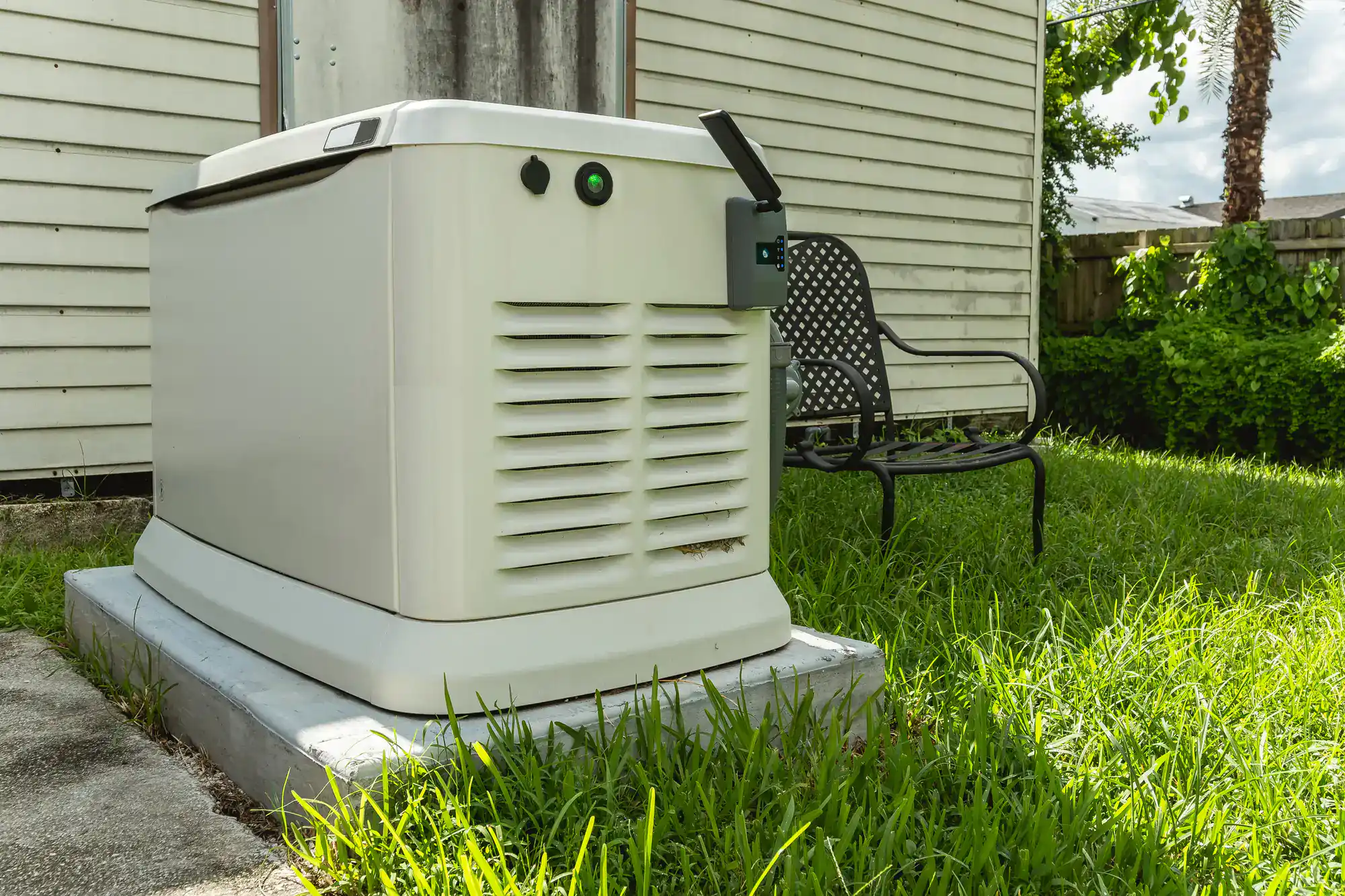
We pull the permits and coordinate inspections. The generator gets connected to Mobile Link remote monitoring so you can check its status anytime. You’ll know if there’s a maintenance alert or if the system ran during an outage, all from your phone.
In South Kingstown, most homes we work with are choosing between 14kW and 24kW systems depending on what they need to power. If you’re running a whole house with central air, you’re looking at the higher end. If you’re covering essentials—heat, fridge, some lights, sump pump—you can get by with less. We size it based on your actual load, not guesswork.
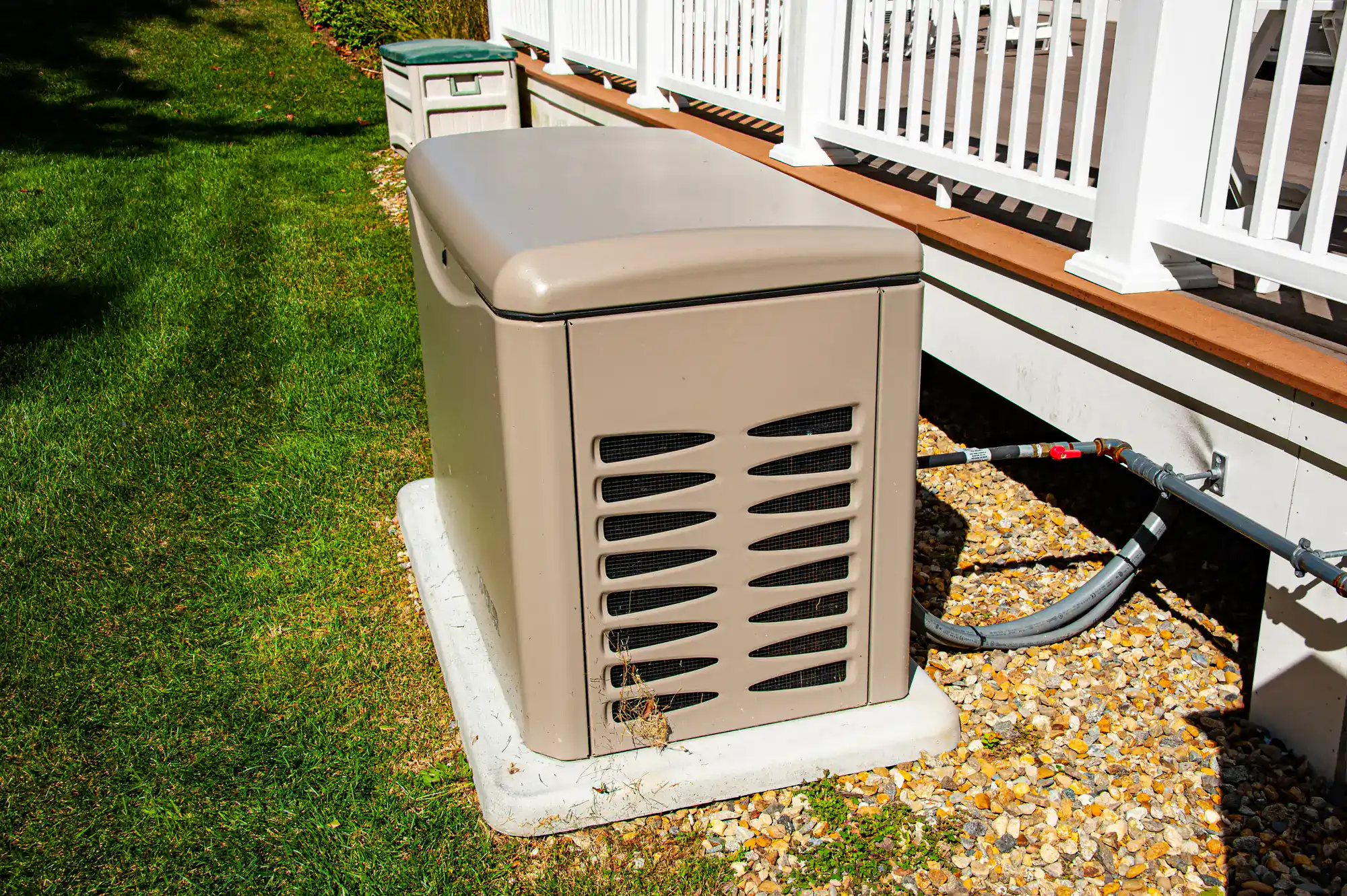
Generac generators run on natural gas or propane, and they’re built to handle Rhode Island winters. These units are designed to fire up automatically when the power drops, run for as long as needed, and shut down when utility power comes back. You don’t touch anything. The system does it.
Most residential standby generator installations take two to four days from start to finish. That includes site prep, pouring the concrete pad, running fuel and electrical lines, mounting the unit, connecting the transfer switch, and final testing.
Weather can add time, and so can permitting if there are delays on the town’s end. But once we’re on site, the physical work moves quickly. We’re not bouncing between jobs—we finish yours before we move to the next one.
If your electrical panel needs an upgrade to handle the generator load, that adds time. Same goes for longer propane line runs or complicated site access. We’ll give you a realistic timeline during the estimate so you know what to expect.
It depends on what you want to keep running during an outage. If you’re covering the essentials—refrigerator, furnace, a few lights, and maybe a sump pump—a 14kW to 18kW generator usually handles it. If you want whole-house coverage including central air conditioning, you’re looking at 20kW to 24kW or higher.
We calculate your load based on your electrical panel and what circuits you prioritize. Not everyone needs to run everything. Some people just want to make sure the heat and fridge stay on. Others want life to continue exactly as normal. Both are valid, and both affect what size system makes sense.
Oversizing costs you more upfront and burns more fuel when it runs. Undersizing means you’re making sacrifices during an outage. We size it to match your actual needs, not a sales quota.
For a fully installed standby generator, you’re typically looking at $7,000 to $15,000 depending on the size of the unit, site conditions, and how much electrical work is involved. Smaller systems on the lower end, whole-house setups on the higher end.
That price includes the generator, transfer switch, concrete pad, fuel line connection, electrical hookup, permits, and labor. If your panel needs upgrading or if we’re running a long propane line, that adds cost. Same with difficult site access or ledge that complicates the pad installation.
We give you a fixed price upfront after we assess your property. No surprises halfway through the job. And yes, it’s an investment—but when you’re comparing that to frozen pipes, spoiled food, or a flooded basement, the math changes. These systems last 20 to 30 years with basic maintenance.
Yes. You need both an electrical permit and often a building permit depending on the installation specifics. South Kingstown requires permits for standby generator installations, and the work has to be done by a licensed electrician.
We handle the permitting process as part of the installation. We pull the permits, schedule the inspections, and make sure everything is up to code before we’re done. You don’t have to deal with the town or chase down paperwork.
Skipping permits is a bad idea. It can cause problems with your homeowner’s insurance, and it’ll definitely cause problems if you ever sell the house. Inspectors check this stuff. We do it right so you don’t have issues down the road.
It can, if that’s how we size and install it. A whole-house generator is designed to power everything in your home—HVAC, appliances, outlets, lights, all of it. You’ll need a larger unit, typically 20kW or higher, and your electrical panel has to support the load.
Some people choose to power only essential circuits instead. That’s a partial-house setup, and it costs less because you’re using a smaller generator. You pick what matters most—heat, fridge, well pump, a few outlets—and we wire those circuits into the transfer switch.
Both approaches work. It just depends on your budget and what you want during an outage. A whole-house system means life goes on like normal. An essentials-only system keeps you safe and comfortable without powering things you don’t really need during an emergency.
Once a year is standard. We check the oil, filters, battery, fuel lines, and run the system through a test cycle to make sure everything is working. Generac generators are built to self-test weekly, but annual professional maintenance catches issues before they become problems.
Rhode Island weather is hard on equipment. Humidity, salt air if you’re near the coast, freeze-thaw cycles in winter—it all adds up. Regular maintenance keeps your generator ready to run when the power goes out, which is the whole point of having one.
Skipping maintenance is how you end up with a generator that won’t start during a storm. We’ve seen it plenty of times. The system sits for two years, nobody checks it, and then it fails when you actually need it. Annual service costs a few hundred dollars and it’s worth every cent.