
For over 30 years, we’ve powered Rhode Island with expert electrical services delivered with a personal touch. Discover our story and commitment to quality.
Contact Info
You’re not sitting in the dark wondering when National Grid will get to your street. You’re not throwing out a fridge full of food or worrying about frozen pipes. Your sump pump keeps running, your heat stays on, and your family stays safe.
A professionally installed standby generator means you don’t scramble for extension cords or gas cans. The power goes out, your generator starts itself within seconds, and life continues. When the grid comes back, it shuts down on its own.
That’s what you get with a whole-house generator installation in Newport, RI. Real protection for a home you’ve invested in, in a state where outages aren’t rare—they’re expected. Recent winter storms knocked out power for 100,000+ Rhode Islanders, some for days. You either prepare for that reality or deal with the consequences every time it happens.
We’ve been installing and servicing generators across Newport for years. We’re an authorized Generac dealer, which means we’re trained on the equipment we install and held to manufacturer standards you can verify.
We’re also members of the Rhode Island Electrical Inspectors IAEI Roger Williams Chapter and follow NFPA’s Certification Code of Ethics. That’s not marketing language—it’s accountability. Much of Newport’s housing stock was built before World War II, so we’re used to working with older electrical systems and making sure your generator integrates safely with what’s already there.
You’ll work with licensed electricians who understand local building codes, pull the right permits, and do the job correctly the first time. We provide a Certificate of Insurance on request because we know Newport homeowners expect that level of professionalism.
First, we come to your property and assess your electrical panel, fuel source, and the best location for the unit. We’ll talk through what size generator you actually need based on what you want to keep running during an outage—not what sounds good in a sales pitch.
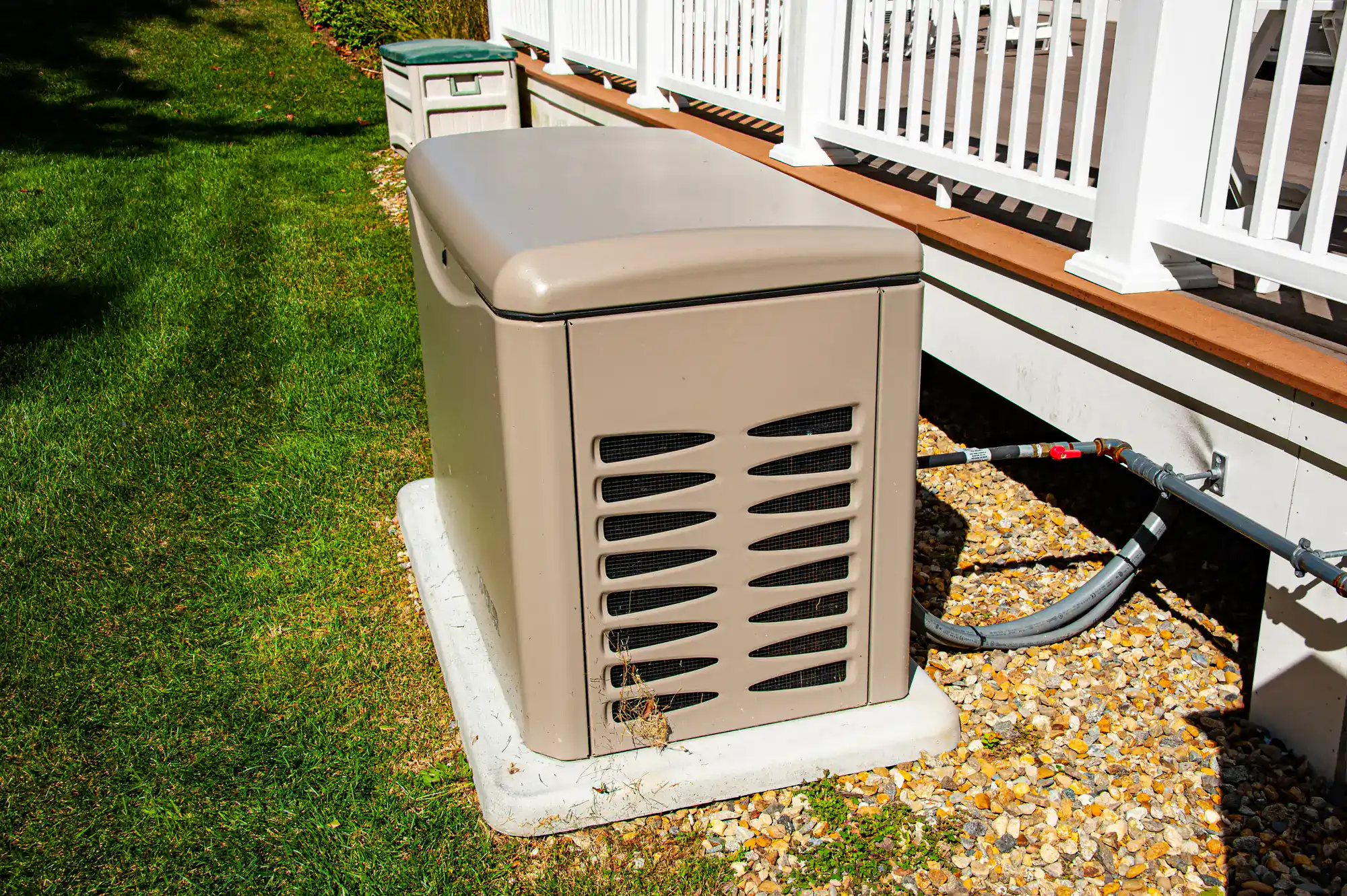
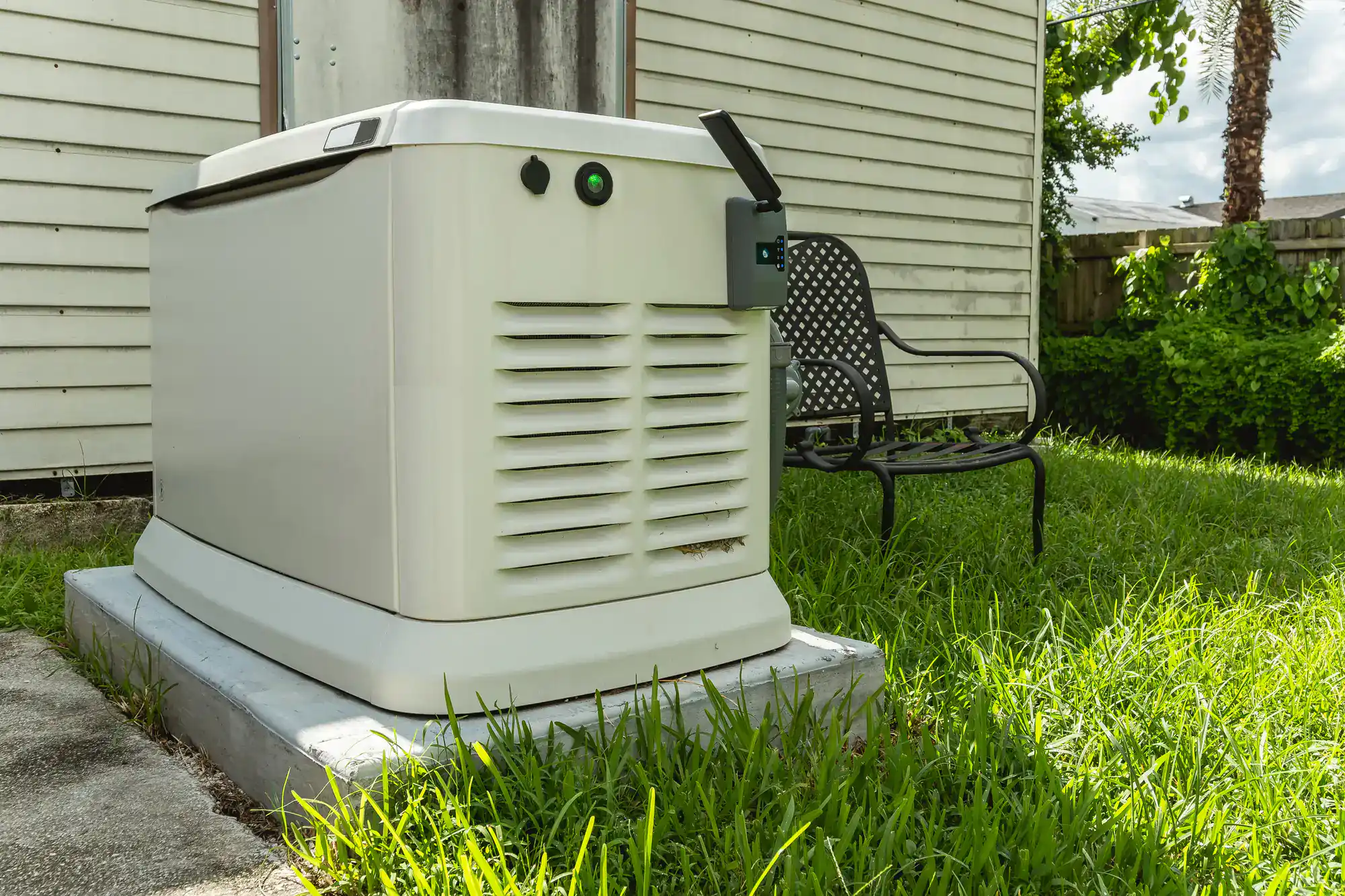
Once you approve the plan, we handle the permits and schedule the installation. We set the generator on a concrete pad, connect it to your natural gas or LP fuel line, and wire it into your electrical panel with a transfer switch. That switch is what allows the generator to safely power your home without backfeeding into the grid.
After installation, we test the system to make sure it starts correctly, transfers power smoothly, and shuts down when utility power returns. We’ll show you how to monitor it from your phone and explain the maintenance schedule. Then we clean up and leave you with a system that’s ready to work the next time Newport loses power.
Ready to get started?
You’re getting a complete system, not just a generator dropped in your yard. That includes the generator unit itself, a concrete pad or mounting platform, a transfer switch wired into your electrical panel, and connection to your existing fuel supply.
We pull all required permits in Newport and coordinate inspections so the job is code-compliant. You’ll also get mobile monitoring capability so you can check your generator’s status from anywhere—helpful when you’re away and a storm rolls through.
With Newport’s median home value over $746,000, you’re protecting a serious investment. A standby generator installation also increases property value and can be a selling point if you ever list your home. But more immediately, it protects you from the financial hit of spoiled food, burst pipes, or having to relocate your family to a hotel every time the power goes out for more than a few hours.
Rhode Island’s outage frequency isn’t improving. The infrastructure is aging and storms are getting worse. A generator isn’t a luxury in this market—it’s a practical response to a documented problem.
Installation costs vary based on the size of the generator, your home’s electrical setup, and how far the unit sits from your fuel source and electrical panel. Generac home backup generators start around $1,949 for the unit itself, but total installed cost typically runs higher once you factor in the transfer switch, concrete pad, labor, permits, and fuel line connection.
For a typical Newport home, you’re usually looking at a system sized between 16kW and 24kW to cover essential circuits or whole-home power. Older homes with outdated electrical panels may need panel upgrades, which adds to the scope.
We price each job individually because no two properties are identical. We’ll give you a clear quote after the site assessment so you know exactly what you’re paying for. There are no markup surprises or hidden fees—just transparent pricing based on the work your property requires.
Most residential standby generator installations take one to two days, depending on the complexity of your electrical system and site conditions. If we’re working with an older home that needs panel work or running a longer fuel line, it might take a bit longer.
We’ll give you a timeline during the estimate so you can plan accordingly. Permit approval can add a few days to the overall schedule, but we handle that process and keep you updated.
The goal is to get your system installed, tested, and operational as quickly as possible without cutting corners. You’ll have a fully functional backup power system that’s ready to go the moment we’re done.
It depends on the size of the generator and what you want to power. A properly sized whole-house generator can run everything—HVAC, kitchen appliances, lights, outlets, sump pump, well pump if you have one, and any medical equipment.
During the site assessment, we calculate your home’s electrical load and recommend a generator that matches your needs. If you want to run everything without thinking about it, we’ll size the system accordingly. If you’re comfortable managing loads and only need essentials covered, we can install a smaller, more affordable unit.
The transfer switch we install determines what gets powered. We can set it up to cover your entire panel or just critical circuits. Either way, the generator starts automatically when the power goes out, so you’re not flipping breakers or making decisions in the dark. It just works.
Yes. Standby generators need annual maintenance to stay reliable, just like your HVAC system or car. That typically includes an oil and filter change, air filter replacement, spark plug inspection, and a battery check. Annual maintenance usually runs $150 to $300.
Generac generators have mobile monitoring that sends you maintenance alerts, so you’ll know when service is due. We offer maintenance services and can put you on a schedule so you don’t have to think about it.
A well-maintained generator can last 20 years or more. Skip the maintenance, and you’re risking a failure right when you need it most—during a storm when every generator technician in Rhode Island is booked solid. Regular upkeep is cheap insurance compared to replacing a failed unit or dealing with an outage without backup power.
A portable generator requires you to haul it out of the garage, fill it with gas, start it manually, and run extension cords to whatever you want to power. You’re also refueling it every few hours, which means storing gasoline and going outside in the middle of a storm.
A standby generator is permanently installed, connected to your natural gas or LP fuel supply, and wired directly into your home’s electrical panel. When the power goes out, it starts automatically within seconds. When power returns, it shuts itself off. You don’t touch anything.
Portable generators work for occasional, short outages if you’re home and able-bodied. Standby generators work every time, whether you’re home or not, and they don’t require you to do anything. For Newport homeowners dealing with frequent multi-day outages, a standby system is the only real solution.
Legally, no. Generator installation in Rhode Island requires a licensed electrician and permits. You’re working with high-voltage electrical systems, fuel lines, and transfer switches—mistakes can cause fires, carbon monoxide poisoning, or electrocution.
Beyond the safety and legal issues, an improperly installed generator won’t pass inspection, won’t be covered by warranty, and might not work when you actually need it. If you ever sell your home, unpermitted electrical work is a red flag that can kill a deal or force you to pay for a licensed electrician to redo it anyway.
The cost of professional installation protects your investment and ensures the system works correctly. We’ve seen DIY attempts that cost more to fix than they would have cost to install right the first time. It’s not worth the risk.