
For over 30 years, we’ve powered Rhode Island with expert electrical services delivered with a personal touch. Discover our story and commitment to quality.
Contact Info
- List Item
For over 30 years, we’ve powered Rhode Island with expert electrical services delivered with a personal touch. Discover our story and commitment to quality.
Contact Info
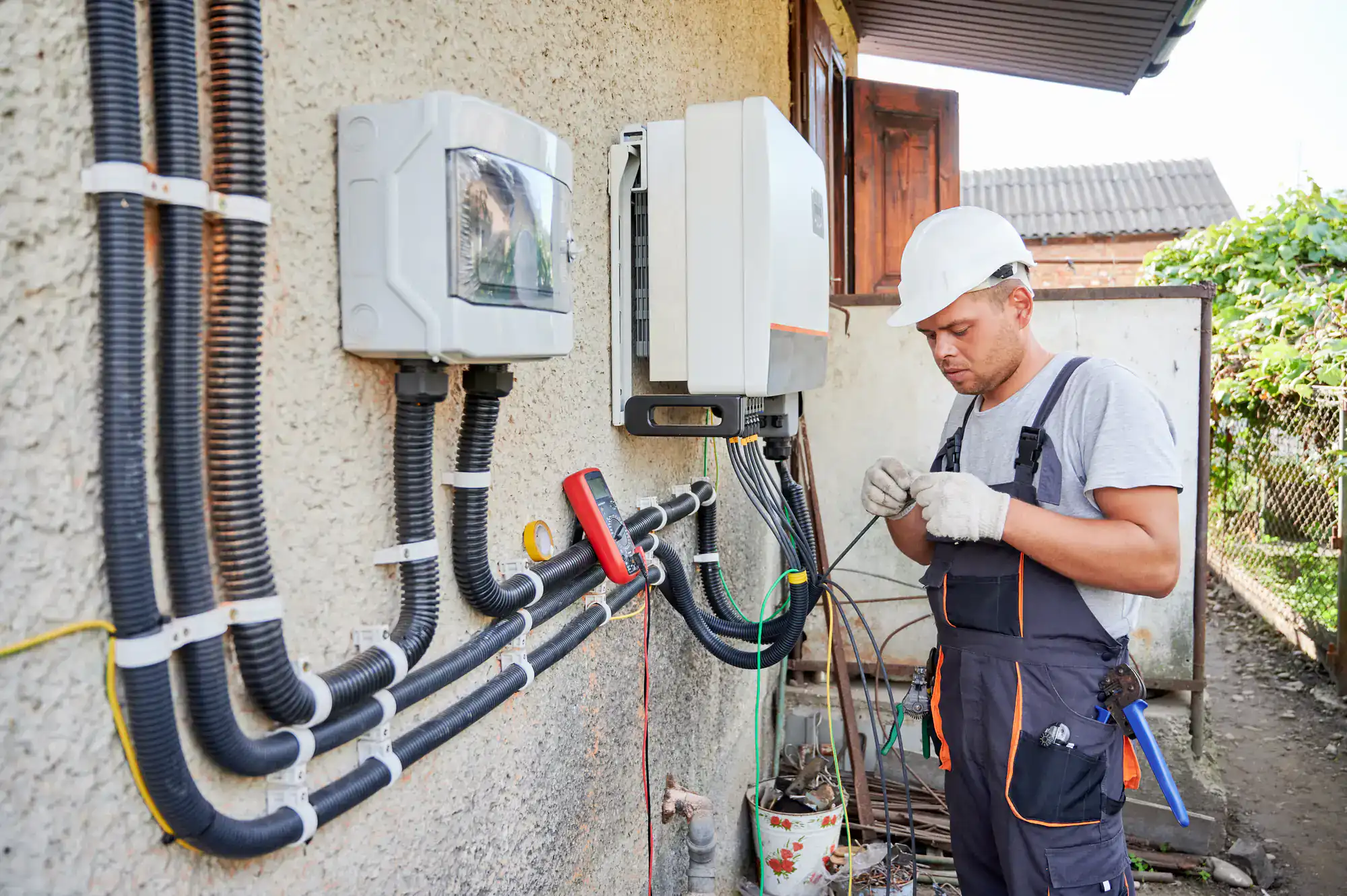
You need power you can count on. Your well pump has to run. Your generator needs to kick on during storms. Your family deserves to feel safe in a home where the wiring isn’t a fire hazard waiting to happen.
Rural Exeter properties deal with electrical stresses that suburban homes never see. Lightning strikes on open land. Voltage drops from long underground runs. Heavy loads from well pumps cycling all day. Trees taking down overhead lines during nor’easters, leaving you without power for days.
We’ve worked on enough barns, outbuildings, and rural properties to know what breaks, what fails, and what keeps working. When your electrical system is set up right, you’re not calling someone every time the power flickers. You’re not wondering if your knob and tube wiring is going to cost you your insurance coverage. You’re not sitting in the dark waiting for your generator to fire up.
We’ve been handling electrical work in Rhode Island for over 70 years. We’re members of the Rhode Island Electrical Inspectors IAEI Roger Williams Chapter and follow the NFPA Certification Code of Ethics. That’s not marketing language—it means we’re accountable to professional standards, not just our own word.
Exeter’s rural layout means you need someone who understands what makes your property different. We’ve wired barns, replaced knob and tube in old farmhouses, installed whole-home generators, and troubleshot well pump circuits that other electricians couldn’t figure out. Your property isn’t cookie-cutter, and neither is our approach.
You’ll get job-specific pricing, not package deals that don’t fit what you actually need. We look at your situation, tell you what it’ll take, and do the work right the first time.
You reach out, we listen. You tell us what’s going on—whether it’s a panel that needs upgrading, a generator that won’t start, or wiring that’s scaring you. We ask the right questions to understand your property and what you’re dealing with.
We come out and assess the situation in person. Rural properties have variables you can’t diagnose over the phone. We look at your service entrance, your grounding system, your panel capacity, and any specific concerns you’ve mentioned. Then we explain what we found in plain terms and what it’ll take to fix it properly.
Once you approve the work, we handle it according to the 2023 National Electrical Code and Rhode Island amendments that took effect in December 2025. You get work that passes inspection, meets insurance requirements, and actually solves the problem. No surprises, no shortcuts, no coming back six months later to redo something that should’ve been done right initially.
Ready to get started?
Generator installation and repair is critical here. When storms knock out power to Exeter’s rural lines, you’re not first on the utility company’s list. You need backup power that starts automatically and runs your essentials—well pump, heating system, refrigeration. We size generators correctly for your actual load, install transfer switches that meet code, and service equipment so it’s ready when you need it.
Knob and tube wiring replacement matters more than most people realize. If your home was built before 1950, there’s a good chance you still have it. Many insurance companies in Rhode Island will drop your coverage outright if they discover knob and tube during an inspection. Beyond insurance, it’s a legitimate fire risk that can’t handle modern electrical loads. We rewire sections or entire homes, depending on what you need.
Well pump electrical service is something we handle regularly. Pumps pull heavy current, and if your wiring or circuit protection isn’t sized right, you’ll have nuisance trips, voltage sag, or equipment failure. We troubleshoot pump circuits, upgrade service panels to handle the load, and make sure your water supply stays reliable.
Lightning and surge protection installation gives your rural property a fighting chance against power surges. Exeter’s open countryside means more exposure to direct strikes and induced surges from nearby hits. Whole-home surge protection at the panel, plus point-of-use protection for sensitive equipment, keeps your electronics and appliances from getting fried during storm season.

We answer emergency calls as quickly as possible, but response time depends on where we are when you call and what else is happening. Rural Exeter doesn’t get the same instant response as denser areas—that’s just geography.
What we can tell you is this: we prioritize emergencies like downed lines, sparking panels, or total power loss. If your situation is dangerous, we’ll get there. If it’s urgent but not immediately hazardous, we’ll give you an honest timeframe and show up when we say we will.
During major storms, everyone’s calling. We triage based on safety risk and work straight through until people have power restored or safe temporary solutions in place. You won’t get a runaround—you’ll get a realistic answer about when we can be there.
First, check your fuel level and make sure the fuel valve is open. Generators that sit unused between outages can have stale fuel or clogged fuel lines. If you have propane, confirm the tank has gas and the valve to the generator is open.
Next, check your transfer switch. Some systems require you to manually switch from utility power to generator power. If it’s an automatic transfer switch, there may be a fault preventing it from engaging. Look for any error lights or codes on the generator’s control panel.
If those basics don’t solve it, don’t keep trying to force it to start. You can damage the starter motor or flood the engine. Call us and we’ll diagnose whether it’s a fuel delivery issue, a dead battery, a failed transfer switch, or something else. Generator repair in Exeter, RI often involves components that failed from sitting idle too long between uses—regular maintenance prevents most of these problems.
Yes, and here’s why. Knob and tube wiring wasn’t designed for the electrical loads modern homes use. It has no ground wire, which means no protection against shocks or faults. The insulation deteriorates over decades, especially in attics and basements where temperature swings and moisture accelerate breakdown.
Insurance companies in Rhode Island are increasingly refusing to cover homes with knob and tube wiring. Some will cover you initially but drop you after an inspection reveals it. Others won’t insure the home at all. Even if you find coverage, your premiums will be higher.
Beyond insurance, it’s a fire risk. When insulation cracks and wires are exposed, you’re one short away from a fire inside your walls. Modern electrical codes don’t allow knob and tube for a reason. Replacing it isn’t cheap, but it’s a lot less expensive than losing your home or your insurance coverage. We can rewire in sections if you need to spread the cost out, or handle the whole house at once if you’re ready to be done with it.
If your breakers trip frequently, that’s a sign your panel is undersized for your current electrical load. Homes built decades ago weren’t wired for central air, electric vehicle chargers, modern kitchens with multiple appliances running simultaneously, or home offices with computers and equipment drawing power all day.
Another indicator is if you’re still using a fuse box instead of circuit breakers. Fuse boxes are outdated, harder to manage, and don’t provide the same level of protection modern breaker panels offer. If you’re adding any major electrical load—like a generator, EV charger, or workshop equipment—your existing panel may not have the capacity.
Physical signs matter too. Rust, corrosion, burning smells, or scorch marks around breakers mean something’s wrong. Panels that feel warm to the touch or make buzzing sounds are failing. In Exeter, RI, many older homes still have 100-amp service when they really need 200-amp to handle modern demands safely. We assess your current usage, calculate what you actually need, and upgrade your panel and service entrance if necessary.
Rural properties in Exeter deal with longer service runs, which means voltage drop becomes an issue if wiring isn’t sized correctly. You might have 240V at the transformer but only 220V at your house if the underground or overhead run is too long and the wire gauge is too small. That causes motors to run hot and appliances to underperform.
Well pumps are another factor. Suburban homes get municipal water; you’re running a pump that cycles constantly and pulls significant current. If the circuit protection or wiring isn’t right, you’ll have problems. Same with outbuildings—barns, workshops, sheds that need power run hundreds of feet from your main panel.
Lightning exposure is higher on open land. You don’t have neighboring buildings or dense tree cover absorbing strikes. Your home and electrical system take more direct hits and induced surges. We’ve worked enough rural properties to know what holds up and what fails under these conditions.
Annual inspections make sense for rural properties, especially if you have a generator, well pump, or older wiring. These systems work harder and face more stress than typical suburban electrical setups. Catching small issues early—loose connections, corroded terminals, worn insulation—prevents bigger failures later.
If you’re buying a home in Exeter, get the electrical system inspected before closing. Sellers don’t always disclose knob and tube wiring, undersized panels, or code violations that’ll cost you thousands to fix. A thorough inspection gives you leverage to negotiate repairs or price adjustments.
After major storms, it’s worth having someone check your service entrance, grounding system, and surge protection. Lightning strikes and power surges can damage components without causing immediate obvious failure. You might not know your panel took a hit until something fails weeks later. We look at the parts of your system that standard home inspections often miss—well pump circuits, barn wiring, outdoor lighting, and generator connections that need regular attention to stay reliable.