
For over 30 years, we’ve powered Rhode Island with expert electrical services delivered with a personal touch. Discover our story and commitment to quality.
Contact Info
Your insurance company stops pushing back. Most carriers in Massachusetts won’t write new policies on homes with knob and tube wiring still active, and some will drop existing coverage once they find out. Once you replace knob and tube wiring in Fall River, MA, you qualify for standard homeowner policies instead of getting stuck with MPIUA coverage that costs 30-60% more.
You can finally insulate. Insulation contractors won’t touch a home with old wiring because surrounding knob and tube with insulation creates serious fire hazards. The cloth covering on old wires burns at low temperatures, and when heat can’t escape, things go wrong fast.
You unlock Mass Save rebates worth up to $7,000. The state program requires knob and tube wiring removal before they’ll approve insulation upgrades, but once it’s gone, you’re eligible for significant rebates that offset your electrical system upgrade costs.
Your home works the way you need it to. Modern appliances need grounded outlets. Your phone chargers, computers, kitchen equipment—they all expect three-prong connections that knob and tube systems can’t provide.
Fall River has some of the most beautiful Victorian homes and triple-deckers in Massachusetts. It also has some of the oldest wiring. We work throughout Fall River, MA on old home electrical wiring replacement projects where the structure matters as much as the system.
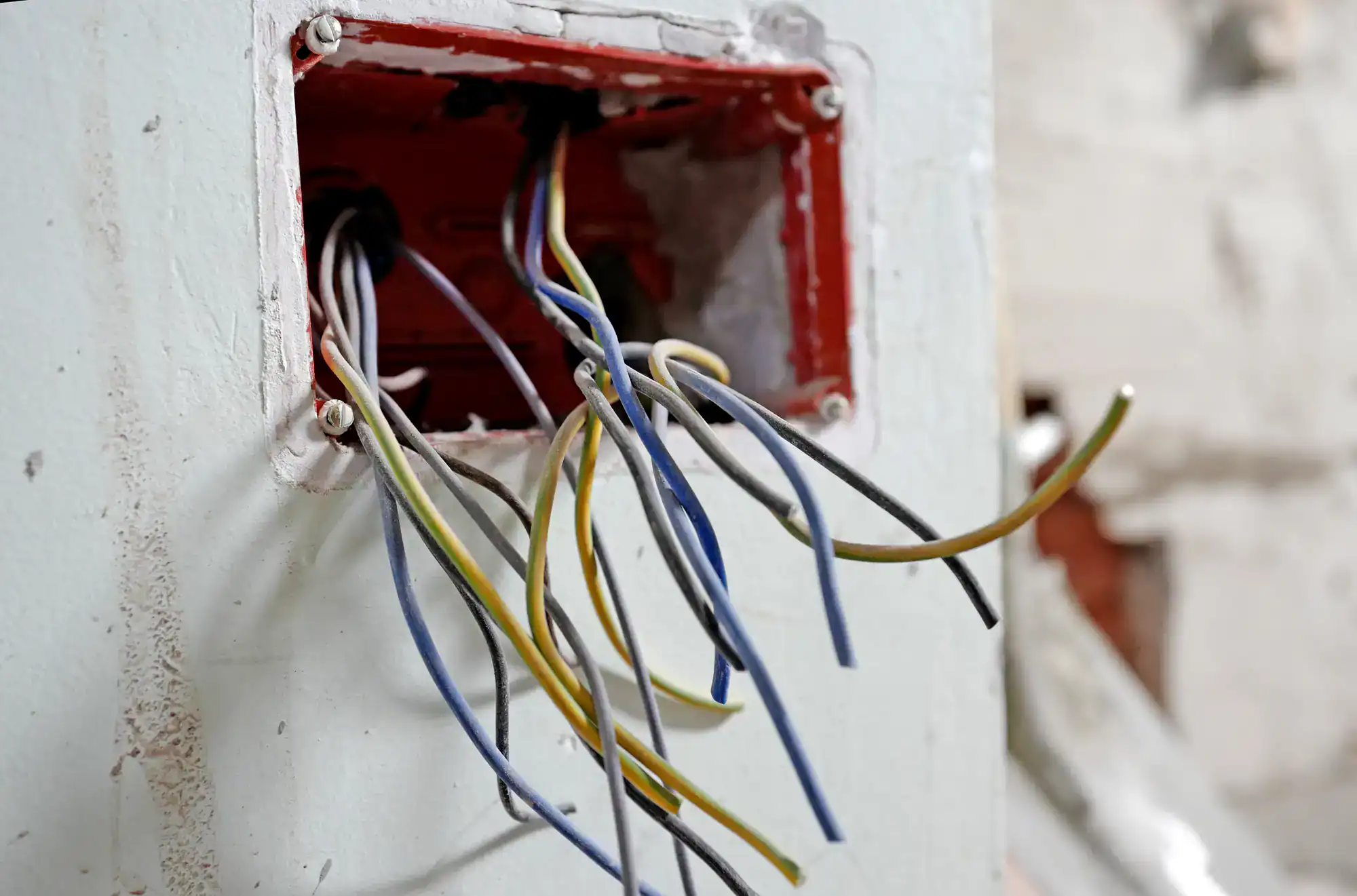
Most homes built before 1950 in this area still have at least some knob and tube wiring hidden in walls and ceilings. You might not see it until you open up a junction box or pull a switch plate. That’s where proper inspection comes in—checking almost every outlet, switch, and fixture to find what’s actually there.
We handle the permits, the inspections, and the coordination with your insurance company or insulation contractor. You get documentation that proves the work was done right and meets current Massachusetts electrical code.
First, you need a real inspection. That means removing outlet covers and switch plates throughout your home to see what’s behind them. Knob and tube wiring hides in unexpected places—attics, basements, wall cavities. A thorough inspection finds all of it so nothing gets missed.
Next comes planning the new system. Depending on your home’s layout and how much wiring needs replacement, the approach changes. Smaller projects might only require updating specific circuits. Whole-house rewiring means running entirely new electrical lines, often through basements or attics to minimize wall damage in your Fall River home.
Then the actual removal and installation happens. Old knob and tube wiring gets pulled out. New wiring goes in—properly grounded, up to code, rated for modern electrical loads. Outlets get replaced with grounded three-prong versions. Your electrical panel may need upgrading if it can’t handle increased capacity.
Finally, inspection and documentation. A city inspector verifies everything meets code. You receive documentation proving your home no longer has knob and tube wiring—exactly what your insurance company or Mass Save program needs to see.
Ready to get started?
You get a complete inspection that documents every location where knob and tube wiring exists in your Fall River, MA home. That inspection report becomes the basis for accurate project scoping and cost estimates—no surprises halfway through the job.
The removal itself covers all active knob and tube wiring that poses safety risks or blocks your insurance and insulation goals. Dead wiring that’s completely disconnected and not causing problems can often stay in place, which saves time and money.
New wiring installation brings your electrical system up to current Massachusetts code. That means proper grounding, correct wire gauges for the loads they’ll carry, and protection that actually works when something goes wrong.
Permit handling and inspections are part of the package. Fall River requires permits for electrical work like this, and final inspection approval is what makes your upgrade official. You’ll receive documentation proving the work was completed and approved—critical for insurance companies, home sales, or Mass Save rebate applications.
Panel upgrades happen when needed. Many older Fall River homes still have 60-amp or 100-amp service that can’t support modern electrical demands. If your panel needs upgrading to handle new circuits safely, we address that as part of your electrical system upgrade.
Costs depend entirely on how much wiring needs replacement and how accessible it is. Smaller projects that only address specific problem circuits typically run $3,500 to $9,000. Whole-house rewiring in Fall River, MA homes ranges from $12,000 to $36,000 depending on square footage and complexity.
Victorian homes and triple-deckers—common throughout Fall River—often fall somewhere in the middle. You might have knob and tube wiring in your attic and basement but updated wiring on your main floor. Partial replacement costs less than complete rewiring.
The real number comes from inspection. Until someone actually looks inside your walls, junction boxes, and electrical panel, any estimate is just guessing. Accessible attic and basement wiring costs less to replace than wiring buried in walls that requires opening up plaster or drywall.
Mass Save rebates can offset costs significantly if you’re combining wiring removal with insulation upgrades. Up to $7,000 in rebates becomes available once knob and tube wiring is gone, which changes the math on your total investment.
Yes, and it happens regularly in Fall River, MA. Insurance carriers view knob and tube wiring as a significant fire risk, and many refuse to write new homeowner policies unless all of it gets removed first. Some companies will drop existing coverage once they discover old wiring during a claim or inspection.
You might get pushed toward MPIUA coverage—Massachusetts’s insurer of last resort. MPIUA policies cost 30-60% more than standard homeowner insurance and offer less coverage. It’s expensive and it’s not optional if no standard carrier will take you.
Even if your current insurer hasn’t said anything yet, that changes when you file a claim or try to increase coverage. Suddenly the old wiring becomes an issue that blocks what you need. Getting ahead of it by replacing knob and tube wiring before insurance becomes a problem saves headaches later.
Some carriers will insure homes with knob and tube wiring if it’s been inspected by a licensed electrician and deemed safe. But “deemed safe” usually means it’s not actively being used, which defeats the purpose of having electrical service in those areas.
No. Insulation contractors won’t do it, and they’re right to refuse. Knob and tube wiring was designed to dissipate heat into open air. When you surround it with insulation, heat builds up, the old cloth covering deteriorates faster, and fire risk increases dramatically.
Massachusetts building code and insulation industry standards both prohibit insulating over active knob and tube wiring. Any reputable insulation company will require written confirmation from a licensed electrician that no concealed knob and tube wiring exists before they’ll start work in your Fall River home.
Mass Save won’t approve rebates if knob and tube wiring is still present. The program specifically requires old wiring removal before insulation upgrades qualify for rebates. You can’t get around it.
Even if you found someone willing to insulate around old wiring—which you shouldn’t—you’d still have the insurance problem, the safety problem, and the code violation problem. It’s not a shortcut worth taking.
Partial replacement projects usually take two to five days depending on how many circuits need updating and how accessible the wiring is. If your knob and tube wiring is mostly in the attic and basement with easy access, work moves faster.
Whole-house rewiring takes one to three weeks for most Fall River homes. Triple-deckers and larger Victorians take longer because there’s simply more space to cover and more circuits to run. Plaster walls—common in older Fall River homes—require more careful work than drywall to minimize damage.
The timeline also depends on permit and inspection scheduling. Fall River requires electrical permits for this work, and final inspection has to happen before the job is officially complete. Building department schedules vary, which can add a few days to the overall timeline.
You can usually stay in your home during the work. Power gets shut off to specific areas while wiring is being replaced, but you won’t be without electricity for days at a time. We coordinate with you to minimize disruption to your daily routine.
It becomes a negotiating point that almost always costs you money. Buyers either ask you to replace the wiring before closing, request a price reduction to cover replacement costs themselves, or walk away entirely if their lender won’t approve the mortgage.
Institutional lenders often refuse to finance homes with knob and tube wiring unless the electrical system gets upgraded before closing. FHA loans specifically flag old wiring as a safety issue that must be resolved. That shrinks your buyer pool to cash buyers or people willing to take on the project themselves.
Even if a buyer is willing to proceed, their insurance company might not be. When their homeowner insurance application gets denied because of old wiring, the deal falls apart unless someone addresses it.
Getting knob and tube wiring removal done before listing your Fall River, MA home eliminates these problems. You control the timeline, you choose the electrician, and you don’t lose negotiating leverage or deal with last-minute closing delays. The home shows better and appraises higher with updated electrical systems.
Often, yes. Many Fall River homes with knob and tube wiring also have outdated 60-amp or 100-amp electrical panels that can’t safely handle modern electrical loads. When you’re already upgrading the wiring, it makes sense to upgrade the panel at the same time.
Modern homes typically need at least 200-amp service to run HVAC systems, kitchen appliances, electronics, and everything else you plug in daily. If your current panel can’t support that load, adding new circuits without upgrading the panel creates safety issues and code violations.
The panel upgrade also future-proofs your electrical system. You won’t hit capacity limits when you want to add central air conditioning, install an electric vehicle charger, or upgrade to electric heating. The infrastructure is already there to support it.
Not every knob and tube wiring removal requires panel replacement. If you’re only updating a few circuits and your existing panel has adequate capacity and meets current code, it might be fine. That determination comes from inspection and load calculation—we can tell you whether your panel needs upgrading based on what your home actually requires.